
By Carolina Piras
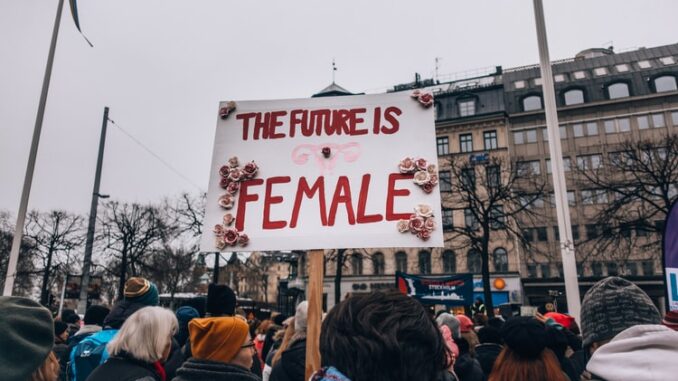
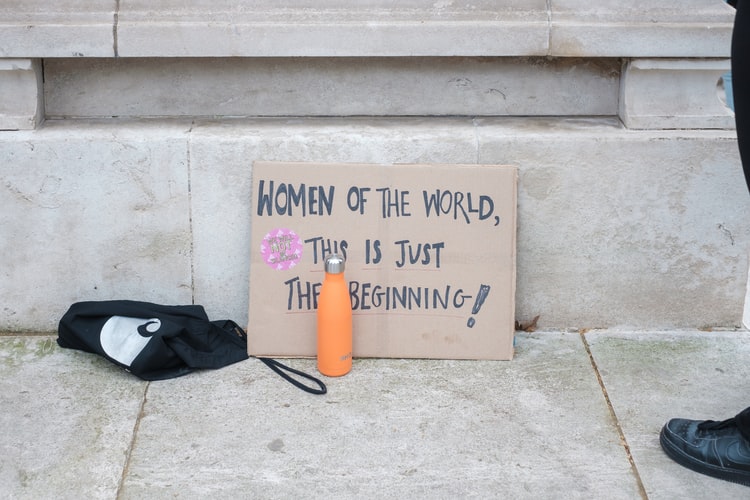
“The world doesn’t belong to you and your old boys anymore, it belongs to us,” a woman screamed during the first protest in Clapham Common remembering the death of Sarah Everard.
“They didn’t say no”
“We were drunk”
“She was asking for it because of what she was wearing”
“You need to be more assertive.”
“Are you sure you didn’t want it?”
“He’s a father. You can’t expose him.”
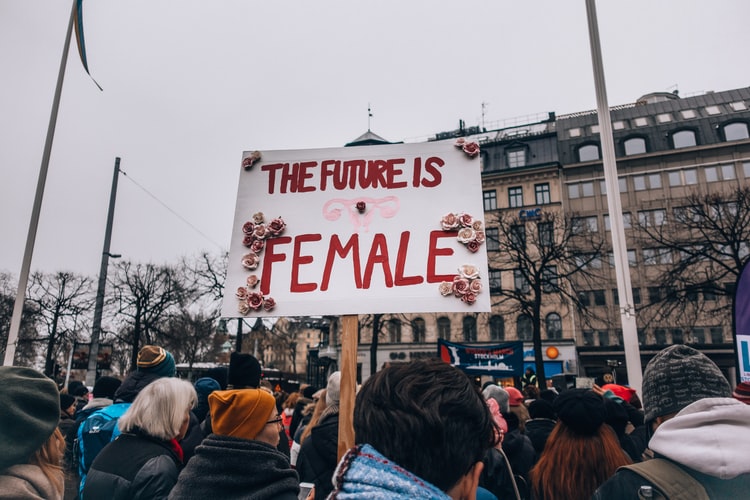
All these women are demanding, after all, i to be protected from violence – sexual or otherwise – and be treated fairly.
The time to break the silence has come. More and more women around the world, from entrepreneurs to politicians to activists and others, are stepping up to discuss the biggest historical injustice that we’ve been carrying since the dawn of time.
A survey conducted by UN Women UK found 97 per cent of women aged 18 to 24 had been sexually harassed, while 80 per cent of women of all ages said they had been harassed in public spaces. And the Rape Crisis Centre says at least one in five women aged 16 and over have been sexually assaulted in the UK.
Is change coming?
But the times could be changing: #MeToo movements, #OurStreetsNow, and many others are doing their part every day in every corner of the globe. And a report from OpenDemocracy examined why 2020, in particular, brought a ‘massive feminist resistance’ that never happened before.
It’s still not enough and many women do still not feel safe on the streets, but now they are making a lot of noise, which has led to in-depth discussions in the media about what is the core of the discrimination against women. It has then been analysed on social media, in particular by feminist activists, that the problems lie in the awareness of consent: what would happen if school programmes around the world embed consent awareness education from primary school to universities?
Not for nothing, Ofsted urgently ordered an inquiry investigation as part of a ‘deep dive’ into allegations of school sexual abuses, brought about by the Everyone’s Invited initiative, to assess why so many complaints by pupils regarding rape, harassment, and assault haven’t been taken seriously until now.

Schools’ role fundamental
Holloway Express breaks down women’s views on this matter, showing why the schools’ role is fundamental in shaping the people of tomorrow.
Yeliz Cakiroglu 20, a student at London Met and ambassador for #OurStreetsNow in the university, said: “We do not have compulsory education about consent in schools. Some universities and some schools around the world embedded sex education or workshops about consent or sexual violence but is still not normalised and is not enough.”
Cakiroglu said that teaching about topics such as consent from a very young age is a “vital step” to raise a responsible generation and she also believes that this could help to reduce the rate of sexually motivated criminal offenses.

“Many young members of society are not aware of what is considered sexual abuse or harassment,” she said. “Further, establishing these kinds of courses and workshops gives a clear statement saying that any form of sexual harassment is unacceptable.
“Over centuries at this point, we have established a strong power imbalance between women and men, enabling men to exhibit behaviours they consider normal which are however making women uncomfortable.
“Radical rape culture“
“If we now tell boys all of a sudden that the behaviour they have exhibited possibly over years is sexual harassment, they might not want to hear or accept this. Plus, from home, they might hear that certain behaviours are ‘normal’ even if they are not,” the 20-year-old student said.
The OSN Ambassador firmly believes that schools and education systems are ‘to some extend’ responsible for how radical rape culture became in our society. “I think it starts with things such as dress coding girls for too short skirts or wearing tank tops but not doing the same for boys,” she said.
“It goes further with teachers not taking it serious when girls speak out about situations they experienced as being uncomfortable with other of their peers.”
The young feminist ambassador argues that the clear message schools have been establishing is that “boys are more important than girls and that girls are responsible for creating a perfect environment for boys. Equality is not present in schools and thus, from a young age, teaches boys and girls a terrible picture of sex.”
Need for trauma counsellors
Cakiroglu takes a step by talking about the struggle of survivors in education environments, claiming that schools should have a trauma counsellor or someone closely available who can join any conversation with a survivor. “I think it is also important that teachers are trained regularly in how to respond to survivors talking up and how to assist them in their future, be it in reporting the incident or seeking psychological care. It needs to be taken seriously and the experiences must be validated.”
She breaks down the silence around digital consent and how this is approached in schools, saying is not approached ‘at all’.
“I believe this topic is addressed way too little. On the one hand, this could be because teachers themselves are not as literate with these topics as they are not affected by the threat of any form of digital harassment as much as their students are.
“I think the approach we are currently undertaking at London Met is a good start, designing a consent workshop with the assistance of students to get their input in and then putting it into the induction programme is a good way to make sure all students have gone through the workshop and also makes sure the workshop is suited for students.”
Need to clarify consent
Sejal Chad, survivor-focused counsellor at London Metropolitan University, remarked that consent education is really important to clarify in the first place what consent is and isn’t, so that we can debunk some very popular and ingrained myths about consent, such as not explicitly hear a ‘no’ or that seeing someone fighting back can mean that consent is given.
“Consent education also helps to start creating a cultural shift regarding awareness of people’s boundaries. It helps start to consider how power dynamics operate in different situations, relationships, and institutions,” she said.
She highlights that understanding consent is ‘vital’ to help people identify and validate sexual violence, to also support survivors and victims.
“Consent of course is important not just in sexual activity and interactions but in everyday interactions and relationships as well, and consent workshops can be very helpful for starting to understanding ways of communicating and clarifying boundaries, having healthier and generally better interactions, understanding when something is not consensual and what support (whether emotional or legal) can be accessed.
“Some people’s resistance or lack of interest may be linked to how deeply ingrained and normalised non-consensual behaviour is in much of our society. It is uncomfortable and can sometimes arouse shame and guilt to think otherwise – to imagine losing entitlement, privilege, and power, to question where your own or your family or friends’ behavior may have been non-consensual or abusive,” she explains.
“What could also be most uncomfortable is the idea that anyone can potentially be a perpetrator if they ignore any of the vital conditions of consent – this challenges the idea that sexual violence is only caused by violent strangers in dark alleys – it could be caused by you or your friend or family member and there are repercussions for this behaviour.”
Trauma as a result of sexual violence
As an expert in sexual violence traumas, Chad explained that by denying survivors the opportunity to share their needs we keep normalising the silence around the issue, as they can become isolated, develop concentration issues, unseen trauma symptoms and even drop out of university, “all of which could have been prevented with the right support and awareness”.
She adds: “Classes and workshops are a good idea. I don’t think there needs to be one prescription for developing consent awareness – the more consent awareness becomes embedded in any aspects of university life, the more helpful it is for creating a consent culture that is helpful for all students’ wellbeing.
“Freshers workshops can certainly play a part in this, as well as consent workshops tailored for survivors and their needs. But the conversation must not end there – the more consent awareness can be brought up and embedded in the fabric and culture of all university communities, the more this becomes normalised and the less power rape culture retains.
“Bystander awareness and intervention training and resources could also be extremely helpful for creating a cultural shift where we all feel responsible for practicing and upholding consent, challenging perpetrators and supporting victims/survivors.”
Leave a Reply