
By Martina Manias
“I was trying to become a model, so I started to follow diet pages on social media. I entered a period where I was very depressed.”
These are the words of Chiara Paludetto, a 24-year-old who tried to fit into conventional beauty standards, following a strict diet and documenting herself on a YouTube vlog.

In today’s digital age, social media’s pervasive power has transformed how we connect, communicate, and perceive ourselves. While these platforms offer numerous benefits, they have also inadvertently become breeding grounds for a hidden epidemic: eating disorders.
“Social media is a part of this unhealthy process,” said Samantha Galea, 24, a dietician who works for the NHS in Hammersmith.
“Social media is not the only thing but is part of a wider spectrum of things; everything is so accessible now, we can look at our feed at any moment and there are people that literally know everything online, but they can also get access to you, and they often offer lots of information through all of these online platforms.
“Nowadays there are apps like face tune, photoshop and sometimes looking at pictures on the web you really can never know if it is real or not.”
Social media platforms have become virtual landscapes where curated images, filtered perfection, and unattainable beauty standards reign supreme. Users are constantly exposed to meticulously crafted posts that glorify thinness, idolise flawless physiques, and promote unrealistic body ideals.
The relentless stream of these images can trigger feelings of inadequacy, comparison, and self-doubt, particularly among vulnerable individuals already grappling with body image issues.
The danger of social media
“Someone posting, you know, by including something like a hashtag, you can include a community around something so they, by clicking on it, they have all the photos of people that post thigh gaps or skinny legs, creating a cult following around it,” said Samantha.
“This kind of hashtags exist in mainstream media, so making eating disorder tendency so much more common and accessible, you don’t have even look for it anymore, it’s just in front of you, so how people even surprise if a 16 years old is developing an eating disorder.”
The term “thigh gap,” to which Samantha speaks, refers to the space between one’s thighs when standing with feet together, often associated with a thin or underweight body ideal. Luckily this hashtag has been banned since it was implemented in response to growing concerns about its negative impact on body image, self-esteem, and the promotion of unhealthy body standards.
The alluring allure of virtual validation further exacerbates the problem. Likes, comments, and followers become the currency of self-worth, creating a vicious cycle of seeking external validation through appearance. As users constantly scrutinize and compare, self-esteem plummets, and the seeds of dissatisfaction and body dysmorphia are sown.
Activism and awareness
Francesca Mittoni has committed herself to help people break the cycle, and her videos and photos shed light on the real issue of social media and editing apps.
Francesca Mittoni showing to her audiences that what we see on social media is not real. credit: instagram: francescamittoni_ https://www.instagram.com/p/CsbfJJdxunW/
Francesca Mittoni showing to her audiences that it is also possible to edit our body in a video. credit: instagram: francescamittoni_ https://www.instagram.com/p/CkNt9eIDIvt/
One of her videos demonstrates the stark difference between our natural faces and the edited versions achieved through filters and editing apps, highlighting how easily we can conform to social media standards. In another video, she shows how artificial intelligence allows us to modify our body and face in real videos, emphasizing the ease with which we can alter our appearance.
Vox populi
These visuals provide valuable insight into the detrimental effects of social media and editing apps on our self-perception and emphasise the need for change.
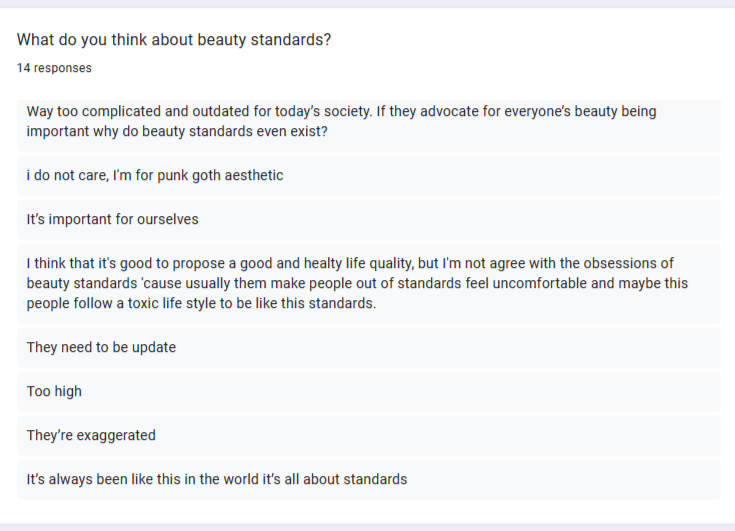
“There is an unreachable idea of ‘perfection’ out there,” is one of the responses to a poll made a few days ago, following the other responses: “There are too many standards out there,” and “Perfection does not exist.”
The poll’s findings revealed that a substantial majority of participants, 88.9%, have felt uncomfortable with their bodies at least once in their lifetimes.
This demonstrates the prevalence of body image disorders among people.
Notably, of every participant in the poll,100% reported having a social networking platform account.
Within this group, 66.7% actively prefer to engage with pages that share healthy food recipes and diet suggestions. In addition, 33.3% of the participants have been diagnosed with a food disorder.
“I wasn’t achieving what I was trying to achieve, and I was in the environment that I wanted to so I think everything kind of like put me into this terrible state of mind, said Chiara Paludetto.
“I think social media did not help that time.” The environment has an impact on making you more vulnerable, she added.
Isolation during the pandemic made it even easier for individuals to spend hours scrolling through social media, further exacerbating feelings of loneliness, inadequacy, and vulnerability.
In fact, Samantha said, she has noticed many cases of individuals that are struggling with high levels of anxiety, and depression, which make people much more vulnerable.
The NHS states that during the COVID-19 pandemic, cases struggling with eating disorders has increased by 15.3%, with most of them diagnosed with anorexia nervosa.
An healthy way to use social media
“My sister has been diagnosed with anorexia, and she tends to disengage from those specific aspects of media; it can be difficult, but let’s say when pictures come on your feed specifics, just do not click on the photo; if you do not click on the photos, it does not come again in your feed,” said Samantha.
“Once you are in there, you are allowing yourself to be a target for that kind of information because is so widespread now.”
The influence of social media on food disorders is a complex issue that requires our attention. While it can perpetuate harmful narratives and trigger negative behaviours, social media platforms also possess the potential to create positive change.
Recognising the impact of curated content, disengaging sensible content, and obsessive content about body and beauty, supporting body positivity initiatives, and promoting responsible use of social media are essential steps toward mitigating the detrimental effects on individuals’ mental health.
By collectively working towards a more inclusive and supportive online culture, we can empower individuals to cultivate a healthy relationship with food, their bodies, and social media.
Leave a Reply