
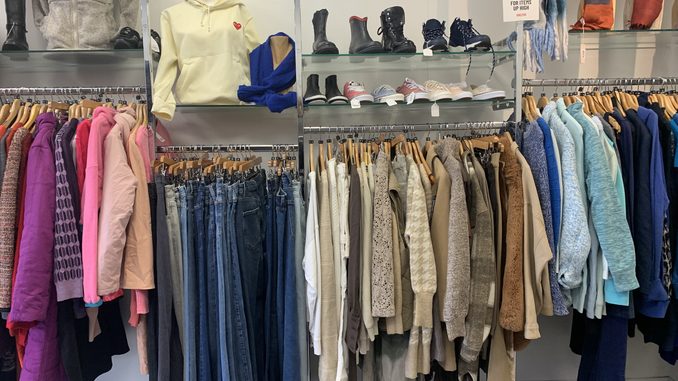
Image credit by Lubna Amour
Words by Lubna Amour
The traditional British charity shop, once a dusty haven for bargain hunters and eccentric collectors, is facing an identity crisis.
As the secondhand market expands into a multi-billion-pound global industry – driven by digital platforms like Vinted and Depop. However, everyday shoppers are discovering that the “gentrification” of thrifting has come with a severe side effect: staggering price inflation on the racks.
While UK spending on secondhand clothing has quadrupled over the past decade to £8.8 billion a year, the bricks-and-mortar sector is under immense pressure. Instead of a golden age, industry titans are grappling with plummeting profits – Oxfam’s retail profits dropped 23% this past year, and the British Heart Foundation has announced plans to shutter 150 stores.
However, while backrooms are emptier, shop floors are busier – though the faces looking at the racks have fundamentally changed. The severe cost-of-living crisis has pushed middle-income shoppers through their doors out of financial necessity.
Shop manager of Shelter Charity, Lisinia Valez highlighted this stark contrast in high street affordability. “We have lower prices,” Valez explained. “It’s hard nowadays to go to the high street where a jumper would cost £80 while here you can get it for £8 or £10”
The immediate hurdle facing these shops often comes down to manpower, though experiences on the high street vary wildly.
While one shop struggled immensely with a post-pandemic volunteer shortage, Martin Wearmouth, manager of St Vincent’s charity shop reported a completely stable environment, noting “no difference” when asked if it had become harder to recruit or retain volunteers since the lockdowns.
Yet, as mid-tier high street pricing skyrockets, charity shops are simultaneously fighting an influx of cheap, fast fashion. Wearmouth noted a clear pattern in their intake, stating, “We get a lot of high street stuff from the mid-range, such as Primark.”
This reflects a broader industry headache: an avalanche of lower-quality items entering the donation stream, making it harder for shops to curate the higher-value items that yield strong profit margins.
Simultaneously, a younger, trend-driven demographic has flooded the market. Driven by climate anxiety and a desire for unique style, Gen Z and millennial shoppers are coming in much more frequently, viewing charity shops through the lens of curation rather than charity.
As charity shops navigate this landscape, they find themselves caught in a paradox. Secondhand fashion has never been more popular, but the traditional, community-focused charity shop has never had to fight harder to retain its soul on the modern high street.
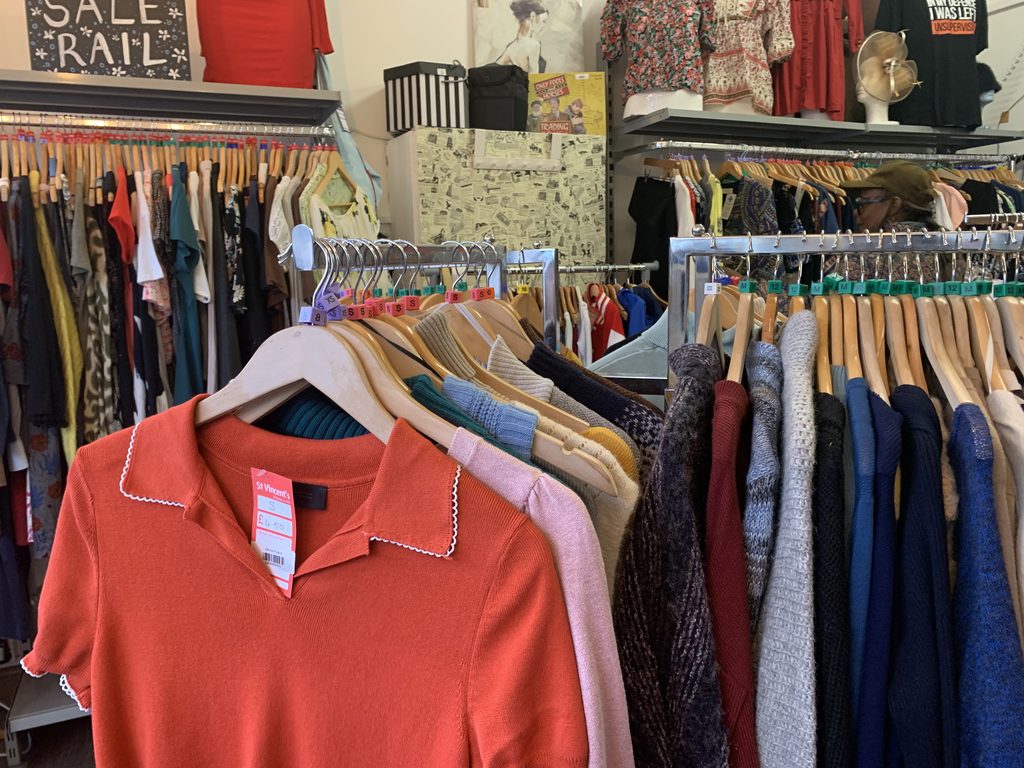
Image credit by Lubna Amour
Leave a Reply