
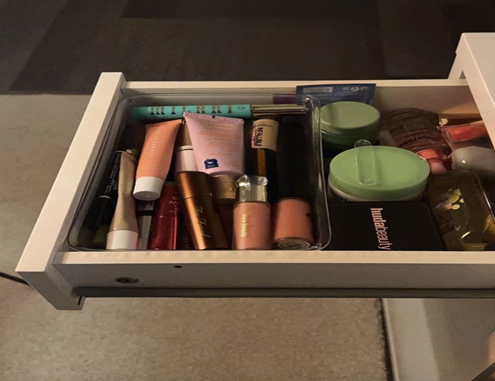
A selection of makeup products arranged in a drawer, highlighting the tools often associated with beauty standards and self-presentation. Image by Mariem Abada
By Mariem Abada
The clean girl aesthetic has been a growing trend all over TikTok and Instagram, from sleek, bun hair and gold necklaces to flawless skin and almost no makeup. Although the trend is generally said to be easy and natural and is growing in popularity among younger girls, some may disagree, arguing that it is a false beauty standard and has increased expectations to always be put together.
Social media has always been central within the beauty scene. But trends are moving at a faster pace than ever before. As perfectly picked out routines, skin care lines and lifestyle posts are constantly cropping up online, many young women are wondering whether it’s empowerment or just another unattainable expectation that’s being touted as self-care.
Typically linked to influencers and celebrities, the trend frequently represents shiny skin, costly skincare items and a polished general look. The beauty of it is seen as a motivator or inspiration for some, while others feel it promotes comparison and perfectionism.
Social media is out of reach of many young girls in London; they cannot avoid it on the issue of beauty standards. Social media websites like TikTok and Instagram constantly use users with curated images and trends, making it hard to avoid.
Young women discuss whether social media has changed beauty standards and increased pressure surrounding appearance. Video by Mariem Abada
Gerda Krit, a 21-year-old student in London, believes social media has influenced the beauty standards of young people and set a standard that previous generations probably didn’t face as drastically.
‘Definitely,’ she said. ‘I believe that people who have grown up in the current digital age have unrealistic expectations of women on social media due to the explore to different looks and ‘ideal looks’ that are not experienced by people of previous generations.’
The constant exposure to influencers and idealised images online can make it hard not to compare. Apps like TikTok and Instagram constantly expose users to idealised beauty content.
She admits she does not feel pressured to be flawless all the time, but there are times when she feels the pressure to be perfect socially.
‘Sometimes, if I know I am going out to be in an environment for a prolonged period and around others, I like to look ‘put together’, but not always pressure,’ she explained.
Simple and organic?
The clean girl trend is often portrayed as simple and organic, but many girls disagree and think that it takes a lot of time and money to maintain it.
From skincare routines to gym memberships and beauty treatments, many young women feel pressure to constantly improve their appearance to keep up with trends.
‘It’s probably quite a lot, she said. ‘Trying to achieve a certain look takes more time and money than people realise.’
While the trend can be seen as a form of empowerment and confidence, Gerda believes that confidence comes from self-acceptance rather than following a certain aesthetic.
‘Probably more unrealistic,’ she said. ‘Empowerment would come more from people accepting and appreciating their own looks and aesthetic rather than a goal look or ideal for everyone to achieve.’
Savannah Lewis, a 23-year-old pharmacist, feels that social media has brought about an unhealthy beauty standard for young women as well.
‘Yes, ‘ she said. ‘I believe that social media has set a very unhealthy and unrealistic beauty standard.’
Savannah admitted she often feels pressure and puts herself together, and admits that social media does impact her less as she gets older, but also feels that trends in beauty online still impact many young women today.
‘Not anymore, as I’ve gotten older,’ she said, ‘it affects me less’ .
In the world of the internet, the clean girl look could be easy, but Savannah states that upkeep and financial investment are significant for the look.
‘It’s up to you how far you want to go to get the desired look, but it’s not a lot of time and a lot of money.’
Savannah thinks the trend gets ‘out of hand’ when everyone is expected to look alike. ‘Unrealistic because all people are beautiful in their own way,’ she said, ‘as humans we are never designed to look the same’.
Social media has become a daily routine to many lives of many young women and has created an atmosphere of self-care and perfectionism. Beauty trends often come across in online media as a lifestyle and not just a onetime effect people are always bombarded with pictures and routines that they feel they must emulate.
Appearance and identity
From skin care to fashion, cosmetic procedures are all tired to the theme of appearance and confidence and identity, online.
A range of skincare products laid out, showing the growing emphasis on skincare routines within modern beauty culture.
Neire Hamdouni, owner of a beauty salon, feels that social media has put a lot of pressure on young women to look a certain way.
‘Absolutely,’ she said. ‘I believe that girls are afraid of being rejected and don’t want to stand out.’
Neire explained that insecurities among young women have increasingly focused on facial features and hair rather than body image alone.
‘Your face and hair are more of an insecurity than the body, she said. She feels that beauty ideals have become more unattainable because a lot of youths find them on social media and compare themselves with such photos.
‘Yes, they’re comparing themselves to pictures of perfection, which were adapted by AI,’ she replied. Clients often talk about pressure around beauty treatments and the trends online,’ Neire says.
‘Yes,’ she said. ‘Lip fillers, BBL and hair extensions, especially.’
Neire further adds that the use of filters and edited images is having a negative impact on confidence in the real world.
‘They impact on all aspects of real life,’ she explains. ‘Girls are hating themselves for having pores, cellulite and frizz in their hair. They don’t smile in pictures as they all seem to think that, like an AI, is normal.’
Confidence or insecurity?
The beauty industry breeds confidence and self-care, but also can instil insecurities in people, Neire says.
‘Yes, there’s more pressure in the industry than there is in the solutions, she said. ‘They make products and campaigns which help girls to concentrate on their flaws.’
But Neire says that even with all this, young women should avoid comparing themselves online and strive to be more authentic and accepting of themselves.
‘It is all fake, filtered and altered,’ she said. ‘Be you, smile and enjoy your life, unhappiness and insecurity should not be a trend.’
Beauty salon owner Neire Hamdouni discusses how social media beauty trends are affecting confidence among young women.
With beauty trends continuing to hold sway on social media, many young girls are now starting to wonder about the pressure set by the unrealistic yardstick that they have on the internet. The clean girl look can be seen as empowering by some, but perfectionistic and comparison-driven by others.
Confidence now means more for many young women to be unique and real than to conform to internet fashions. The notion of perfection equating beauty has been challenged in many ways as discussions about perfection increase on the internet.
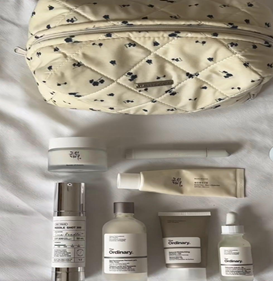
A range of skincare products shows the growing emphasis on skincare routines with modern beauty culture. Photo my Mariem Abada
Leave a Reply