

By Alex Gageanu and Jerzy Nicolas
London’s Design Museum has showcased exhibitions that have explored the intersection of fashion and sustainability.
Visitors have the opportunity to view garments made by designers who prioritise sustainability. Showcased work, including the use of upcycled materials and zero-waste techniques, highlights that fashion can be both stylish and environmentally conscious.
The Design Museum encourages visitors to rethink their relationship with fashion by displaying how clothes are made, promoting sustainable choices. Exhibitions feature interactive displays, workshops, and talks by industry experts, providing visitors with a deeper understanding of the impact of fashion on the environment.
Journalism student Nicky Detail said that sustainability is not always at the forefront of everyone’s agenda, and that they prioritize their own needs. “Sustainability in fashion is about focusing on how the impact on individuals is measured, rather than looking at statistics,” he said.
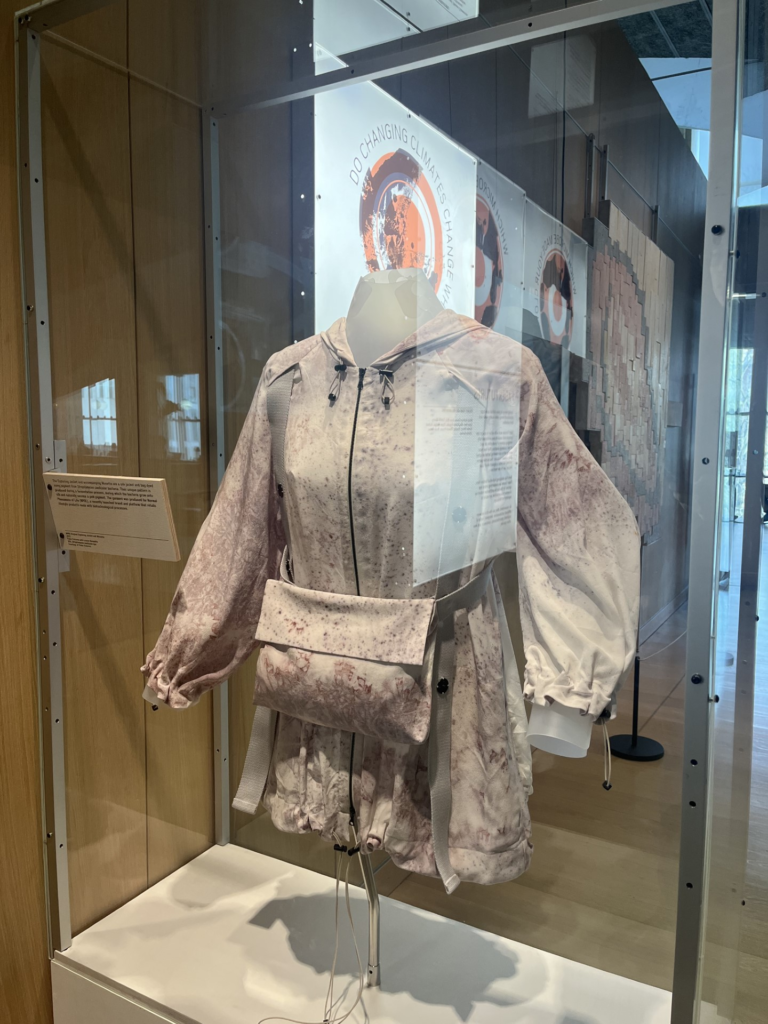
Photo by Alex Gageanu
Use of materials
The jacket shown above was made by a project team – known as ‘Faber Futures’ – and collaborators who use nature as inspiration for their design ideas, and carry out research for less environmentally damaging processes. They aim for fashion industries to evolve from extraction of waste and instead resort to regenerative bio design.
Dyeing fabrics for clothes uses large amounts of energy, contributing to water and land pollution.
The silk jacket has been bag dyed from Streptomyces Coelicolor bacteria which shows a pattern produced during a fermentation process, during which the bacteria grows onto the silk, creating a natural pink pigment.
As researchers and collaborators, they consider the choices made by designers, material suppliers, manufacturers, and consumers, allowing them to carry out eco-friendly practices.
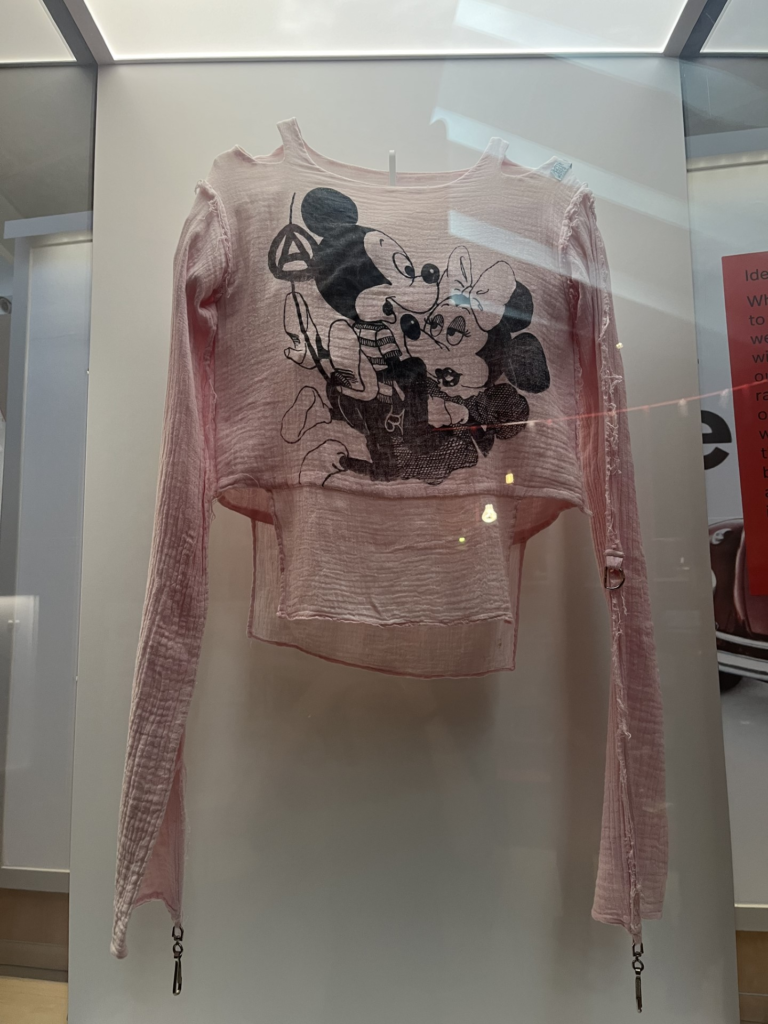
Photo by Jerzy Nicolas
Vivienne Westwood and Malcolm McLaren re-imagined fashion and identity by deconstructing them both.
Their anarchic style was designed to deliberately shock people, and quickly became a uniform for punks across the UK.
They didn’t come cheap, yet Westwood’s work provided punks with an identity and a toolbox of ideas they could use to improvise their own looks.
Westwood is known for her inventive silhouettes and historical dress, and the distinctive way in which she manipulates fabrics to create unusual tailoring and structures.
Challenging the norms in fashion not only creates new trends, but encourages the reuse of materials or damaged garments.
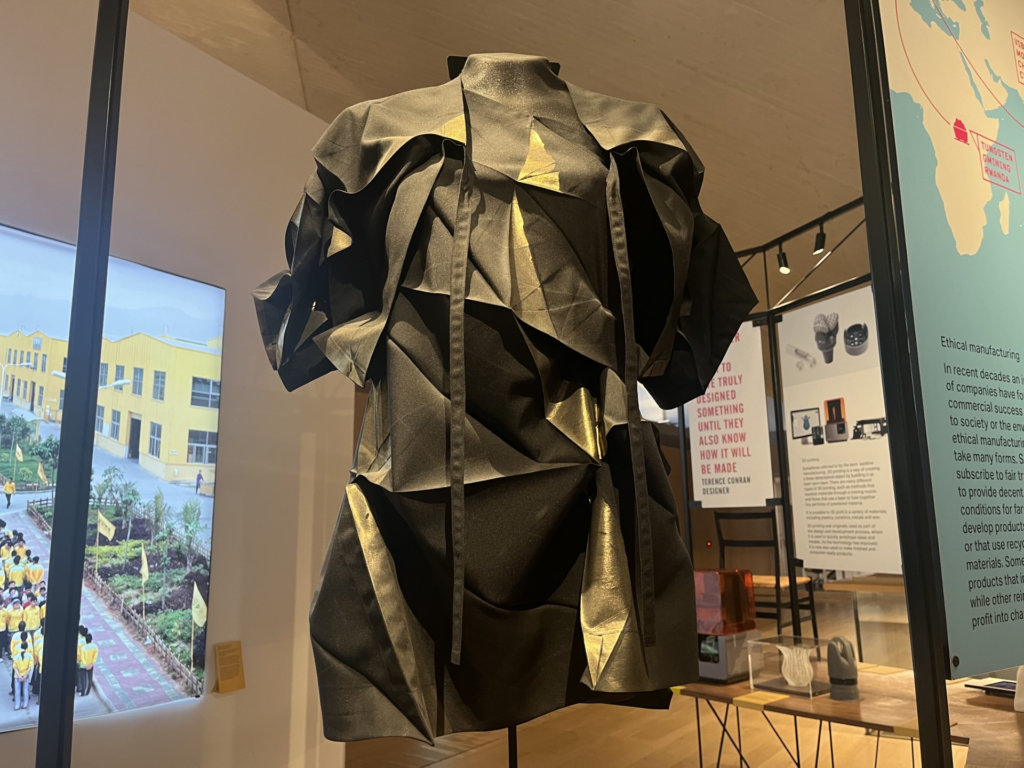
Photo by Alex Gageanu
Ready-to-wear
It is a common term used for fashion, but is it always sustainable? The garment shown above was created as part of Issey Miyake’s ready-to-wear 132 5. collection.
Issey Miyake’s Reality Lab created this on a computer programme by constructing three dimensional shapes from a single sheet of material, instead of sewing several pieces of fabric together.
Showcasing that technology does help reduce waste material, however electricity and energy used may contribute to air pollution, which is a concern today.
This collection used radical forms of recycling by employing fabric woven from threads produced from melted plastic bottles, ensuring sustainability.
Leave a Reply