

By Lilly Fryer
Baby, it’s hot outside – and many people are taking advantage of the scorching temperatures to top up their tans.
Sunbeds and the sun are considered a type one carcinogen, meaning that they put people at a high risk for a cause of cancer.
Too much exposure to UV radiation is the leading cause of skin cancer in the UK, and being safe in the sun and avoiding sunbeds could prevent up to 9 in 10 melanoma cases.
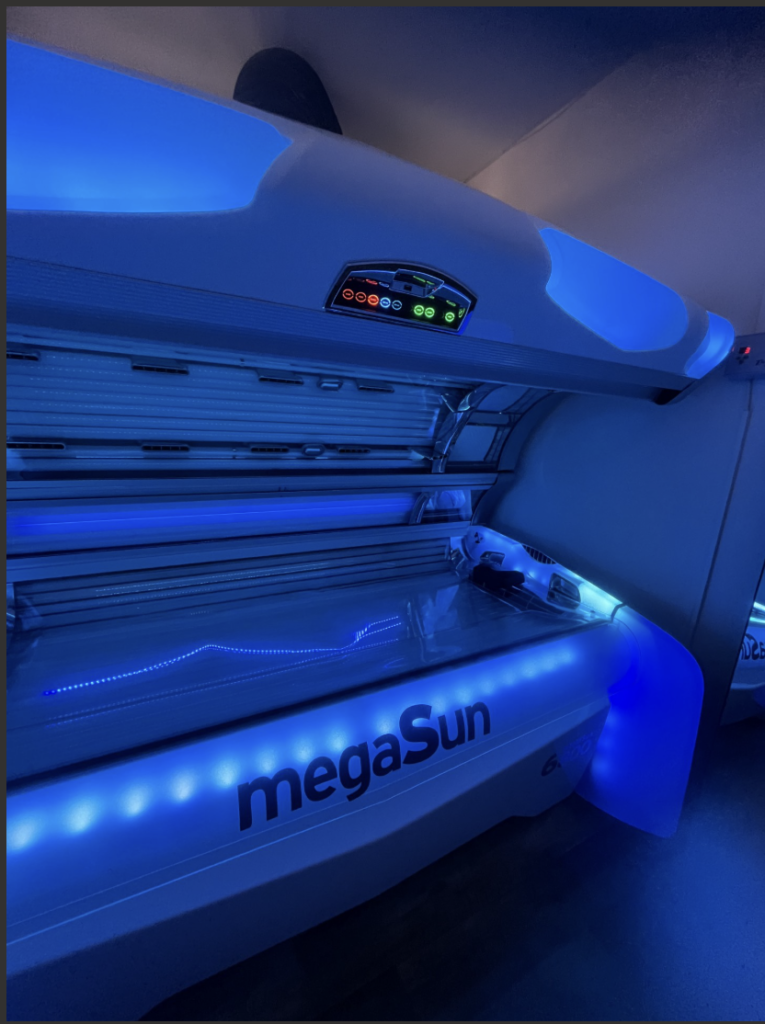
Studies show that using a sunbed before the age of 35 can increase skin cancer risk by 59%. An indoor tanning bed is designed to emit artificial ultraviolet radiation to trigger melanin production in the ski, penetrating the skin a lot deeper and at faster rates than lying out in the sun.
People admit to using them to create a base layer before their holiday, or in fair-skinned cases, to prevent burning. In some cases, people may also use sunbeds to temporarily help skin conditions such as acne or eczema.
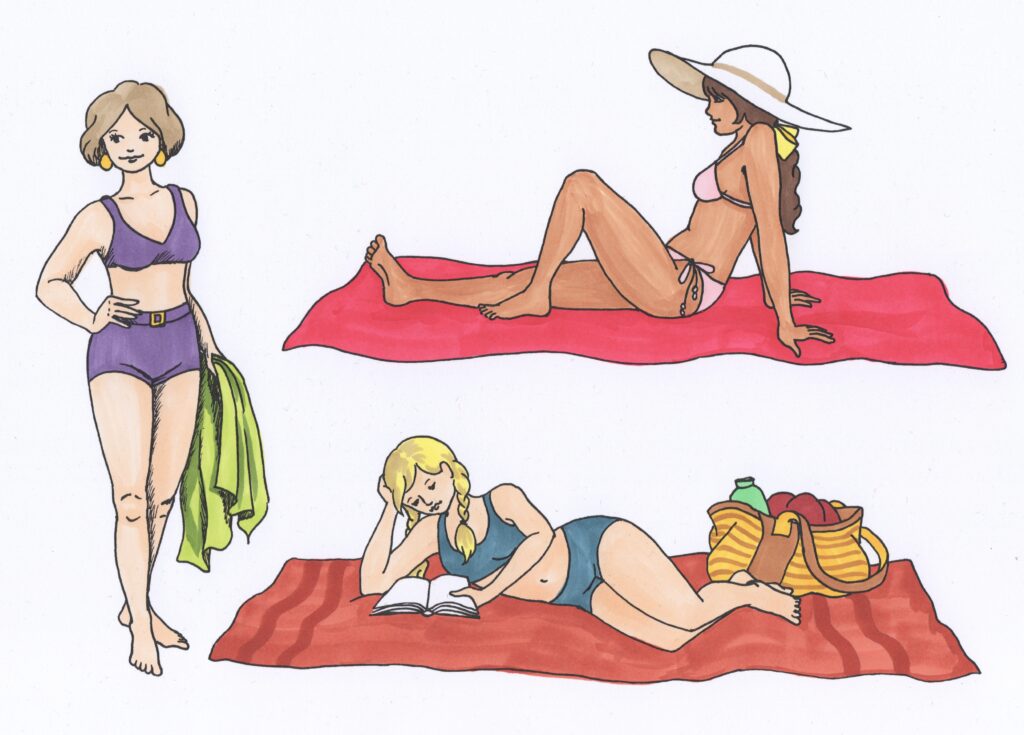
Not only does UV exposure increase the risk of skin cancer, but it can also accelerate skin ageing, and it may account for around 80% of visible ageing. That means it’s essential to wear a high-factor SPF to prevent this.
Sunbed use, and excessive UV exposure, is not a new thing, with sunbeds being very popular dating back to the ’70’s. With advanced research and knowledge, doctors and scientists are now able to better determine and understand the damage that can be caused and the direct links to skin cancer, with melanoma being the worst form.
In the past few years, there has also been a production of new unregulated products that have not been approved by health authorities to help achieve a tan, such as nasal tanners that contain synthetic hormones such as melanotan I and II.
By Lilly Fryer
Lack of regulation
Sunbeds and irresponsible UV exposure goes back to a time when nobody was the none the wiser. Now, they are heavily used and regulated as a beauty hack to speed up the tanning process.
It is interesting to reflect on the lack of knowledge around UV exposure decades ago and how far we have come in understanding the negative effects.
Sylvia Hollis, 79, stated that when she was younger, “most people would sunbathe on the beach using olive oil and vinegar.
“Sunbeds became very popular in homes in the ’70’s, we had one that went over our bed.”
This probably explains why there has been such a rise of knowledge in determining why melanoma cases have risen. A lentigo maligna can take decades to develop, which could explain why people who used sunbeds in the ’60/s and ’70’s are now developing skin issues.
Split opinions
There is a vast split in opinion of people who are for and against sunbeds. Perhaps half desire a dark natural tan, while half would not take the risk. However, with sun and sunbed exposure so normalised, it is easy to understand why people do it.
Sophie Read, 40, who works in a tanning salon, advised that she goes on a sunbed “twice, maybe three times a week” and that she uses sunbeds “before working in the salon, and would continue to use them after”.
Some argue that sunbeds do have benefits, as they aid against winter depression, providing some sort of sunlight substitute when it is lacking.
Legal sunbed age?
I was once an amid sunbed user, visiting the salon, sometimes five times a week. This was when I had just turned 18 and did not know any wiser, which raises the concern: should the legal minimum age to use a sunbed be increased?
I recently took a trip back to the sunbed shop to gather some supportive research on why people continue to use indoor tanning. Throughout my process, it was quick, easy, and I must admit, a lovely experience. By the end, I did feel happier and slightly darker.
By Lilly Fryer
It made me question if that is also the reason for the popularity of the beds, although the tan is the result, do people go for the overall experience? From what I could gather, it is a complete endorphin release – there is music playing through speakers, and mist being sprayed on you throughout that cools you down.
Ultimately, however, what needs to be remembered is that it has now been proven that there is no safe way to tan from UV exposure, and it will damage the skin.
There are precautions that can be taken to help be safer when exposed.
How to stay safe, from the sun or a tanning bed
- Familiarise yourself with your skin type using the Fitzpatrick Skin-Type Chart to determine how many minutes you should use a tanning bed – if at all.
- Type 1 skin types should not use sunbeds.
- Wear UV blocking eyewear – often offered in tanning salons, or sunglasses if in the sun.
- If using sunbeds as a beginner, start with a low time, 2-5 depending on skin type.
- Allow 24-48 hours between tanning sessions
- Wear appropriate sun lotion if outdoors.
- Wear SPF-protectant lip balm
- Regularly check your skin for new mole or lesions or any changes to existing ones.
- Always wear SPF on your face, even throughout winter, to protect and defend against quick ageing.
Check out further advice here.
Check your skin
In recent years, with the knowledge of sun exposure being spread far wider and talked about more, it is leading to younger people being conscious about being safe with UV exposure and the importance of checking their skin.
Mia Preston, 22, who recently had to visit the dermatologist to undergo the procedure of getting a mole removed, said that she “would use sunbeds a lot during the summer time”. She added that she had an “uncomfortable” experience of getting a mole removed, and how it is not worth it due to having to have an “anaesthetic injection that caused a bad pressure feeling”.
With social media and especially TikTok, awareness is now constantly being raised on these issues. Young people especially are sharing their stories of skin cancer scares and how they have spent hundreds of pounds on skincare products to reverse skin damage caused by sun exposure.
It is now advised how important it is to wear SPF all year round to prevent signs of ageing and protect your skin.
SPF stands for sun protection factor with different numbers of UV protection:
* SPF 15: 93% of UVB rays
- SPF 30: 97% of UVB rays
- SPF 50: 98% of UVB rays
SPF works by measuring the time it takes for redness (erythema) to appear on unprotected skin exposed to a specific dose of UV rays.
https://www.nivea.co.uk/advice/sun/what-is-spf?utm_source_platform=GoogleAds#what-is-spf
It is always advised to use a separate face protector.
Nivea offers full advice on how best to use and apply sunscreen here
Overall, it is clear to see the desire to use sunbeds and sit in the sun, but it also needs to be remembered that there are risks associated with UV exposure. While education and awareness have come far in the last 50 years, indoor tanning and extensive sun exposure is still normalised.
It is essential that if you are going to take part in tanning, while it has been proven that there is no safe way to obtain a real tan, that you ensure you are taking the best precautions and educate yourself fully on how to stay safe in the sun.
By Lilly Fryer
Leave a Reply