
By Gabriela Yorgova
Fashion is an industry that has a sizable contribution to pollution levels in certain areas, the population and nature. More and more people adopt sustainable practices in everyday routines to help the planet and reduce their carbon footprint.
Consumers’ shopping habits change due to financial matters, such as the cost-of-living crisis, and trends – minimalism and eco-friendly choices. It is the companies’ responsibility to watch the changing purchasing behaviours and adapt. One of the important problems is the sustainability practices in the fashion industry.
Understanding of “sustainable fashion”
In a few words, “fast fashion” is the opposite of “sustainable fashion”. But is it that simple to explain and visualise?
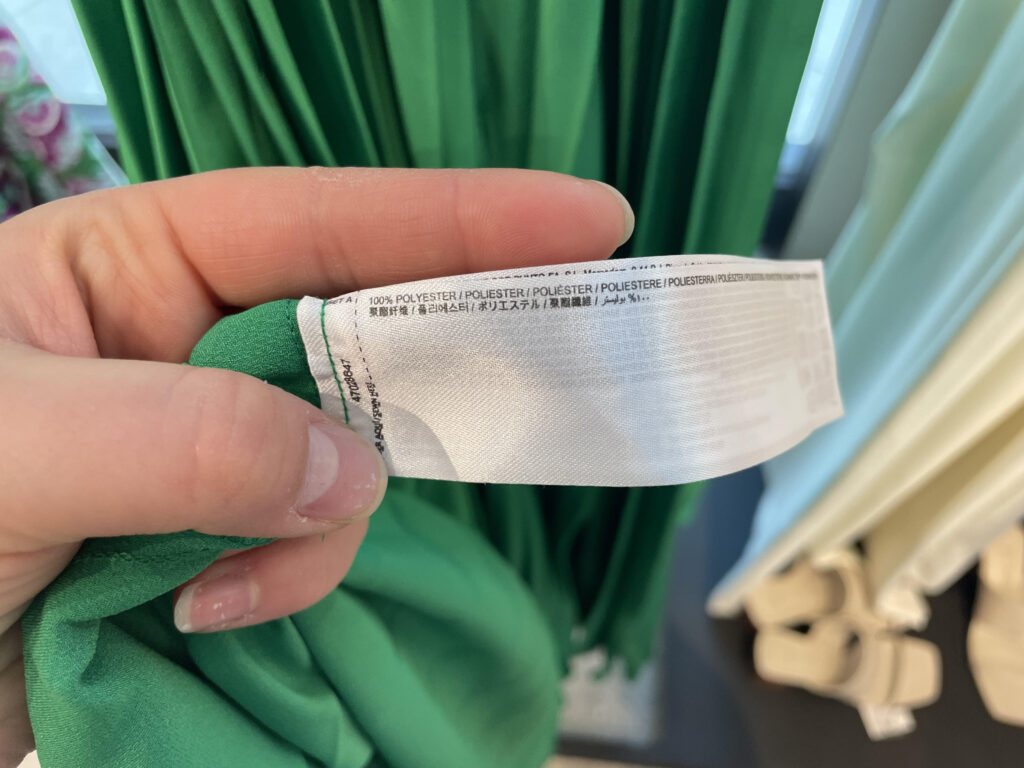
Companies produce way more than they sell, which is one of the factors that affect waste. Fabrics, such as polyester – a material that requires a long time to linger in the environment, are binned in landfills. The fashion industry emits greenhouse gases throughout the whole process from sourcing and production to the end consumer. Dangerous chemicals used in textile factories are worsening people’s health and nature.
One way to reduce the waste from this industry is to buy less and bin fewer garments. A report published in 2022 suggested that a sufficient wardrobe needs only 74 items, or 20 outfits. According to researchers from the Hot and Cool Institute, the fashion industry would have to reduce its emissions to 1.1 billion tonnes of carbon dioxide equivalent (CO2e) to meet the Paris Agreement target for limiting the rise of the global temperature under 1.5 degrees Centigrade.
Many companies might say they produce “sustainably-made clothing” but promises and slogans are not solutions to the problem that affects the population in the world.
Jasmine Wynants, a sustainability expert, told FashionUnited: “Where can I buy sustainable fashion? That is a question I regularly get from family and friends.”
To avoid marketing deceiving techniques, customers can look for FairTrade Certified and EcoCert Cosmos emblems. Otherwise, it might be the case of brands stating they produce sustainable clothing but using vague words.
Companies such as GoodFabric help designers, factories and others source the best quality fabrics for the price. It is becoming more and more common for clothing brands to shift their view to a different perspective due to the rise of sustainable fashion.
Polina Karbanova, owner of sustainable fabric store GoodFabric, said: “I work with a number of small sustainable fashion brands, helping them source sustainable fabrics… The beauty of sustainable fabrics is they are not only better for the planet but also people, so everyone in the supply chain will get paid a living wage.”
Predictions of the fashion industry
Brands are adopting new ways of sourcing materials and producing new garments. More and more recycle and reuse old fabrics and customers seem to like it. It is a trend that is likely to be relevant for many years from now on.
Michaela Vogl, Marketing Content specialist, has noted some trends in a report: “Sustainability becomes harder to prioritise.” Her prediction for the fashion industry is that consumers will buy more second-hand clothing, but they will still prefer convenience.
The designer Lesley Hampton told FASHION Magazine: “Fashion evolves with human needs, and by 2050, the need will surely be to consume less and respect more – to value the minds and hands that make the garments, to wear that which doesn’t harm the planet…”
Karbanova said: “I have seen such a huge rise in the order quantity of fabrics in the last two years which can only be proof that sustainable fashion is on the rise.”
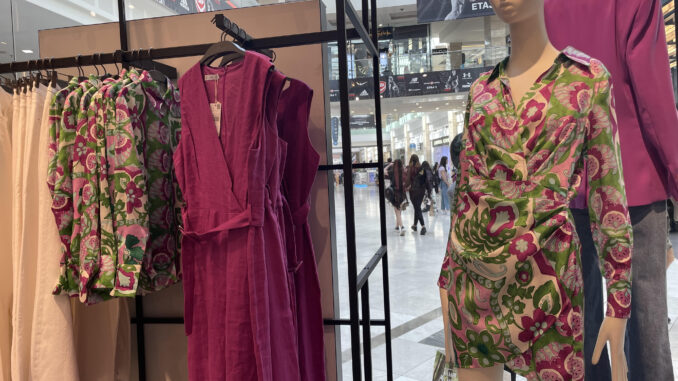
Fast-fashion companies are notorious for the waste they create and stimulate. Some of them have also created sustainable lines so that they follow the trend. Mango is one of the examples – they use better quality and more natural materials. However, the way they source and repurpose waste is not under the spotlight but is in the interest of those who look deep into sustainability practices. Cotton and linen are some of the materials that Mango uses in their collection “Committed”.

Annelie Helgelin, PR specialist, said that there were almost 53 million online mentions related to fashion and sustainability last year, which is one of the reasons why she is positive about the future of this trend. She said: “It looks like sustainability and ethical fashion will be more important than ever before in 2023 if the upward trend continues.”
Why we should be more conscious
The fashion industry has an impact on climate change – the more we buy, the more clothes companies will produce.
Some of us buy considerably fewer clothes than we used to a few years ago. The cost-of-living crisis has influenced our purchasing decision for every necessity or splurge.
During the cycle of wearing and discarding clothes, there is also a moment when we have to buy new clothing. Items that last and are well-maintained will last longer; however, buying clothing will lead to the production of new pieces for which the earth is affected if we discard them quickly.
Karbonova added: “From my own perspective – I always look at fibres. Avoid polyester and choose natural fibres such as cotton and linen. They are not only better for the planet, but also for our own health.”
In a survey conducted among fashion followers, they were asked to share their purchasing habits. Less than 8% of the respondents said they do not take any actions to ensure they make sustainable choices. One of the fashion followers said: “It seems like brands are becoming self-conscious of the harm they cause to the planet, but to be honest I don’t expect they’ll switch to more sustainable fabrics anytime soon.”

Price tag
Sustainable fashion labels are often associated with high-priced garments that the majority of the population cannot afford. It is a misconception that paying more will ensure better quality and long-lasting products.
The high price of a garment does not mean that the fabric is expensive – but it might be the case of workers being paid fairly for their job and time. Another factor could be the name of the brand that affects the price tag. Customers can do their research and decide whether to support a company by paying the price.
The uncomfortable topic, for some of us, considers our shopping habits and personal choices. New standards and regulations are introduced in the fashion industry to control the transparency of the market and ease our more conscious purchases.
“Sustainable fabrics are definitely more expensive,” said Polina from GoodFabric. “The facilities, the water treatments, the chemicals used… all of this will add up and make sustainable fabrics more expensive.”
Consumers might find it hard to adopt different practices in their everyday routines to ensure they have a more sustainable lifestyle. However, companies should aim to make choices that will benefit the planet in the long term. The demand for sustainable products is growing and supporting brands who make any steps to improve their practices will stimulate this growth.
Leave a Reply