
By Mia Aitken, Fiona Vitija and Evie Smith-Adams
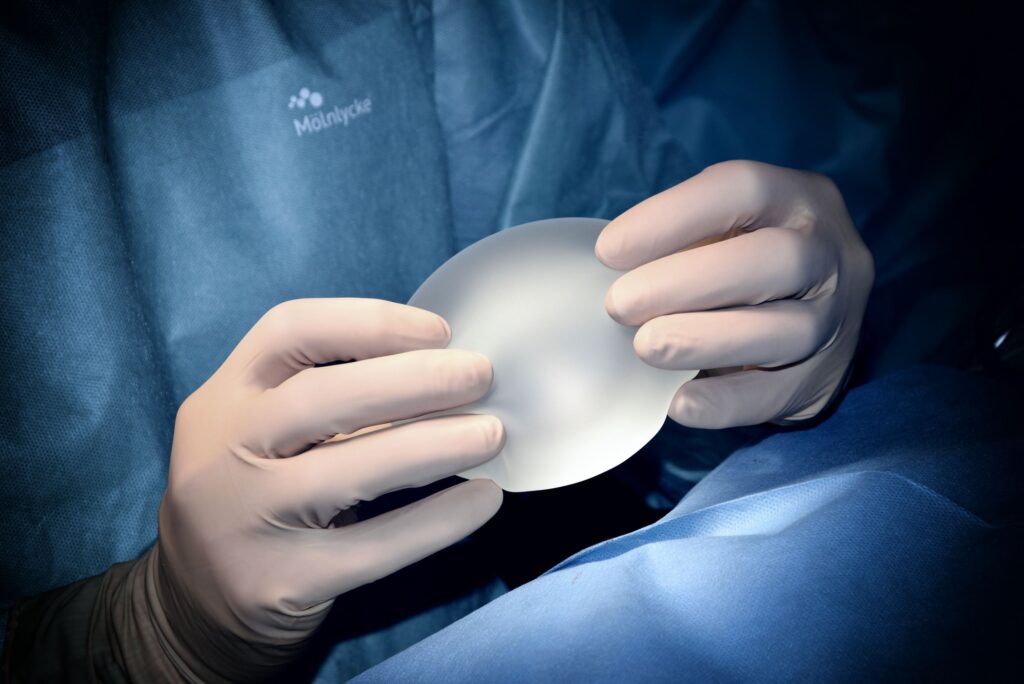
Social media influencer Madison Knowles had cosmetic breast enlargement surgery in 2019, going from a size 32B to a 32F.
“It boosted my confidence massively and helped me feel more like myself,” said the 24-year-old from London, Shorditch.
But in the past three years since Knowles had her surgery, she has started to suffer some regrets. A recent trend towards a more “natural” look has made her doubt whether her larger breasts are really what she wants, as she feels her current body shape no longer suits the current ideal.
“Although it made me feel more confident, I am considering having a breast reduction,” she said.” She continued by saying “It’s like I know I have done it once so what’s stopping me from going under the knife again? I know what to expect and if it’ll make me happy again like the first time why not!”
Differing fashion trends
Fashion trends come and fashion trends go. In the fashion industry a constant change in beauty standards is taken for granted, and as a result society’s perspective on what is desirable changes every season.
In the ‘90s and early 2000s, for example, we saw the rise of “heroin chic” and an obsession over being a Size 0. Not only models but ordinary members of the public – both men and women – began to take drastic measures in hopes of conforming to these beauty standards.
But what makes the past different from the present, as far as beauty standards are concerned, is the advent of social media. Within the last 13 years there has been an extreme change in the way we communicate with each other, and the exposure we have to other people’s opinions and views.
We now have the ability to reach people all across the globe at the click of a button – but is that good or bad?
The new wave of social media
Although social media does have some positives there is no doubt it has negatives as well, such as the effect on people’s self-image and self-esteem. The plastic and Reconstructive Surgery Global Open found that out of 816 completed questionnaires on plastic surgery 48.5%, reported that they felt influenced by social media.
Social media influencers, who only a decade ago didn’t really exist, are now shooting to fame with their online presence, and influencing fashion more than ever before – just think of the Kardashians.
This may explain the extreme shift within the last 10 years on the ideal beauty standard. Size 0 is now out – bigger breasts, a smaller waist, and wider hips – the hourglass figure or “Kardashian body” – are what women around the world are striving to attain.
The Kardashian family has never confirmed that they went under the knife for their looks, but the drastic change to their appearance hints otherwise. Their silence on the topic only prolongs the issue of creating false beauty standards that are impossible to achieve naturally.
The desire for the Kardashian look has led to a rise in plastic surgery such as the Brazilian Butt Lift (BBL), facial reconstruction, and breast enlargement, with over 1.6 million procedures being carried out in 2020 alone, according to research expert Frédéric Michas.
The dysmorphia crisis
In 2017, plastic surgeons saw the phenomenon known as “Snapchat dysmorphia”, which came as a result of the photo-sharing app creating filters that change your appearance by enhancing your lips, clearing your skin, or even giving you ‘foxy eyes’ and higher cheekbones.
The American Academy of Facial Plastic and Reconstructive Surgery recorded that 55% of plastic surgeons saw patients who wished to undergo surgery to improve selfies and look like their filtered photos.
TikTok takes it to another level, naming their airbrushing technique “the beauty filter”, evoking that instant connection of porcelain skin being perfect, although it is unnatural for skin to be that flawless.
The Institute of Education (2013) carried out a systematic review of research into cosmetic procedures on the request of the Department of Health. In their research, they found that patients who had cosmetic surgery were found to be significantly more likely to suffer from psychological issues such as depression and in particular Body Dysmorphic Disorder (BDD).
Dr Jacob Sedgh, a facial plastic surgeon from California, spoke recently about the rise in plastic surgery.
“People have more time on their hands. They’re spending more time in front of the mirror or on themselves, so they’re becoming more critical,” he told the Guardian.
It comes as no shock that with the rise of plastic surgery comes the rise of doctors going into the job. In the past 10 years, the UK has seen a drastic rise in plastic surgeons. In 2010 it was recorded that there were only 450 however, by 2019 the number of surgeons rose to 1,077.
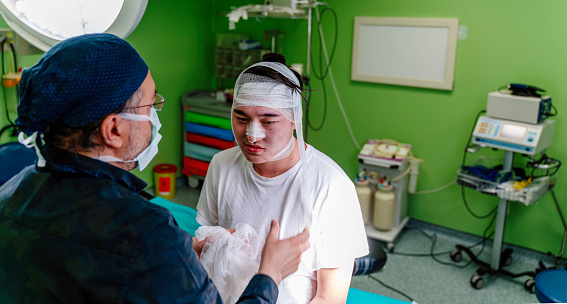
However, plastic surgery has not always been used by people to alter “small” issues to be deemed more admirable for society’s beauty standards. The rise and advancement of plastic surgery were actually because of World War One and Two, as a means of helping men who had lost their identity at war become themselves again. It allowed people to heal from traumatic events and regain their personal identity back.
Labourer Josh Bradshaw, 19, was told he needed nose reconstruction surgery due to an attack that resulted in his nose being disfigured. Not only did the incident affect his self-image as he “looks completely different” but it also affected his ability to breathe.
In this case, surgery is fully allowing him to regain power over his incident and would be helping with the body dysmorphia he gained because of the attack.
Leave a Reply