
By Aliyah Difia Rahma and Tehreem Zahra
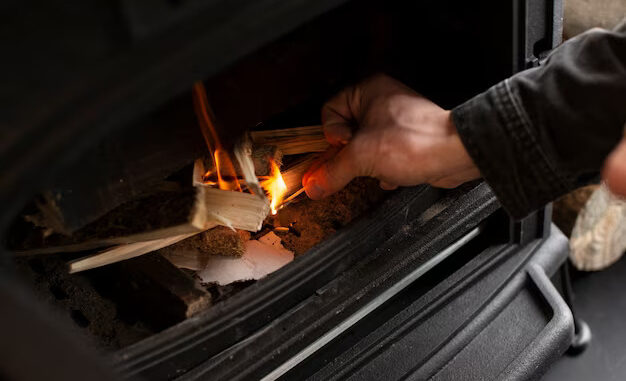
Wood burners are still around for citizens to use at home, whether it be for heating or just for how it looks.
Like any other item that is burned, wood burners are not the healthiest items to own at home. There are health implications and environmental concerns from the smoke.
According to the London Wood Burning Project, an initiative by the London Borough of Camden and Islington, smoke releases small particles which when inhaled could increase the risk of stroke, lung cancer or asthma. These particles are known as PM2.5 and travel through our bloodstream, which is how it affects not just the lungs but the entire body system.
Aside from PM2.5, the smoke also released carbon dioxide to the air, which is one of the biggest contributors of air pollution. Adding more reasons as to change or limit the use of wood burners in homes.
Wood – and coal – burning stoves “accounted for 38 per cent of particulate matter air pollution”, according to the Government’s Clean Air Strategy 2019, as reported by the HomeOwners Alliance. It said “that not all forms of domestic burning are equally polluting but that it depends on the appliance, such as stove or fireplace, how well it is used and maintained, and what fuels are burnt in it“.
“Government data published in 2022 significantly cut the estimated proportion of small particle pollution that comes from wood burners to 17% due to updated and more accurate wood fuel usage data for the domestic combustion sector,” it said.
The new regulations said all wood-burning stoves must meet new guidelines, which are called EcoDesign for Sustainable Products Regulation. This means that “the stove has been independently tested by an approved laboratory and meets requirements on air quality and particulates.
“Stoves are tested on seasonal efficiency (assessed over a year); levels of nitrogen oxides, carbon monoxide, particulate matter and organic gaseous compounds produced by burning fuel.
“An Ecodesign stove that’s properly installed and maintained and that uses good quality dry wood is a low carbon heating method using renewable and sustainable fuel”, according to the HomeOwners Alliance.
Better options
There are better options aside wood burning, which are more acceptable and common for heating or cooking. According to the Clean Air Hub, an organisation specialising in educating communities about air pollution, other alternatives such as gas or electricity are much cheaper to use for homes.
Shajjad Sajid, a 31-year-old student and resident of East London, said: “I don’t think burning good is good for the environment and for our health,” adding that we should search for “better options” instead of burning wood. Listen to what he has to say here:
Video by Tehreem Zahra
In addition, he stated that burning wood had long-term impacts on people’s lives, adding that “his grandparents faced the so many health issues like coughing and breathing problems and are still suffering from it”.
Video by Tehreem Zahra
A sales assistant from a wood burner store in Holloway Road believes that the reason people buy wood burners or fireplaces is because of how they look, rather than what they do.
This could be the first step to incorporating greener energy into our own living space.
Leave a Reply