
By Olivia Snaith-Cairns
In the UK, a woman is killed every three days due to domestic abuse. But it’s not just women who suffer. Over a 12-month period ending in March 2020, 2.3 million adults aged 16-74 became victims of domestic abuse, according to the Office for National Statistics. Those numbers include 1.6 million women and 757,000 men.
Domestic violence can have major impact on someone’s life. The abuse is not always straight-forward and can manifest itself in a range of different ways, from emotional and physical abuse to threats, terrorisation, harassment and stalking.
According to the National Centre for Domestic Abuse (NCDV), “a quarter of all domestic abuse crimes in 18/19 were committed against a male victim. In the same year, 16 men died at the hands of their partner or ex-partner compared with 80 women” in England and Wales.
While women suffer more from domestic abuse than men – with 85 percent of all victims being female – DV against men still exists. It is not, however, as well publicised, which results in men feeling like they cannot come forward as they don’t realise that support for them exists.
Many men also feel a stigma attached to DV against them, whether at the hands of a female or male partner, and as a result they end up feeling like they are the forgotten victims.
Lack of support
Support services for male victims of domestic abuse are not as advertised in the same way they are for women. During the pandemic, a campaign launched to help victims was aimed only at women. According to an investigation by Panorama, during the first seven weeks of lockdown two calls about domestic violence were made to police every minute.
According to statistics by the ManKind Initiative, which helps male DV victims, “in 2017/2018, nearly half of male victims fail to tell anyone they are a victim of domestic abuse (only 51% tell).” Men are three times less likely to tell anyone about their experience than woman, it says.

Mental abuse turns physical
To make matters worse, male abuse is often only in the press when there is a significant case, such as Alex Skeel.
Alex Skeel, 24, was starved, tortured and abused by his ex-girlfriend during their five-year relationship. Jordan Worth, whom he met in college, eventually became the first woman in the UK to be jailed for controlling and coercive behaviour.
Skeel started to speak out about his abuse to raise awareness of domestic abuse and encourage others to speak out. In an interview with BBC Three, he explained the the abuse began after the couple had been together three years, and that it “started with the smaller things’.
“Her telling me not to wear the colour grey or that she didn’t like my hairstyle – had turned into a nine-month campaign or of physical abuse. I was very scared of her.
“I wanted to impress her. But, in reality, she was moulding me into who she wanted me to be. It undermines your confidence. And you’re fighting a battle that you’ll never win. It’s so frustrating.”
Skeel said it took a year and a half for the mental abuse to turn physical. “It began when she started sleeping with a glass bottle next to her, she was accusing me of doing things with other girls, talking to them or messaging, which was completely untrue.”
The physical abuse included everything from pouring scalding water over him to slashing his body with knives. When he was finally rescued by emergency services, doctors said he was just 10 days away from death.
Skeel’s ex-girlfriend was sentenced to 7 ½ years in prison in April 2018, which she admitted ‘to controlling or coercive behaviour in an intimate relationship, wounding with intent and causing grievous bodily harm’, BBC Three reported.
Unaware that help is out there
Nicola Connolly, Hospital IDVA (Independent Domestic Violence Adviser), works with men who are admitted due to domestic violence. She explained that “between June 20-June 21 I saw 111 clients, five of which were men (less than 5%). In a general service, there is 7% of clients who were male for the same period.
“There are DV services that work with men and there is the Men’s Adviceline but the men who I have spoken to did not know that these services are around or that they help them. For example, our service is Wearside Women in Need – we tend to use WWiN to try and be more accessible to all genders and sexual orientation.
“With being the hospital IDVA we see patients when in hospital and for short to medium term support around safety. Help and support was accepted by all men involved this year especially in relation to support around housing, MARAC and safety.”
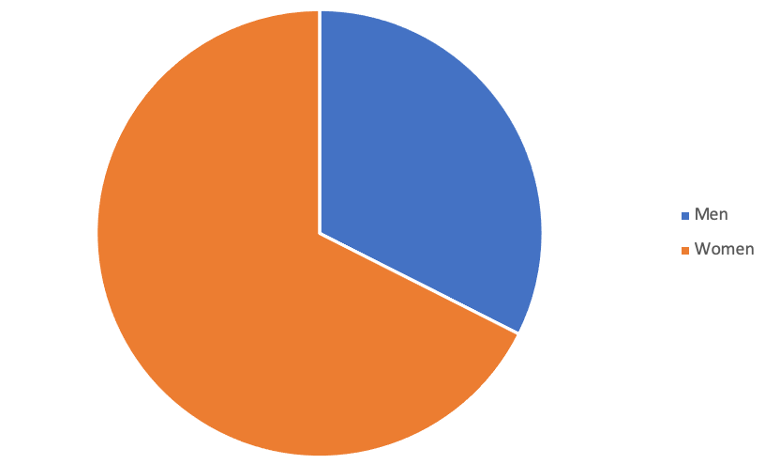
The statistics on ManKind show that ‘2.5% of men and 4.8% of women were victims of partner abuse in 2018/2019’:
There are signs of DV that you can spot, but it isn’t always that simple. The gov website has a page with further information on how to spot these signs.
LGBTQIA+ abuse
Domestic abuse in lesbian, bisexual, gay and transgender relationships is also a serious issue. According to End the Fear, ‘about 25% LGBT people suffer through violent or threatening relationships with partners or ex-partners’, these are the same statistics as in a domestic abuse against heterosexual women. Domestic abuse in same-sex relationships is also not reported or publicised as often, which needs to be changed.
Raising awareness about domestic violence is a factor that can help bring it to an end. There are different ways of raising awareness:
- Educating yourself with articles and videos
- Communicating with others
- Listening to victim’s stories and encouraging other victims to speak up
- Talking about the signs and how to spot DV
If you, or a person you know, are struggling or have struggled with domestic violence, there are a range of different support sites available. Below are some of these sites:
Leave a Reply