
By Simone Limbu, Sahra Sancar and David Pasia
Student Mental Health: Will we bounce back after Covid? This was the topic of a debate that was held at London Metropolitan University this evening with Journalism students, staff and guests.
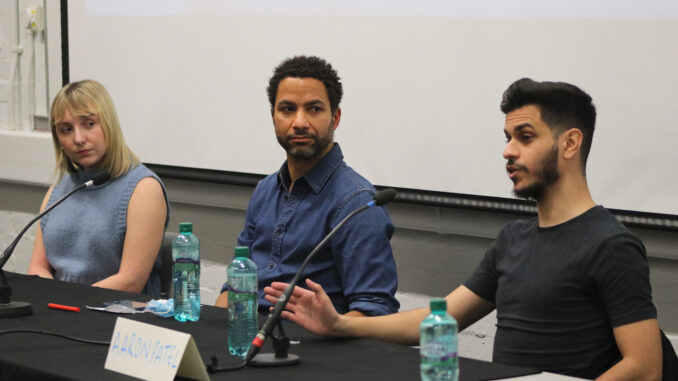
Today’s panel features a diverse range of speakers from various backgrounds who have all dealt with mental health issues. Panellists include Amara Howe, Mental Health recruiter and London Met grad, Aaron Patel, another London Met alumnus and editor of Mental Magazine, and Sean Fletcher, BBC presenter and an ambassador for the mental health charity Young Minds.
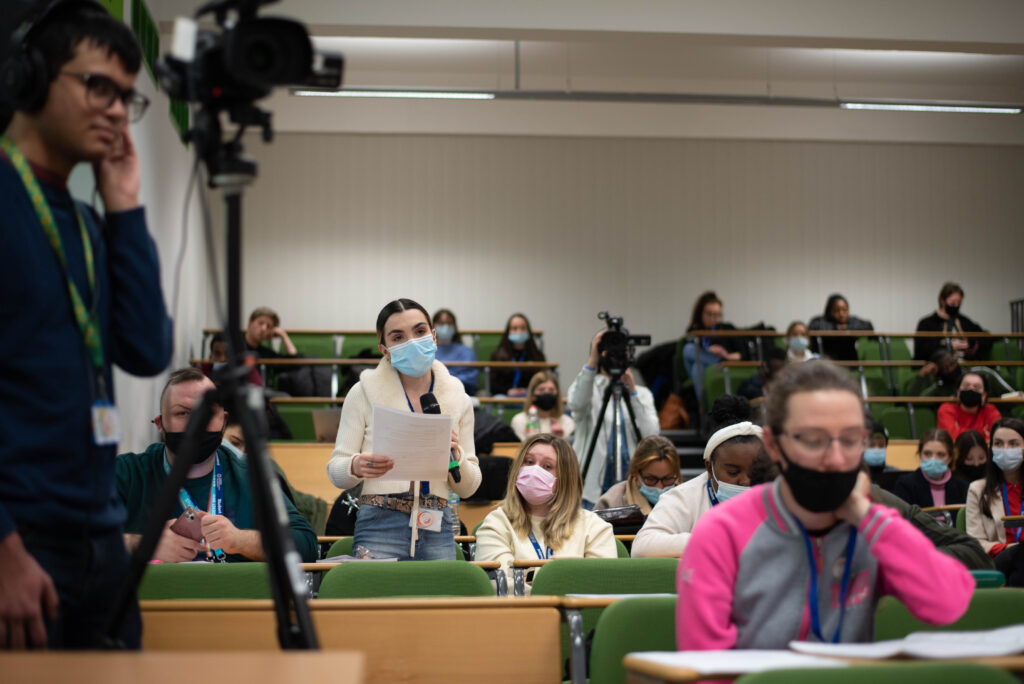
16:55 The panellists have arrived and the students are preparing to ask their questions
16:59 Journalism Course Leader Wendy Sloane opens the Student Mental Health event by welcoming the guests and panellists and explaining the absences of the other panellists who were scheduled to attend but had to cancel due to Covid. Hands over to Simon Cadman
17:01 Senior Lecturer Simon Cadman introduces each panellist and their work regarding mental health: Aaron Patel, editor-in-chief of Mental Magazine; Sean Fletcher, BBC presenter; and Amara Howe, Mental Health recruiter
17:03 A short film on mental health during the pandemic, made by digital media students, is played for the audience. The film was made by London Met students Raffaele Vitale and Tatiana Barbosa Almeida.
17:07 Question from student Gianluca Baarbazza: Why has it taken so long for us to focus on mental health during the pandemic? Why didn’t people care?
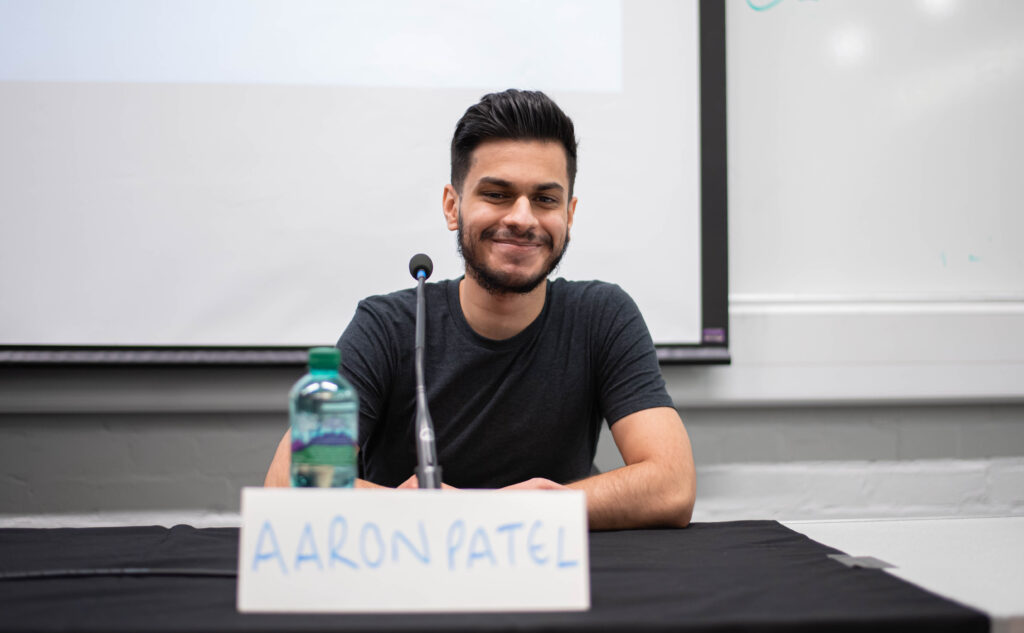
17:09 Aaron says: “Mental health has been a pandemic forever. It’s an ongoing battle.” Talks about how important it is for young people to talk about mental health issues, and how he wishes he had done so too years ago. “It’s okay not to be okay.”
17:11 Sean:“I did not know much about mental health issues until my son was diagnosed with OCD a few years ago. I learnt that mental health is the poor relation compared to physical health.” He discusses the shock of finding out how young people are waiting to receive help for long periods of time despite residing in one of the richest nations in the world. “Students had far worse, the pubs opened right away whereas the schools were closed.”
17:15 Amara talks about the positive outcome of the pandemic in terms of people realising they have been struggling with mental health issues, enabling them to recognise the symptoms, take action and seek help.

17:17 Question from student Rose: Do you think social media encourage people to misdiagnose themselves?
17:18 Amara agrees that social media has started a trend where people start diagnosing themselves as autistic by googling the symptoms. She advises to go to the professionals and seek medical help.
17:20 Aaron says: “I don’t tend to look at social media anymore because of the misinformation – you should get professional help to know what step to take next.”
17:21 Question from student Emily Boon: What kind of work needs to be done to de-stigmatise mental health issues among minorities?
17:22 Sean: “My son had OCD. I didn’t say it to anyone outside the family -you want to protect him, you feel like you’ll be judged and your son will be judged.” Recalls an experience at the London Marathon and how he blurted out the fact that his son had OCD to Prince William and that was the first time he had told anyone. “It was the best thing that happened, the weights were lifted off my shoulders.”

17:24 Aaron says when it comes to mental health, there needs to be a united front. Mental health doesn’t have a race, religion or gender. It’s a matter of getting together and sharing with each other, no matter where you are from
17.26 Amara talks about her profession working with several mental health organisations and talking to many members of the BAME community
17:29 Diana to Aaron: “What can students do to navigate the last year of university?”
17:29 Aaron: “Look after yourself. Give yourself time to prepare mentally. Have as much fun as you can. Help pick others up when they are down. Remember what’s there and believe in it.”
17.30 Sean and Amara agree and say try to manage yourself – if you have mental health issues, try to chip in every day to avoid the last-minute anxiety.
17.34 Question from student Diana Roche: “Is the representation of mental illness on TV and film beneficial?”
17:34 Amara says there is always an entertainment value to how mental illness is portrayed on mainstream media
17:35 Simon: How is mental illness presented on television?
17:35 Sean talks about how programmes poke fun at mental health in order to make a commission and maintain viewership and is difficult to put mental health on television because it is hidden, and television is all about seeing things. “The channels are doing it better now.”
17:37 Aaron says: “Broadcasters need to be careful how they present it. There is a fine line between documentary and entertainment.”
17:40 Amara talks about the positive side of how some shows provide caution and resources for those who may feel uncomfortable, or kinship when watching scenes that depict poor mental health
17:41 Student Francesco Fiori asks a question to Aaron: “How important is it to promote good mental health in schools as well as adversities?”
17.42 Aaron says schools don’t prepare the students for the bigger world and the resources that are there to support them along the way. “It starts from the top and goes to the bottom.”
17:42 Carolina Piras: “What do you think were the biggest challenges people with OCD had to face during the lockdown?”
17:43 Sean believes the pandemic has been a huge setback for people with OCD and says: “It was a setback for the individuals who were making good progress” when they started receiving treatment via Zoom or some other digital platform rather than face-to-face treatment. Also mentions how staying at home 24 hours a day with intrusive thoughts with no distraction and treatment can be very detrimental to someone suffering from OCD
17:45 Sean believes that some people, including himself, can sometimes minimise the severity of OCD by labelling people who are tidy as having the disorder, and that this is a case of disease doubting. It is only OCD when the habit or ritual is obsessive to the point that it is affecting your daily life
17:48 Paloma Mairone to Sean: “What is the severity of mental health issues in media industries – and what’s being done to address it?”
17:48 Sean addresses the case with actress and presenter Caroline Flack as a tragedy. He feels that broadcasters’ main priority lies in viewership/readership despite staff undergoing so much stress. He believes there will be other cases like Caroline Flack. “When you are on top, it’s like a drug and can get carried away.”
17:52 Simon talks about the intense deadlines with the show Gogglebox. Plenty of staff were buckling under the pressure of delivering the goods.
17:53 Sean also addresses Gogglebox and how there is a culture that does not make the staff feel at ease to complain.”The problem with television is if you complain you lose the job.” Advises audience to always speak up if they are experiencing a decline in their mental health if they ever find themselves working on shows that are hugely demanding
17:55 Sam: “What would you say to the government to enact change?”
17:55 Sean replies more money needs to be invested in mental health. Mentions the lack of staff in mental health services. He says the government are clever with introducing money for services and that the public should always be questioning where the money is coming from and why it is coming now. “It is a great way of influencing media by the government.”
17.58 Simon talks about the £500 million spent by the government on mental health services and says we aren’t seeing anything happening, are we?
18:00 Sean says: “Business has relationships with ministers who make decisions and they do lobbying, pushing for tax relief on certain things but there is no one lobbying for young people and mental health. It’s so sad.”
18:02 Amara says: “They’ve got the money. People’s wages who are working in the mental health is not the best because people are leaving NHS because of low wages as there is more money in other sectors.”
18:03 Student Martina Manias: “What are the most common problems involving mental health that face Black students?”
18:04 Aaron says: “It depends on the household and culture – they are scared about their parents’ reaction, and inability to open up at home.”
18:05 Sean believes there are certain prejudices about the Black community, as people are often stereotyped and put into a box as being aggressive and associated with criminality. “I’ve had to be better than everyone else to have the same opportunity as someone who is white.” Says this kind of experience have a detrimental consequence on the mental health of Black men and women
18.06: Amara says: The majority of people sectioned are young Black men: “It’s sad but it is alarming figures and it has been rising and that tragic.”
18:07 Amalie to Amara: “How does having a skin condition affect your mental health?”
18:08 Amara says it can have a huge impact on mental health. She discusses her experience with severe eczema as a student. “A common misconception about eczema was just an itch. It’s a really debilitating thing to have to deal with and it really affects your mental health.”
18:09 Simon talks about the tweets she has written about her skin and asks about the responses she receives
18:09 Amara says they understand what it is like because they suffer from the same issues and it is wonderful to have that community. “Talk about it; talking is a powerful tool; join a Facebook group; don’t keep it to yourself; having discussions is beautiful.”
18:11 Kwesi-Lee Williamson to Aaron: “Why did you decide to dedicate your magazine to student mental health?”
18:11 Aaron responds that when in his final year at uni, he found that there wasn’t a lot out there in terms of publications dedicated to student mental health so he wanted to fill that gap. He’s received touching messages on social media on how his publication has helped the community it caters to. “I don’t care how many people read it as long as it’s making a difference in someone’s lives. If someone feels better the next day than the night before, then we have done our job.”
18:15 Olivia Snaith-Cairns: How can we encourage students to talk openly about their mental health?
18:16 Aaron says: “Being able to ask if they are okay, you get to know how people are feeling and get to have the bond.”
18:16 Sean says that it’s important to have relationships with friends, nurturing the relationship where people can say how they feel and isn’t superficial
18:18 Amara says sometimes people need to talk to the therapist and have a one-to-one conversation. “Things have changed from social media – it has the negative side but it’s wonderful that we can talk about it.”
18:20 Student Carolina Piras: How can we close the gap between people presenting with ill health and getting treatment on the NHS?
18:21 Sean: “Services are overstretched, underfunded and overworked, there is not enough of staff. If someone is brave enough to say they are not well, they need to get treatment.”
18:22 Amara says money needs to be put into marketing Crisis Cafes that have been introduced to alleviate the pressure on the NHS and for people who are in crisis and need someone to speak to. Not enough people know about them without marketing. “Support workers are sitting there waiting for people and it’s pretty quiet there.”
18:24 Aaron: “I think messaging is very important, it comes to the money and decision from the top.”
18:26 Carolina: How does therapy compare with prescription medicine?
18:26 Aaron says: “I am not a medical professional but in my opinion therapy is intimate, the prescription is over the counter, there is a marginal difference. Often more times, I heard worse stories of people on prescriptions than people in therapy.”
18:27 Amara says she is on anti-depressants and goes to therapy. She was immediately prescribed an anti-depressant when she went to the doctor to be diagnosed. She believes it should always be therapy before the medicine is prescribed. She believes therapy is a wonderful experience whereby you learn more about yourself and work towards your goal.
18:28 Sean explains that SSRI’s keep your serotonin levels in check and maintain them. Agrees with Amara that therapy should be the preferred option as you are allowing your body to deal with issues as naturally as possible. Therapy can reap long-term results while antidepressants are a quick fix.
18:30 Simon thanks the panellists for their contributions and the audience applauds.
18:31 Wendy thanks the panellists and also Simon for hosting the event and concludes by promoting the different multimedia that have been produced on social media and Holloway Express.
Leave a Reply