
By Kim Tran and Molly Madden
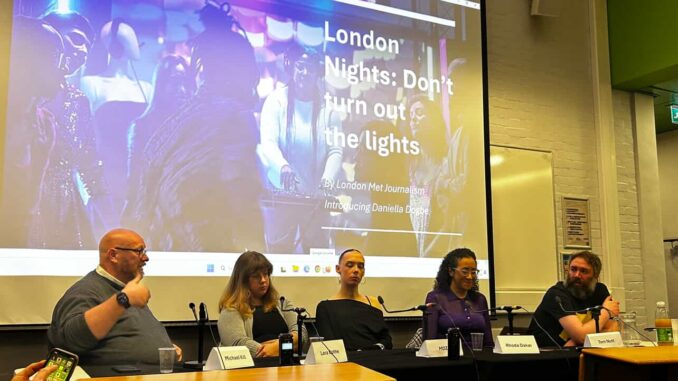
London Metropolitan University held a panel discussion focused on nightlife in London on Wednesday, 28th January. The event featured Michael Kill, CEO of Night Time Industries Association (NTIA); Lara Bothe, tour manager for Live Nation; MDZA, a drum & bass DJ; Rhoda Dakar, musician and lead singer of The Bodysnatchers, and Tom Nutt, deputy manager of The Garage, a club based in Islington.
17:10 – The conference begins with Dr Wendy Sloane, Course Leader of BA Journalism and BA Fashion Marketing and Journalism, introducing the theme; London Nights: Don’t Turn Out the Lights. After a brief welcome and introduction, she handed the floor over to Journalism student Daniella Dogbe, who was chairing the event.
17:15 – Daniella Dogbe starts by asking the audience how many people have gone to a pub, bar or event this month. She asks the panelists to introduce themselves one by one and the panelists discuss what their ideal night out would be.
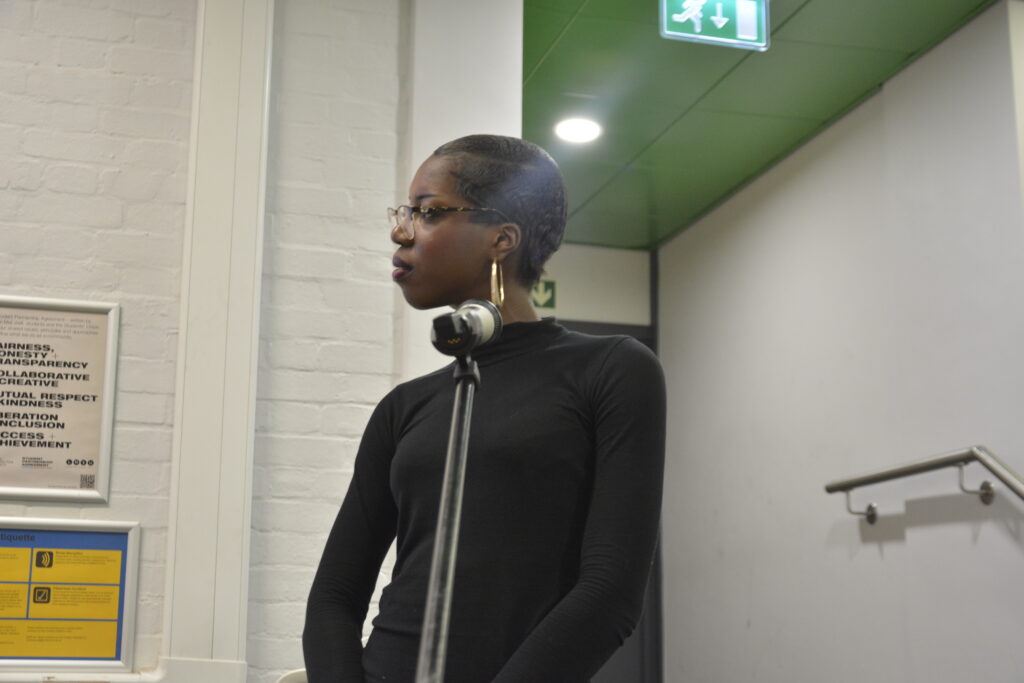
Student Daniella Dogbe chairing the event. Photo by Maria Luchetti
Dakar explains the answer would differ between ages – at 15 she would be going to gigs, at 25 she would be getting out of the studio and mentions “we don’t live in one decade”. Michael Kill shares that it would be a rave, his mind says to go to the warehouse party but his body says no – “my body is way behind my mind” and explains his biggest worry is bumping into his children at a rave.
DJ MDZA answers that it depends on what she has to do on Monday and also who’s going to what party; “it’s always about people”. Tom Nutt says his perfect night is about good music, affordable and good beer – that you have to enjoy going out to enjoy working in the industry. Lara Bothe explains it’s great when she doesn’t have a lot of gigs since work and free time can overlap because she’s working in the industry.
17:22 – The conversation moves towards ticket pricing and whether people would eventually be outpriced. Lara discusses how she doesn’t deal with ticket prices but believes it’s to do with the extra fees that makes it expensive. She suggests the idea of going to smaller shows as they are still affordable.
Dakar believes it’s becoming outrageous and wonders where the money is going towards, as it’s definitely not all going to the artists. Kill says the Government Department for Digital, Culture, Media & Sport (DCMS) are looking at fan-based reviews to evaluate the experience and ticket prices in relation to the dynamic pricing.
Dakar states: “The people who agreed to dynamic pricing should be ashamed.” Tom ends the discussion with discovering new bands and artists will be more affordable.
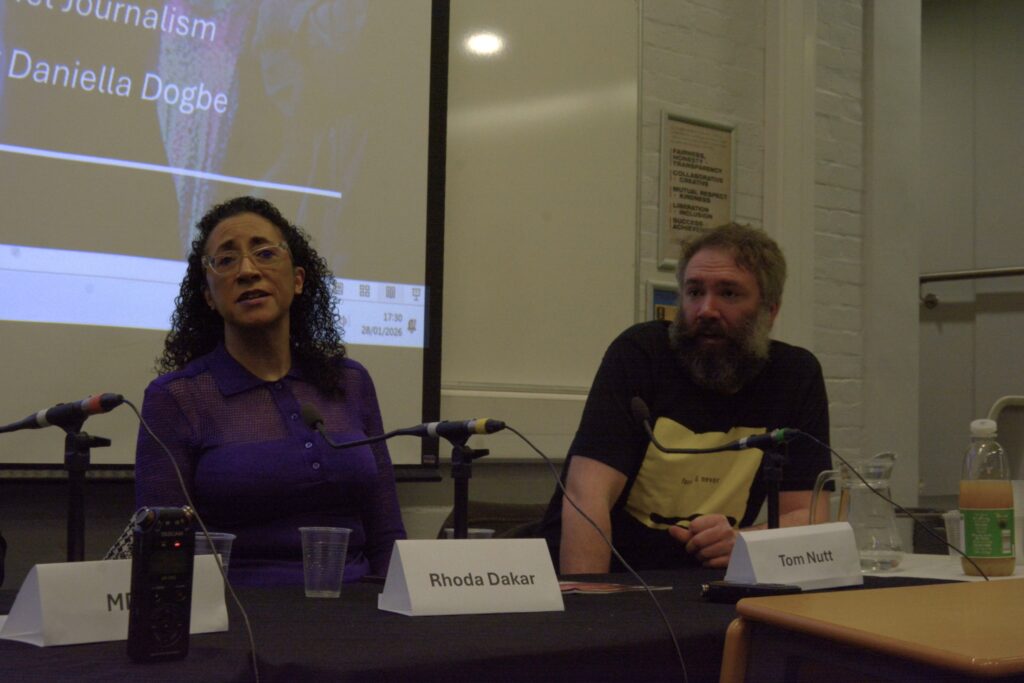
Dakar and Nutt. Photo by Maria Luchetti
17:30 – On the topic of the HM Treasury granting a package worth £80m a year for pubs and live music venues, Kill says it won’t make a big difference to London nightlife and that 7/10 live music venues are barely making money since 2020. To explain the funding he describes it as “the government is taking £1 in tax and giving back 50p back” and that venues are already taxed enough. Funding is another case of smoke and mirrors and feels like “a bit of a slap in the face by the government”.
Dakar comments that she’s grateful as it wasn’t a complete disaster as everything is being reevaluated but the Treasury is not listening to DCMS – thinks two arms of government aren’t talking to each other.
17:41 – Student Cydneii L’ungaho asks the panel how apps like DICE FM and Buzz have aided or broken-down London nightlife. Lara began explaining how smaller venues struggle with selling tickets last minute because they don’t have the ability to take card at the door of the club. “Running a business, we don’t want to let people in for free,” she said as she talks about how there is a delay between ticket sales and tickets being uploaded to the scanner on platforms like ticketmaster but with apps like DICE FM, door staff are able to scan tickets immediately: “From the production side of things, these apps are quite a good tool.”
17:53 – Kill begins talking about licensing reform. Dakar asks him to specifically mention form 696, a Metropolitan Police risk assessment form used between 2008-2017 that was heavily criticised for racial profiling. The form required event promoters to submit detailed information in advance including artists personal information, music style and the target audience.

Kill and Bothe give their opinions during the panel discussion. Photo by Maria Luchetti
17:57 – Kill explains how legislation like Martyn’s law, which came after the Manchester Arena attack in 2017, has changed safety standards for venues, requiring more training for staff, evacuation plans and security protocols for venues with occupancy between 200-799 and for venues with more than 800-person occupancy. Enhanced anti-terrorism security measures are required.
18:11 – MDZA talks about how everything is becoming sanitised and commercialised, comparing it to America. MDZA and Kill reference their own experiences with families moving into areas where music venues have existed for long times and wanting quieter environments, “why would you move into the busiest area of Hackney and complain about noise?”

Bothe, MDZA and Dakar. Photo by Maria Luchetti
18:18 – The conversation turns to young women and their safety in nightclubs. MDZA talks about the immediate safety bartenders can ensure, due to her past experience working as one, she says they are trained in noticing the different impacts of spiking, how to react and what to do next. She emphasises that education is really crucial and that there needs to be more conversations about consent. Nutt adds that managers of venues need to be aware and act quickly – for one of his clubs they enforced a no drink past a certain point policy and made sure to throw away any unattended drink.
18:33 – Bothe shares how reduced night tube services post pandemic are causing people to leave shows early to catch the last trains. She mentions how it is a safety issue too, for women that are leaving alone and for large gatherings of people, if something were to happen having those tubes available makes it easier to disperse quickly.
18:34 – Lastly, Dogbe asks the panel what everyone’s most embarrassing club story is. The panelists reminisce about their club days and laugh at everyone’s stories. MDZA talks about her humorous experiences falling off of a bar onto a colleague, and losing clothes and having to walk around with nothing but booty shorts on. MDZA ends with “do drugs absolutely, just know where your clothes are”.
18:43 – Dogbe thanks the panelists, students and lecturers who organised the event and turns it back over to Sloane to applaud the members of the panel again.
Leave a Reply