
By David Pasia and Gabriela Yorgova
London is plagued by air pollution and dirty rivers and we have a serious rat problem. The air levels are dangerously toxic, causing asthma, rashes, chronic coughs and other health conditions, exacerbated by many properties that are damp and mould-infested. What can we do about it – before it’s too late?
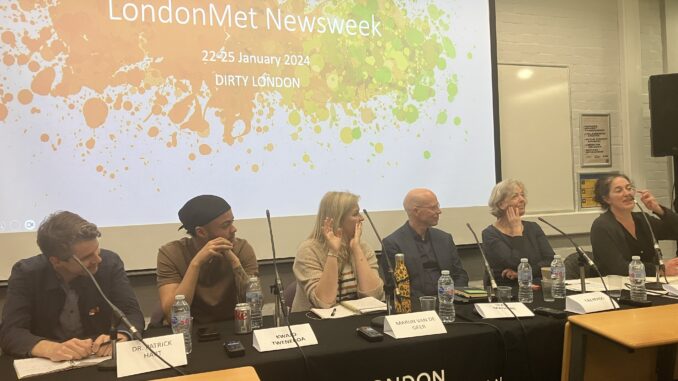
This was the topic of a lively debate at London Metropolitan University, where a panel of distinguished guests who are all environmental social activists gathered to discuss how we can save the planet. Here is what happened:
16:54 – The conference room is beginning to fill up with spectators, including London Met students, staff and visitors.
17:15 – The panelists have taken their assigned seats.
17:16 – London Met Journalism Course Leader Wendy Sloane greets the guests and panelists
17:17 – Journalism Senior Lecturer Daniel Schweimler introduces the London Met Newsweek, Dirty London, citing statistics that speak to the gravity and immediacy of the current environmental crisis
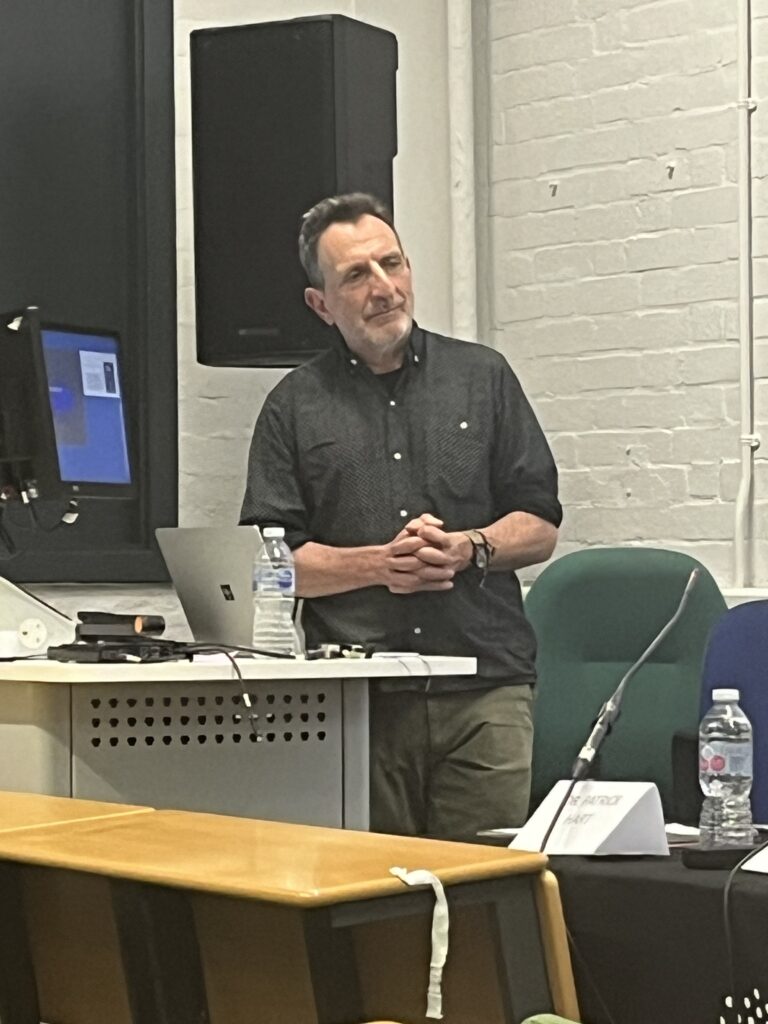
Daniel Schweimler at the helm. Photo by Wendy Sloane
17:20 – Panelist Dr Patrick Hart from Bristol introduces himself as a member of Just Stop Oil. He has worked previously with Extinction Rebellion
17:21 – Panelist Kwajo Tweneboa talks of his work as a social housing activist. In particular, his work focuses on the spread of mould in houses all over the UK
17:22 – Panelist Marijn Van De Geer, a founding member of Extinction Rebellion, says: “I became involved with Extinction Rebellion right from the start, when there was about thirty of us.”
“Nearly six years later, it has radically changed my life in every single way. I never thought I would be
arrested.”
17:23 – Sean Maguire introduces himself as the Director of Strategic Partnerships and Communications at the Clean Air Fund
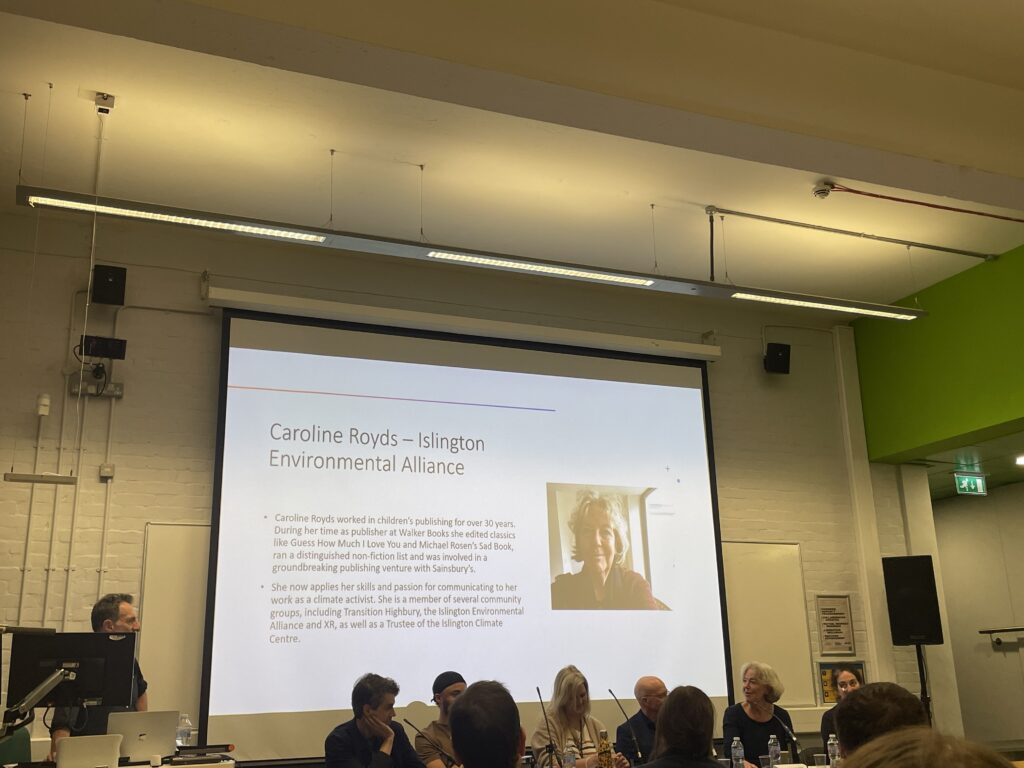
17:24 – Caroline ‘Caz’ Royds introduces herself as a member of the Islington Environmental Alliance
Photo by Gabriela Yorgova
17:25 – Cllr Giulia Innocenti introduces herself as a member of Barnet Council
17:26 – Daniel opens the floor for the audience members to ask questions to the panelists
17:27 – Giulia answers a question on the topic of green spaces. “It’s massively important that we not
only use but protect green spaces as much as possible.”
She acknowledges it’s hard to be mindful of green spaces in a car dominated borough, but efforts
have to be made
17:29 – Caz adds to Giulia’s points by raising the importance of trees as they provide shade and are
necessary for drainage.
17:31 – Sean talks of his past experience as a journalist: “It’s great training for other professions.
Journalistic training is fantastic training for all points in life.”
17:34 – Kwajo is asked which of the London councils were the hardest to deal with. He mentions three: Lambeth, Wandsworth and Islington. “The state of London local authorities is atrocious.”
17:37 – Marijn is asked if young people should be doing more in terms of protesting and risking
getting a criminal record. She urges people who are interested in participating in non-violent
demonstrations to seek help and training from organisations that provide them, like Extinction
Rebellion. It’s imperative for one to know their rights when they are protesting, she says

“I think it’s our absolute duty to protest.”
“Let your voice be heard. It’s absolutely vital. It’s our democratic right.”
17:39 – Patrick addresses the audience, making note of the fact that most are relatively young students. “The mess we’re in is not your fault.”
17:41 – Marijn cites a statistic that a third of young people are of the belief that the news and facts
about climate change are exaggerated. She emphasises, though, young people are not to blame.
“The media has an extremely powerful role in distributing information to people.”
17:44 – Giulia raises the issue of the negative impact of the current climate crisis on young children, many of whom she says are suffering from climate anxiety. She thinks this can be turned into a positive thing by turning it into a call for action
17:45 – Kwajo: “I think it says something about how this country cares more about demonising
migrants than dealing with the future devastation that faces the world
He talks about how the climate crisis will cause mass displacement which will be exponentially worse
than the present situation with asylum seekers and refugees
17:47 – Caz answers a question on recycling: “All the stuff about wasting and recycling is about
making a change… it’s time to see materials as precious.”
She adds that ‘paper’ coffee cups are not as they seem. They are lithe with plastic which will not
biodegrade and are ingested with the drink they hold.
17:52 – The effectiveness of ULEZ is questioned. Sean urges people to visit the GLA website and read
up on figures and impacts of ULEZ
He says ULEZ is “the most ambitious effort in the world to clean the air…” which will have a positive
impact on people’s health
17:55 – Kwajo: “One in three people are living in homes with damp and mould.” People’s health
within their own homes should be better considered by the GLA and the Mayor. Damp and mould
are huge causers of respiratory problems
17:57 – Marijn is asked about the backlash Extinction Rebellion received for allegedly not being
transparent enough to young people about climate change due to an interview broadcasted by the
BBC. Marijn clarifies that the notorious interview consisted of panelists who are climate change
deniers and climate change action delayers which was not specified by the BBC
18:01 – Patrick: “If I want scientific information, I will probably not get it from print media.” He says
local media care more about the general public who they report for.

Dr Patrick Hart. Photo by Wendy Sloane
18:02 – Caz criticises the national media and their failure to treat the climate crisis with the gravity it’s
due
“I despair of the national media. I think the climate is so under covered.”
18:03 – Sean: “I tend to go to organisations that report more accurately.” He cites the Guardian and
Financial Times
18:05 – Kwajo: “You have these big outlets like ITV who have been prolific about reporting about the
state of social housing.”
“Seven years after Grenfell and this is still happening.”
18:06 – Giulia talks about media attention span with regards to the public. She thinks this is partially
why the media is not covering the climate, as it’s such a vast issue
18:07 – Marijn speaks well of Private Eye
18:08 – A question on what should be combated, in terms of pollution, is posed to all the panelists.
18:08 – Marijn talks about the recent major flooding which was prime opportunity for media outlets
to report that this is due to climate change.
18:10 – Sean raises the issue of wood burners. He says people – especially the middle class -are using them for lifestyle and aesthetic purposes – and politicians are not addressing this problem
18:11 – Caz talks about the incinerator located in Edmonton, where a total of seven boroughs’ waste
is burned. She urges people to be more careful with sorting their waste and recycling
18:12 – Marijn believes we need a Citizen’s Assembly to really clean up London. She maintains they
will be a fair representation of the general public
18:16 – Kwajo on declining his MBE. He started campaigning because he was one of those people
living in slum conditions. He will not be accepting an award or a title when people continue to live in
slum conditions and die in these poor living environments

“There’s no way I could take an award and be celebrated… for fighting for something that is a basic
human right.”
18:20 – A question is asked on how students can be given more opportunities by the government to
suggest ideas
18:21 – Giulia: “At a local level, there are opportunities to be involved.” She mentions there is an
assembly for tackling environmental issues, food waste management, cycling groups
“If you want to try doing something, do it locally and you’ll have a lot more sway.”
18:23 – Marijn: “It’s key that citizens get involved but such matter needs to be institutionalised.
Every person is smart enough to make their own decisions and to make informed decisions. It’s
about everyone getting involved in democracy.”
18:25 – Kwajo: “Politics is classist already as it is and excludes a certain demographic.” He believes
people in power and authority should be out there looking for informed answers for social justice
issues.
“There needs to be opportunities for everyone, not just individuals.”
18:26 – Daniel invites the panelists to give their closing statements
18:27 – Sean: “China managed to reduce its [air] pollution by 40%.” This means tens of millions of people will be breathing in cleaner air, having a positive impact on their health. They are an example of a nation who recognised the issue of air pollution needs to be immediately tackled for the betterment of their inhabitants.
18:28 – Giulia talks of an initiative that will produce hedges for schools that act as a shield for particulates, improving air quality conditions for young children.
18:30 – Marijn says “Don’t give up. Don’t feel stuck in the trap of feeling overwhelmed that there are too many issues… We’re not going to recycle our way out of this crisis.”
18:33 – Patrick: “Things are gonna be really, really bad or apocalyptic. And were fighting to get to really, really bad.”
18:34 – Kwajo: “We have another general election coming up… There is another opportunity to turn things around.”
18:35 – Daniel thanks the panelists and the audience give a warm round of applause. The panel concludes.
18:36 – Wendy Sloane thanks all the participants, and Daniel for his stellar job compering the event.

Photo by Gabriela Yorgova
Leave a Reply