

by Eleonora Zorzenone
Why do people collect Barbie dolls, and are willing to spend a fortune just to get *that* very exclusive item or edition? Financial value is not the only reason. Barbie collecting is also about nostalgia, childhood memories and finding a real icon…
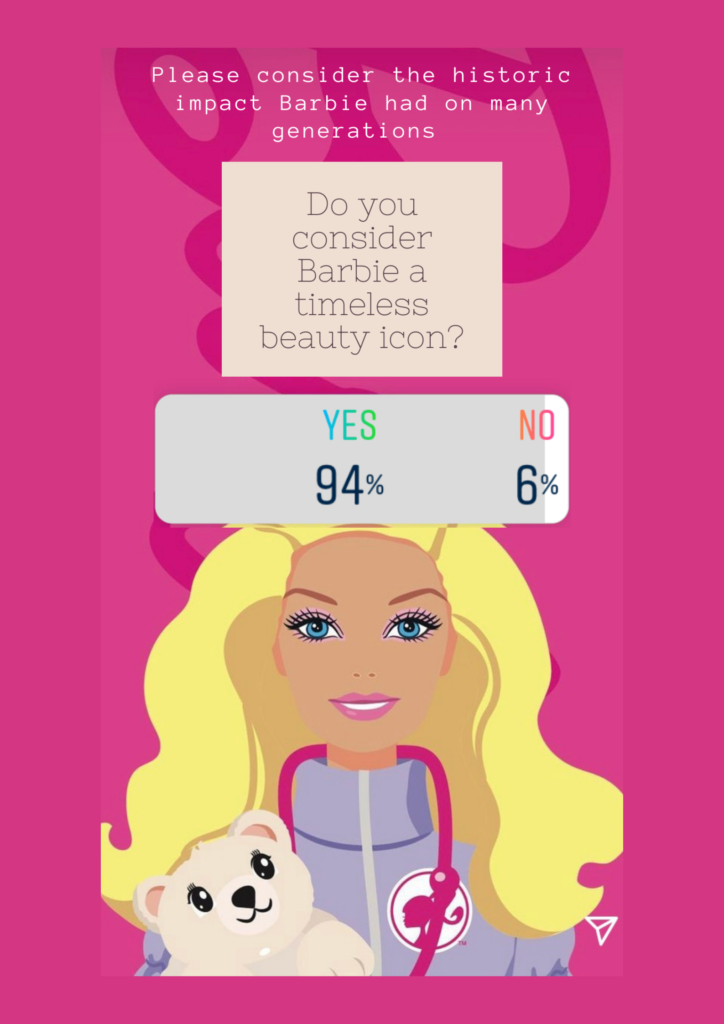
Who doesn’t know who Barbie is? The tall busty blonde girl who has been part of many kids’ childhoods is one of the most successful toys ever. There are more than 100 dolls sold every minute, with a total of 58 million sold annually. Despite controversies and people grimacing at her silhouette, Barbie is still considered a timeless icon.
Numerous people collect Barbie dolls and accessories in their adulthood, preserving what they had from their childhood while also buying new items. Collecting Barbie dolls, especially vintage ones, has become so profitable that prices have skyrocketed, with people ready to pay up to $320,000 for a 2010-Stefano Canturi Barbie edition.
Collectors don’t only trade in Barbies for financial value – most grow their collections for sentimental reasons.

Becoming an icon
But how did Barbie become the icon we know now?
Barbara Millicent Roberts, known to the world as simply Barbie, was created by Ruth Handler in 1959, who had co-founded the company Mattel with her husband Elliot fourteen years prior.
The first Barbie was a simple doll that resembled divas of the period such as Elizabeth Taylor and Marylin Monroe. It then evolved into a woman with over 200 careers, Only recently has the iconic doll finally been able to be representative of all women, including those who are not incredibly tall, skinny and blonde, with ridiculous proportions.
The Barbie empire is not only made of dolls. Mattel has created cars, dream houses, campers, films, apps, a Youtube channel, books, TV shows, movies and anything else you could possibly imagine.
Japanese Barbie
Azusa Sakamoto, known for her social media name Azusa Barbie, looks exactly like how you would imagine Barbie in real life. The 39-year-old is a nail artist and YouTube/Instagram influencer who loves to share her passion for Barbie with her 150k followers.
Originally from Japan, Sakamoto now lives in a tiny studio in West Hollywood, Los Angeles that she has turned into a real Barbie house.
“My studio looks just like the original Barbie Dream House. Everything is pink and white and Barbie themed,” she says proudly.
In a video she shared on her YouTube channel, she shows how she has personally customised the entire studio: the floor, the furniture, the kitchen utensils, the bathroom: everything is Barbie-themed.

Sakamoto started her Barbie collection when she was 15. “I had some fashion dolls when I was little but not Barbie. When I discovered Barbie, I was amazed. To me she was not just a toy for kids but more like a cool American pop/fashion icon and I decided that I wanted to be like her.”
Sakamoto’s entire life now revolves around Barbie. “I moved to the US literally because of Barbie as I could have more work opportunities here,” she explains. She works with social media and she is a full-time Barbie representative.
“I do something related to Barbie every single day, whether it is for work or not. I attended many US Barbie conventions and I’m actually hosting the Japanese Barbie Convention from 2022.”
She adds that she is not afraid of spending money on her biggest passion. “I literally don’t count how much money I spend per month for Barbie items. It is my passion, my job and my happiness!”
Her most expensive purchase of all time was a $1,500-pair of Charlotte Olympia Barbie shoes that she has never worn. “The shoes are two sizes too small for me but they were the last ones available so I could not lose the opportunity.”
British Barbie collector
A Barbie collector is not only about extravaganza and social media. Marketing coordinator Tina De Wert, 30, leads a very normal life in London – except she has more than 100 Barbie dolls as well as a couple of original houses, cars, and accessories she likes to share on her YouTube channel.
Her passion for all things Barbie started when she was little. “I have always loved Barbie. I remember being little and playing with my aunt’s vintage Barbie dolls at my grandparents,” she said.
She didn’t start collecting until about seven years ago. “It all started very unintentionally. I bought my first doll on Ebay. It was a 1994 Barbie that I have always wanted as a child but my parents never got it for me. When I saw it on Ebay after so many years, I didn’t think twice, I just bought it without planning to start a collection but then I just carried on buying Barbie dolls and other items.”
De Wert has never considered the financial aspect of her passion. “I would never sell them. I know I have some Barbie dolls from the 60s that would be very profitable but I could never. It is a childhood memory for me. It is nostalgic.”
It must be true that birds of a feather flock together because her partner is a collector too; he has a collection of more than 1000 DVDs and Blu Rays: “We both have our own room in our house where we display our collections. People think it is crazy but we love it!”
Pandemic influence
The pandemic has definitely had a strong impact on people’s lives and somehow changed many habits or routines. In the boredom of a lonely lockdown Tanita Boettcher, 32, decided to start her Barbie collection too.
Boettcher has been loving the iconic doll from the age of four and never stopped – but she started her collection only last January.
“I started because of the pandemic. I realised how happy Barbie accounts on Instagram made me, and I wanted a hobby I could cultivate at home as a distraction from my stressful job and the loneliness I felt during lockdown.”
She has already bought 40 dolls and her collection also includes three houses, a car, furniture and a Barbie horse.
Boettcher takes her collection and her Instagram page very seriously. “It became an obsession now. I love sharing my dolls with my Instagram followers. I built a whole scenery in my guest room to take perfect pictures but then I store my dolls in my walk-in closet. I would like to have a room just for my Barbies but I can wait until my collection is bigger.”
A passion born out of boredom and curiosity, became a real investment. “I spend around €200 per month. I don’t spend a lot on one single purchase but I like to buy multiple things per month to grow my collection. The maximum I paid for one single doll was €60 for an original boxed doll from the 90s.”
She buys lots of vintage dolls from the USA which is already a big investment as, on top of the already expensive price, she needs to pay pricey custom expenses: “ I have never wanted to buy things from the USA as it is extremely expensive but I changed my mind when I started collecting Barbie. I always have to wait several weeks before they arrive but there is something so thrilling in the long wait.”
Barbie controversy
With the huge success, there is also lots of controversy. People considered Barbie too materialistic, unrelatable and one of the biggest criticisms was towards Barbie’s body proportions, considered unrealistic and unachievable.
If Barbie was a real person, she would have a 36-inch chest, 18-inch waist and 33-inch hips for her 5ft9in height. This makes her proportion totally unhealthy and, according to Finnish research, she would not have enough body fat to menstruate.
In 2016 – Barbie finally introduced the new series Fashionistas, which featured different body types: curvy, tall, petite and more – and had more hairstyles and skin tones. People are loving the improvement.
Tina De Wert said: “The inclusivity now is fantastic! Finally any girl can feel represented by Barbie.”
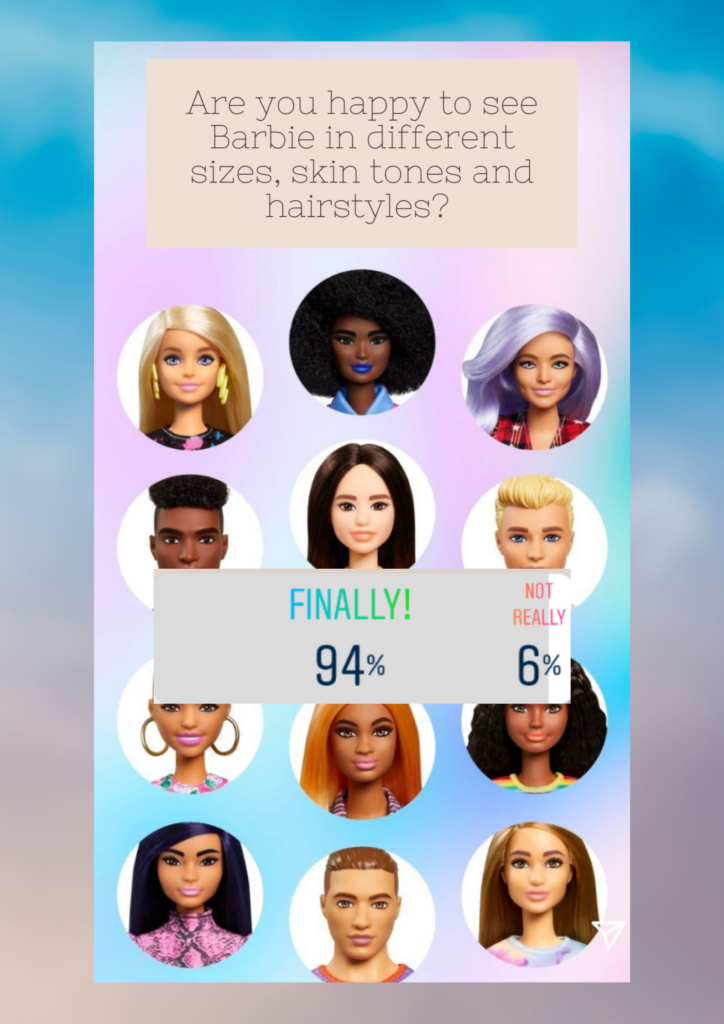
Despite controversies, Barbie remains one of the most desirable dolls, loved by children as much as by adults. The constant evolution and modernisation of the doll showed that she can adapt to any changes in society while remaining a timeless icon.
Barbie’s “You can be anything” motto and the more than 200 careers that Barbie has had has proved that nothing is impossible – there are no dreams too big to become true.
Leave a Reply