

By Alexandra Cimpeanu
While it may seem that being an international student is something to be proud of, sometimes family and acquaintances who stayed home have a different opinion.
Studying overseas is a decision that takes years to make and to prepare for. And adapting to a new life in a foreign country is far from easy, especially for someone who has never been on their own before.
All that only to go back home and see the grumpy uncle at Christmas dinner blaming you for everything bad happening in your country of origin.

“Who will take care of us when we’re old?”, “Who will pay for our pension?”, “What’ll happen with the country if your generation is leaving?”
Sounds familiar? Thought so.
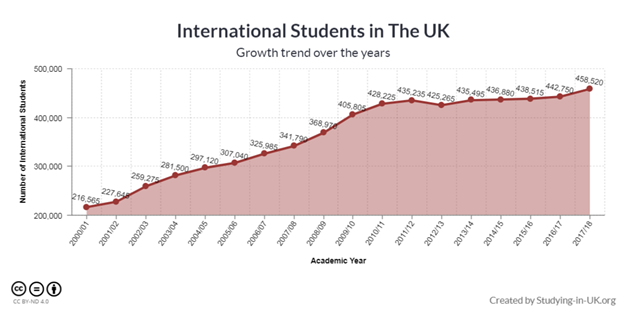
According to statistics from the Higher Education Statistics Agency, in the academic year 2018/2019, there were no less than 485,645 international students enrolled in degrees in the UK, and the number seems to only go up, although Brexit and Covid have taken their toll.
Parents don’t have it easy either. Empty nesters are known to have feelings of anxiety, sadness and grief when their child moves out, and if their son or daughter knows about the way they feel, it makes it even more difficult.
It’s rather the idea that their now young-adult is in a different country, rather than the actual time it takes to get there, which often times is shorter than going to the other side of their own country.

London has become one of the most popular destinations for international students, and there are many reasons for that. There are over 35 universities in the mega-city, so no matter what you’re into, there’s surely a course for you.
“You’d be a fool not to take all the opportunities that are offered here, London is so vibrant and multi-cultural, it’s open to everyone,” says Florentina Cercel, 23, who is studying Photojournalism at London Metropolitan University in Holloway Road.
That is indeed the reason so many people choose to come here.
Cercel says she has never felt guilty for her decision: “I felt that I needed to do whatever it takes for my own future,” she says.
“I never felt guilty. I just did not see a future in my home country.”
Cercel comes from Romania, where although studying abroad is a decision that has been taken by students ever since universities started to exist, people still judge the students who choose to make that step.
“I got frowned at by older neighbors from home, but didn’t take it into consideration,” she said.
Cercel believes that studying in the UK is the best decision she has ever made, shaping her into her best version of herself.
Here’s a sneak peak into London Metropolitan Journalism:
“From where I’m from, if you moved to another country and go back to visit, you’re not getting looked at nicely,” she says. She thinks people feel betrayed by the fact that the younger generation, who they have raised and worked all their lives for, is leaving.
This behaviour is understandable, especially in underdeveloped places like Romania, where many people have lost hope for a better future. And seeing the younger generation choosing to study and work elsewhere does not help their attitude. They are ultimately just looking for a scapegoat for all the ongoing issues.
Whether it is out of guilt or not, many people choose to return to their countries after completing their studies, to try and implement what they have learned abroad.
A study done by OECD in 2011 shows that on average, only 25% of international students in the UK choose to remain in their country of study. The reasoning behind this is either increased work opportunities in comparison with their own country, or the ease of integration and the possible career advantages when returning to their country or moving to a third country. The flexibility around the subject nowadays is incredible.
Cercel does not see herself moving back home, but she likes to go and visit sometimes in spite of the remarks she gets every time she returns.
“’Now that you’re in the UK you think you’re better than us?’ That’s the one I heard the most,” Cercel says.
An Instagram poll carried out by Holloway Express shows that 59% of the 17 students who replied don’t feel guilty about studying abroad, compared to 10 who do. This is not restricted to the UK, but includes students in the Netherlands, Spain and Romania.
Thankfully, our generation seems to be friendlier with the idea of having friends who study abroad. Not only can they eventually visit, in non-pandemic times, but also they can hear all the stories and share opportunities.
Alexandra Mihaela Pupaza, 21, is a Spanish and English Languages and Literature student in Bucharest who has decided to stay in Romania. “I don’t get the guilt part. It’s really sad that our country does not offer everything you need to develop into a professional,” he says.
“All of my friends who have left said it was the best thing they did,” Pupaza says, “You have to choose what you think is right for you.”
“They don’t appreciate us either, the ones who choose to stay when we could have left,” she adds.
In the end, the answer is simple. Do what you think is right and suits you, and if it does not work, change it.
If you think staying abroad is better- do that; and if you think it would make you happy to go back and make a difference where you came from- that’s also great. Just make the decision yourself and don’t listen to others.
Leave a Reply