

It was exactly 22 days ago when the contact to Malaysian Airline flight MH370 was lost somewhere in the southern Indian Ocean, and the world has anxiously followed the search of the plane and its passengers ever since.
Despite flying is the safest form of transport or travel, tragic events like this contribute to the fact that the number of people with a fear of flying increases.
“Anxiety, stress and fear is on the rise in general and [fear of] flying is as well. This could perhaps be because more people are flying and our access to information about crashes, like the Malaysian crash, being so public,” said Danny Rosenberg from The Therapy Lounge which treats people with all kinds of phobias.
“We use a combination of approaches but the most successful for this are differing forms of hypnosis and NLP [Neuro-Linguistic Programming],” Rosenberg said.
The fear of flying is one of the most common fears there is, but is also easily treatable and manageable.
“These are almost never conscious decisions. This means that we weren’t born afraid of flying and learnt this fear through what we interpreted from certain experiences.
“If we can learn fear, we can learn calm, and as that was our initial state, it’s easy to regain if you know how,” said Rosenberg.
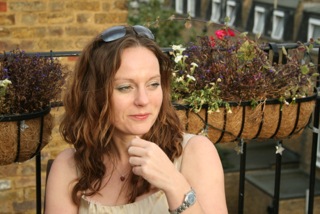
Rachael Hudson from DōChange Hypnotherapy & Coaching has not seen a rise in patients after the Malaysian incident just yet, but did start with a new patient a week before it took place. By enabling his sense of self-control and state of choice to empower him, her client has been successful in separating his own fears from the topical news story.
“In human behaviour it is the strongest emotional state which wins out, and in the incidences of fears and phobias, if the fear of the ‘thing’ is greater than the belief of inner resourcefulness, then the fear ‘wins’.
“Fears and phobias can develop either as a result of an one-off episode, or as a slow burn of witnessing someone else’s fear response,” Hudson said.
For some people, the fear of flying can be a phobia specifically, but for others it might be connected to enclosed spaces which means they avoid getting in to lifts, tube and other enclosed places too, said Steve A. Harold, an experienced Clinical Hypnotherapist.
Ordinarily the mind attempts to keep a person safe and it does this by making a rapid assessment of the environment a person is in. The mind looks for common aspects of the environment and then produces a response to that environment.
For a person who has had a bad experience of flying, where there was a lot of turbulence, banking of the plane, and/or any perceived threat to their life, the mind will make a quick association between flying and anxiety.
“This is the minds way of alerting us to danger,” Harold said.
When talking about phobias, the usual logic is that there is no logic. The fear can be caused by a traumatic event in the past, a reaction to the closed space or equally the anxiety caused by news like the recent disappearance of the Malaysian Airplane flight.
The rescue and search operation which included dozens of ships and planes last week has been highly reported in the media.
“Despite a person knowing that flying is one of the safest forms of transport, the logic of this knowledge is not strong enough to diminish the minds association between flying and anxiety,” Harold said.
However you know you are far more likely to die on your way to the airport than in the plane, the phobias can be irrational and might have been started from completely other causes than flying. Hypnosis deals with the subconscious (imaginative) mind, rather than the conscious (logical) part of our brains, which is why its so good for phobias, said Ruth Culver, Clinical Hypnotherapist & NLP Coach from North London Hypnotherapy.
Inaccurate Hollywood portrayals of hypnosis also mean that some people worry they might be controlled during hypnosis, but nothing could be further from the truth.
“Hypnosis is a natural state, quite like that half-awake feeling just before you go to sleep or as you re waking up. In fact I can’t get anyone to do or say anything they don’t want to and you remain aware and awake throughout,” said Culver.
Therapists emphasise that many people with the phobia can be treated and helped back on board again.
At Life Tranceformation, I offer a combination of Transformational Coaching, Hypnotherapy and NLP (Neuro Linguistic Programming) to empower you to make the changes you desire in your life.