
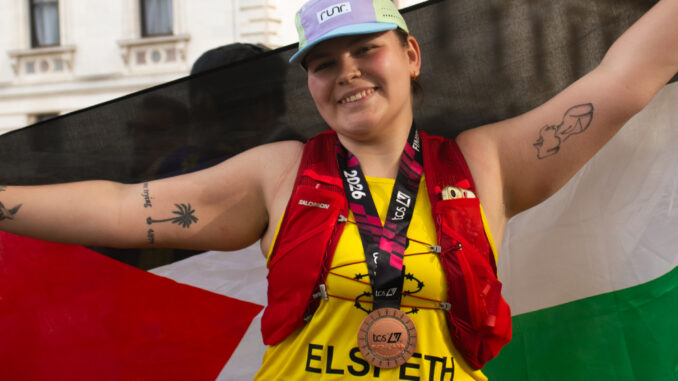
Image by Elspeth Chapman
By Elspeth Chapman
Across parks, canals and city streets, running has become one of the capital’s defining lifestyles. Once viewed primarily as a competitive sport, it has increasingly developed into a social activity shaped by fitness culture, online communities and a widespread search for routine in an ever-changing city.
Much of modern running culture has been built online. Platforms such as TikTok, Instagram and Strava have helped transform running into a visible part of everyday life, particularly among younger people documenting training routines, races and personal progress.
Social media has “made the sport feel more accessible for people who may never have considered it before,” says Katie Treasure, a twenty-something running influencer who has amassed over 75,000 followers across social media platforms.
“I try and come across as authentically as possible because my whole thing is that I want to show that people who are slower runners or may not be super naturally athletic, or who are starting from square one can do hard things too, and can train for a marathon too,” Treasure said.
Treasure and other fitness influencers alike are aiding the growth of greater representation in running spaces. Seeing people online with similar lifestyles, running speeds and ability can help to create an environment where running doesn’t feel intimidating. Online running communities can also provide motivation and accountability, particularly for beginners trying to maintain consistency with training.
Running in the age of social media:
The rise of running influencers has matched the growth of run clubs across London, many of which combine fitness with social interaction. Evening and weekend runs through areas such as Regent’s Canal and Battersea Park have become increasingly common among young professionals looking for a community outside of work.
While many people begin running by themselves, social media platforms can create a sense of community by allowing users to follow other people’s progress and share their own experiences. However, Treasure also acknowledged that fitness culture online can sometimes create unrealistic expectations around performance and reality. This can sometimes shape the content that is produced by fitness influencers:
More than exercise:
Lloyd Bradley, 71, is an author and long-distance runner who has contributed to publications including Men’s Health, Men’s Fitness, Runner’s World and GQ. Bradley has also written several bestselling books, including The Rough Guide to Men’s Health and The Rough Guide to Running.
For Bradley, this new wave of runners often feels performative. The appeal of running goes far beyond performative social media trends for Lloyd Bradley:
Having spent years running and writing about the sport, he believes its popularity comes from the structure it creates.
His perspective reflects a wider shift in how Londoners view exercise. For many people, running has become less about competition and more about creating routine, building discipline, improving mental wellbeing and finding moments of calm in an otherwise busy environment.
Bradley described marathon training as both “physically and mentally draining”, particularly when balancing it with work and daily responsibilities in the city.
London can be exhausting but “running gives people a way to clear their minds and regain some control over their day”, says Bradley.
Unlike many fitness trends, Bradley believes running has grown in popularity and remained popular because of its accessibility. While gym memberships and boutique fitness classes can be expensive, running requires relatively little equipment – just a pair of trainers, some shorts, and a t-shirt (and perhaps a good sports bra).
A marathon that reflects the city:
Nowhere is London’s evolving running culture more visible than at the London Marathon itself. It has evolved dramatically since it was first launched in 1981 by Olympic champion Chris Brasher and athlete John Disley, who were inspired by the atmosphere and inclusivity of the New York Marathon.
What began with just over 6,000 runners in its first year has grown into one of the world’s most recognisable sporting events and one of the most oversubscribed marathons on the planet. More than 1.3 million people applied for a place in the 2027 race, highlighting just how deeply marathon culture has embedded itself into modern British life.
Last month, the streets around Blackheath were full of runners stretching against barriers and weaving through crowds of spectators carrying cardboard signs and coffees.
Conversations about personal training plans were mixed with music, charity chants and nervous laughter as tens of thousands of runners prepared to begin the 2026 London Marathon.
For many of the 59,000 runners that took part this year, the race marked the end of months of preparation. But beyond the finish line, the marathon reflected something larger: the growing role that running now plays in everyday London life.

That sense of togetherness is part of what makes the London Marathon unique. The race route passes some of the capital’s most iconic landmarks, including Tower Bridge, Canary Wharf, Big Ben and Buckingham Palace, before finishing on The Mall. Hundreds of thousands of spectators line the streets each year, transforming London into a shared public space full of inspiration and encouragement.
On race day, the city does not simply host the sporting event, it becomes part of it, creating an unforgettable atmosphere.
Watching crowds gather across London, it’s clear that the Marathon is not only about elite athletes or finishing times but focuses on first-time runners and charity runners too. In a city often associated with stress and isolation, the atmosphere felt unified.
Despite the Marathon’s scale and competitiveness, some of the most memorable moments throughout the day came from ordinary runners and spectators rather than the elite performances. Families waited for hours along the barriers to support relatives, while strangers shouted encouragement to exhausted runners approaching the final miles.
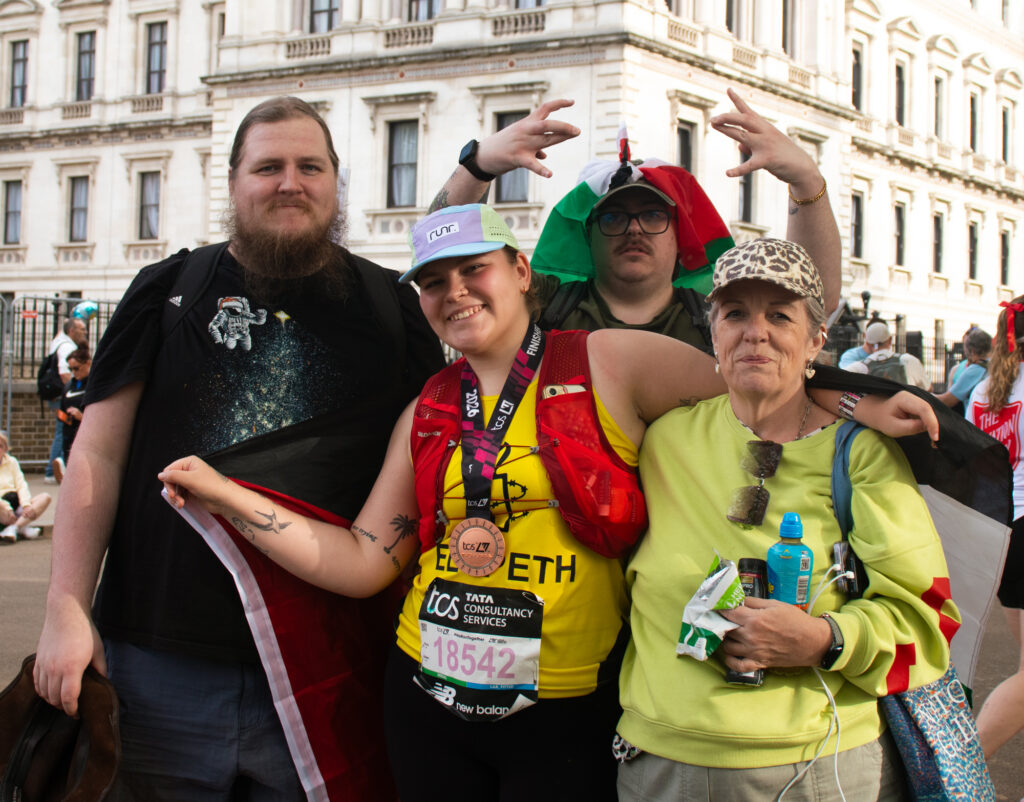
Image by Elspeth Chapman
Abi Clifford, a 20-year-old spectator near Canary Wharf, described the atmosphere as “completely different from anything else in London”.
“Everyone is just cheering each other on,” she said. “It’s easy to think of London as a city where everyone’s in their own world but seeing charity runners in particular come together for the London Marathon is so inspiring… it’s a great reminder that people really do want to support one another and make a difference.”
The London Marathon itself has become one of the clearest examples of how running now extends beyond just sport. Alongside elite athletes, participants included charity fundraisers, first-time runners and people completing deeply personal challenges connected to grief, illness or mental health. With close to £100 million raised, London Marathon really does make a difference.
From world record breaking sub two-hour marathons to the final finisher in 12 hours and 16 minutes, crowds remained cheering from the sidelines. In many ways, the Marathon reflects why running continues to resonate so strongly across London. Beyond competition or fitness goals, it offers routine, identity and community within a city that can often feel overwhelming.
For thousands of Londoners, running is no longer simply exercise. It has become part of how they experience the city itself.
Leave a Reply