
By Molly Madden
Looking for a way to get involved in your community? Volunteering at a community garden is a great way to learn new skills, connect with your neighbours and get in touch with nature
In the heart of London’s busy urban landscape, community gardens offer little havens of greenery for city dwellers to reconnect with nature and each other. These shared spaces, where local residents grow vegetables, flowers, and herbs, are not only helping improve the environment but also fostering a sense of community in a city where connection can be hard to find.
Community gardens are primarily maintained by volunteers, and with spring just around the corner, now is the perfect time to get involved. Whether you have green fingers or are just starting out, gardening is a wonderful way to de-stress, enjoy the outdoors, and contribute to something greater than yourself.
Volunteers have the opportunity to contribute to the planning and design of the gardens, care for the plants as they grow, and enjoy the rewards of their efforts such as beautiful flowers and fresh vegetables. No prior experience is necessary, as everyone can participate at their own comfort level, learning as they go and discovering new skills along the way.
Gardening is also a wonderful activity for individuals with mental or physical disabilities, offering therapeutic benefits and a chance to connect with nature. Many community gardens provide accessible spaces and tools, along with specialized workshops designed to support those who may need extra help, allowing everyone to participate at their own pace in a welcoming, inclusive environment.
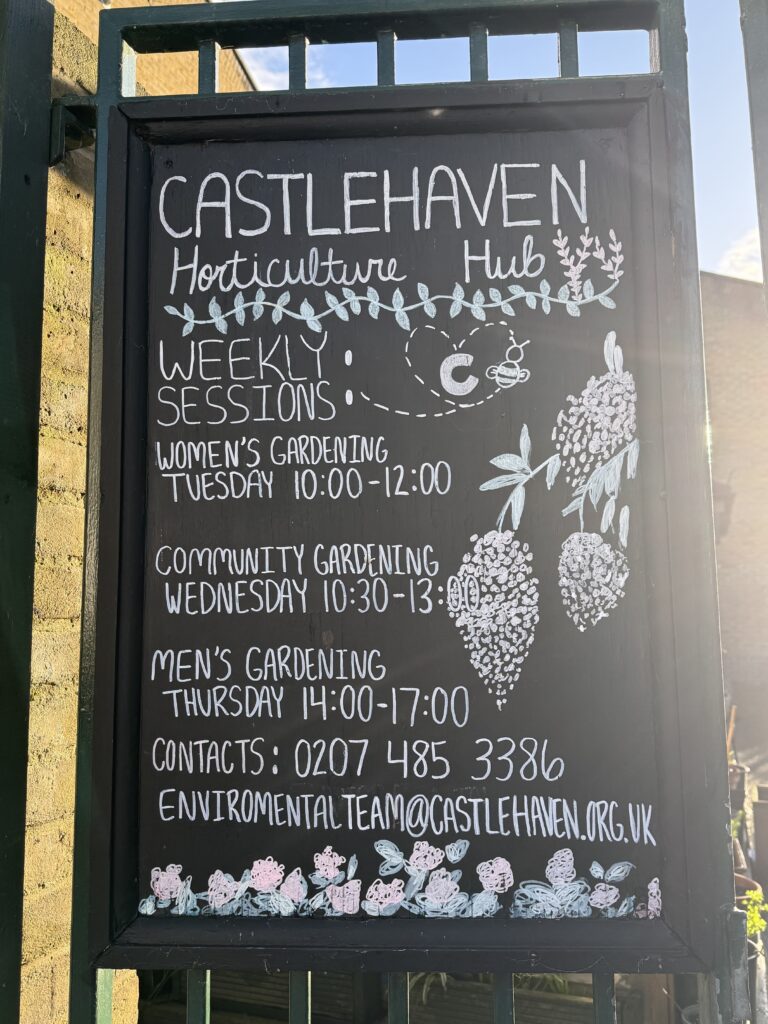
Gardening schedule at Castlehaven Community Garden. Credit: Molly Madden
Sarah Hough a thirty-eight-year old volunteer at Castlehaven Community Garden in Camden, shares, “It’s about bringing people together and creating a space where everyone feels welcome.”
In addition to providing a space for hands-on gardening, many community gardens also serve as educational hubs, offering workshops on topics such as composting, organic farming, and sustainable gardening practices. For example, Culpeper Community Garden in Islington organises a variety of events, including a youth gardeners’ club for children, music jam sessions, and composting classes.
Pensioner Kira Downey, 54, expressed her excitement about volunteering as she stated: “My favourite part is coming back every week and seeing the progress; how things are growing and how the garden is coming together.”

One of the first blooming flowers of spring – a Daffodil planted last fall. Photo Credit: Molly Madden
Despite their many benefits, community gardens face challenges such as limited land availability and financing issues. Most community gardens rely on grants and donations to keep functioning, and without volunteers to help maintain the gardens, they risk shutting down.
Rising property prices and the pressures of climate change also make growing more difficult. Yet, with increasing interest in sustainability and local food production, the future of community gardens in London looks promising, with more councils and organizations supporting these spaces.
If you’re looking to get involved in Islington, there are multiple gardens to choose from such as: Olden Community Garden, Culpeper Community Garden, Arvon Road Community Garden and Penn Road Garden.
Leave a Reply