

By Daniela Forresu
Photo Credit: Alexa_foto by Pixabay
Easter is celebrated worldwide, but each country brings a unique cultural touch to this holiday celebration. From religious ceremonies to vibrant customs – whether Easter eggs, baskets, or egg hunts – people in different nations mark Easter in their own unique ways.
Spain: Semana Santa (Holy Week)
In Spain, Easter is called Semana Santa, which is celebrated with grand religious processions and unique customs. Seville, Malaga, and Valladolid are the most famous cities for this celebration.

La Passion Church in Seville is preparing for the holy week. Photo credit: David AP
They begin with Palm Sunday, known as ‘Domingo de Ramos’. This day includes church rituals, processions, and the distribution of blessed palm leaves.
Holy Week lasts the whole week in Spain, and people commemorate fragments of Jesus’ life and resurrection through a procession. During this procession, people carry wooden arrangements called ‘Pasos’ or ‘tronos,’ which are glorified sculpture icons portraying the Passion of Christ and the Virgin Mary suffering for the killing of his son Jesus, through the main streets.
This often takes place together with the Cofradias (religious brotherhoods), where they are usually dressed in shiny, colourful silk costumes with pointed hoods known in Spain as capirotes.

Semana Santa in Malaga, the Cofradias (religious Brotherhoods). Photo Credit: Ursus612 by Pixabay
The Pasos are normally adorned with gold, silver, and flowers carried from a group of team called costaleros, where they carry them on their shoulders while they pray, accompanied by brass bands playing melodies to create an unforgettable and emotional atmosphere to the processions.
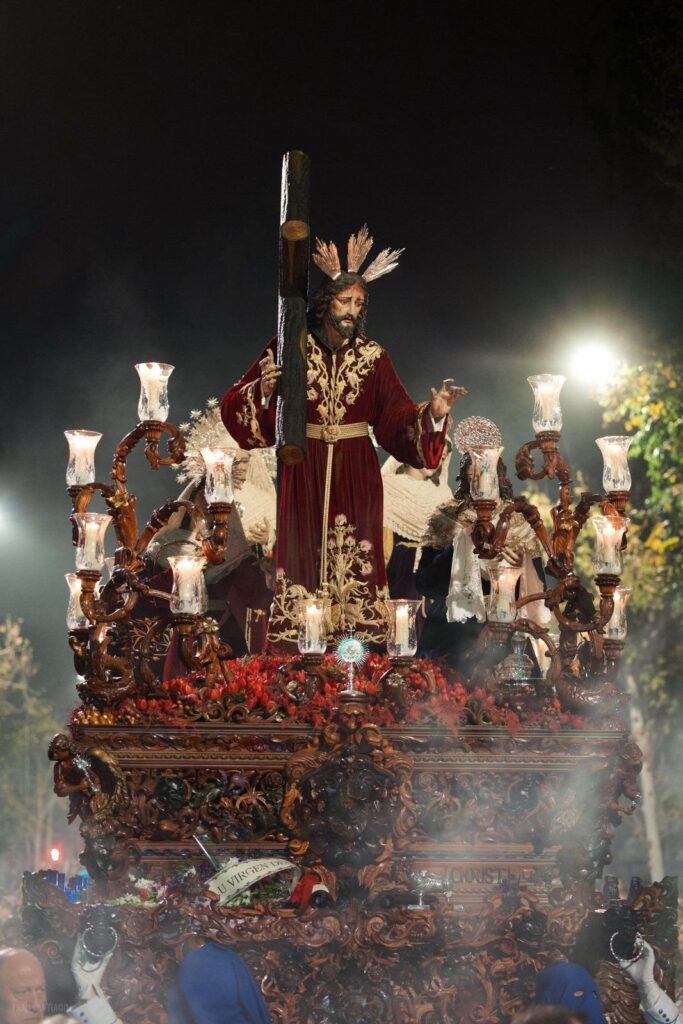
This Pasos was created centuries ago, and even today, people still have devotion for these images of Jesus in Seville. Photo credit: Jose Miguel M. Laguna
The most dramatic moments of this procession take place on Monday, Thursday, and Good Friday, with candlelit night processions, silent marches, and prayers on the streets. Maria De Los Reyes Segura Laguna, 26, a full-time journalism student at London Metropolitan University, is originally from Seville: ”During these days, we do not eat meat because it is seen as a way for believers to participate in Christ’s suffering,” Laguna says.
”On Easter Sunday, for example, we typically eat meat again to celebrate the resurrection, for dessert instead of the typical Easter eggs, we have a dessert called torrijas, similar to French toast, which is a traditional Easter sweet for us.”
Greece: Pasha
In Greece, Easter is called ”Pasha” and is considered the most significant religious event of the year, celebrated all week with ceremonies.
Panos Stachtiaris, 36, a full-time sales team member at the Hilton hotel chain, is originally from Greece. ”Pasha is a very intense and religious holiday for us. The week begins with a procession, but the key moment is the midnight resurrection service, known as the Anastasi, occurring at midnight on Saturday.
“People go into the church holding white candles that they light with the “Holy Light” offered by the priest. This tradition in Greece culminates in the proclamation of Christ’s resurrection, ‘Christos Anesti’.”

Candelights. Photo credit: Pexels by Pixabay
”We also used to play the egg-cracking game called Tsougrisma, where two people hold dyed red eggs and tap the ends against each other. The goal of this game is to try to crack the other person’s egg while keeping your one intact. The person who stays with the last uncracked egg is believed to have good luck for the coming year,” Stachtirais says.

Red-dyed eggs are ready for the Tsougrisma game. Photo credit: Congerdesign by Pixabay
On Easter day, Greek families also typically eat whole roast lamb, or magiritsa, which is a Greek Soup served after the resurrection. For dessert, they have traditional sweets like tsoureki, a typical bread, and koulourakia butter cookies, which are shared among family and friends.
Philippines: Salubong
In the Philippines, Easter is an intense week of spiritual practices. The week for them starts with the Pasyong Mahal (Palm Sunday), where people wave palm fronds in the church to symbolize Jesus’ arrival.
During Holy Week, communities participate in a procession where individuals portray various biblical figures. Alongside this procession, they engage in devotional chants known as Pabasa, which narrate the story of Jesus’ life, suffering, and resurrection. This practice often lasts day and night throughout the week.
Justine Gonzalos, a 32-year-old full-time chef originally from the Philippines, shares how this celebration begins. ”Easter in the Philippines starts with the Pasyon Mahal (Palm Sunday). During the Holy Week, they do procession, and Easter Sunday is called Salubong, where they typically do pre-dawn events on the streets where statues of the risen Christ and the Virgin Mary meet.
“We also do fireworks, and all the church bells ring, and everyone celebrates Jesus’ resurrection all day long’.’
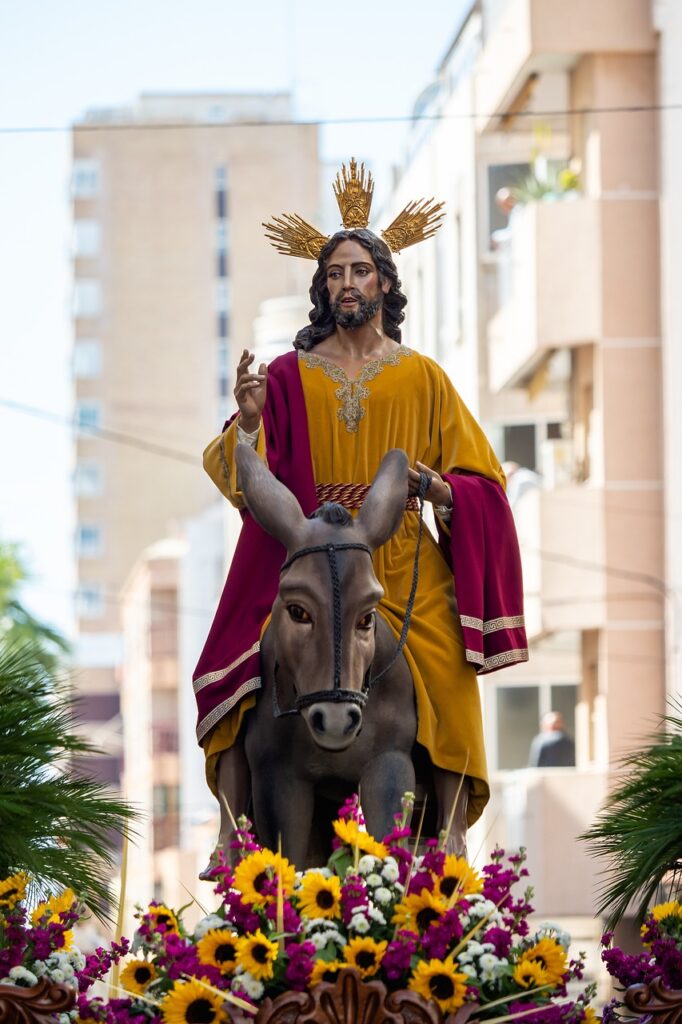
Statues of the rising Christ for Easter. Photo credit: Mianviru by Pixabay
”On Easter day in the Philippines, we typically enjoy roast pig, chicken, kare-kare, which is a rich oxtail stew, and pancit, which consists of various traditional noodle dishes. We celebrate this special occasion by gathering with friends and family to share the meal,” says Gonzales.
Italy: Santa Pasqua
Easter in Italy is a time of reverence and celebration. Every city in Italy has a different way to celebrate this holiday. In Florence, for example, Easter morning begins with the scoppio del carro, which means explosion of the cart. A centuries-old tradition, it consists of a a beautifully decorated cart filled with fireworks that is lift in front of the cathedral of Santa Maria del Fiore.
Many Italians also avoid eating meat during the Holy Week, similar to how they do in Spain.
Video of scoppio del carro for Easter in Firenze
The Holy Week in Italy starts as well with Domenica delle Palme (Sunday of Palms), and all the week, they do a procession waiting for the resurrection of Christ.
Alessandro Fossatelli, 35, a full-time bar manager originally from Rome, explains what people normally eat and do during this holiday: ”In Italy we use to eat very little before the resurrection of Christ, and we do not eat meat at all, praying all day and we go regular to the church,” he says.
”On Easter, after the resurrection for celebration, we meet with parents and friends and we all eat meat together, specifically roast lamb, and of course for dessert Easter chocolate eggs, Colomba di Pasqua (Easter Dove Cake), which is a soft, sweet bread similar to panettone,” Fossatelli says.

Italian Easter Colomba cake. Photo credit: Paolo Falcioni by Pixabay
The Easter tradition in Spain, Greece, the Philippines, and Italy is deeply rooted, showing that Easter is more than a holiday but is a profound expression of faith, culture, and community.
Leave a Reply