
By Kim Tran
The fusion of contemporary art and luxury fashion has become a defining trend, transforming high-end goods into wearable masterpieces. Among the most iconic examples of this intersection is the collaboration between Japanese artist Takashi Murakami and Louis Vuitton, which redefined the boundaries of art and fashion.
This symbiotic relationship enhances brand identity, creates unique consumer experiences, and elevates fashion into an art form. Louis Vuitton gained more fans from this collaboration and now has a cult following behind the Murakami collection.
In 2003, Murakami partnered with Louis Vuitton under Marc Jacobs’ creative direction to reinvent the brand’s signature monogram. The result was a vibrant, playful collection featuring Murakami’s technicolor motifs, such as the Monogram Multicolor and Cherry Blossom designs, with top celebrities like Lindsey Lohan and Paris Hilton taking their Speedy Bags everywhere with them.
These creations blurred the line between functional accessories and artistic expression, turning handbags into collectible cultural artifacts. The collaboration not only elevated Louis Vuitton’s brand identity but also introduced Murakami’s “Superflat” aesthetic which showcases a blend of traditional Japanese art and pop culture, to a global audience.
The items became a collector’s dream as they were super popular amongst stars and fashion lovers and were incredibly rare as they were discontinued in 2015.
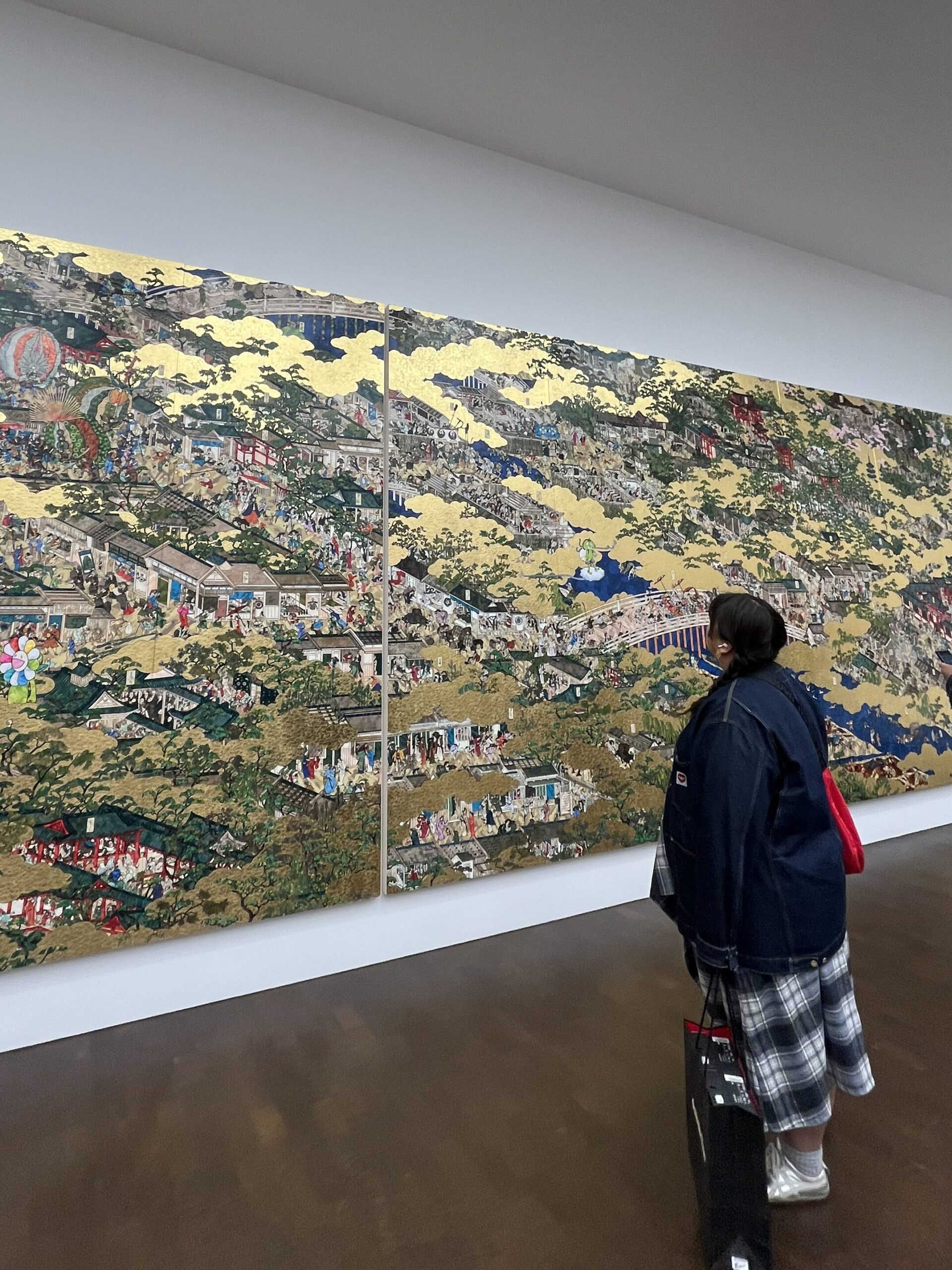

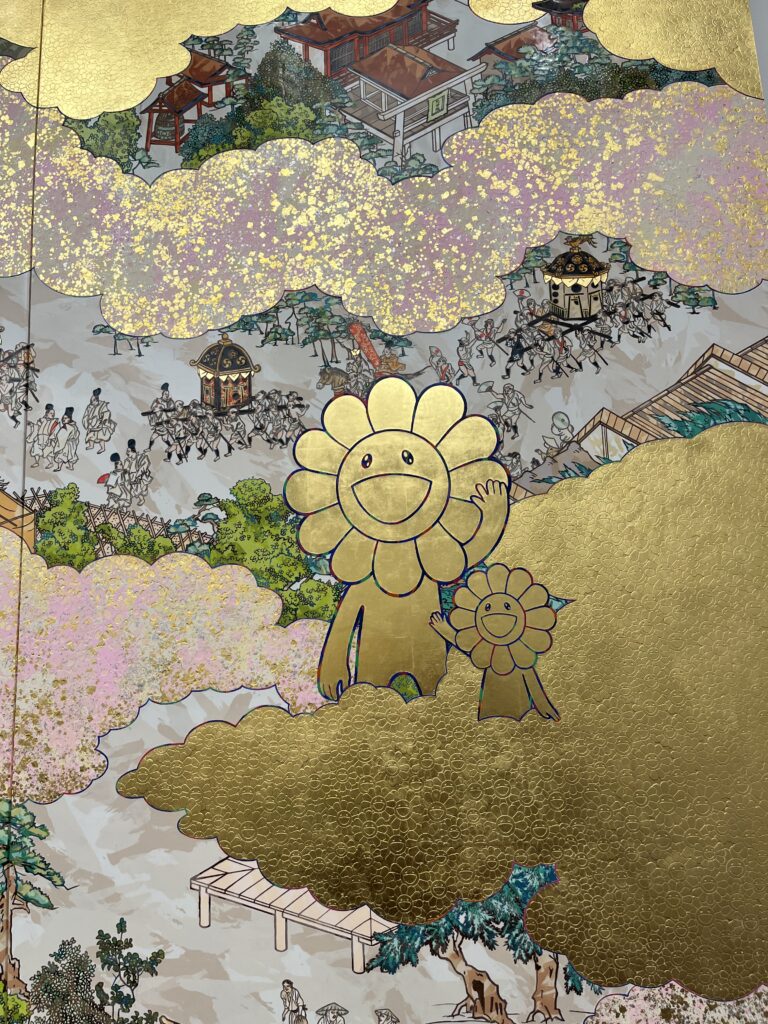
Takashi Murakami’s artworks on display at Gagoasian in Marleyborne. Credit: Kim Tran
Wunnai Tam, 21, a footwear graduate student from De Montfort University, likes the idea behind the collaborations. “I love the releases of these collaborations with artists from these high end brands because I enjoy the exclusivity and rarity of each piece,” he said.
“As an individual that may not even be able to afford that kind of luxury item, I appreciate more how brands include these talented creative people and give it their own twist. I think it’s a good way to broaden the audience’s perspective.
“I feel like a lot of collaborations are selected quite carefully especially in the luxury department. Like Takashi, LV probably ask themselves ‘what can we take away from this artist to make it commercial but also be a signature piece for them?’” he added.

A dupe of the bag found in a charity shop. Credit: Kim Tran
To celebrate the 20th anniversary of their partnership, Louis Vuitton and Murakami launched a re-edition of their original collaboration in 2025. This collection revisits beloved designs such as the Monogram Multicolor and introduces new creations inspired by Murakami’s signature motifs. Highlights include the Cherry Blossom patterns and the Papillon Bags, which are perfectly timed for the spring season.
Alongside the collection’s release, Louis Vuitton launched an immersive pop-up in Soho, London, earlier this year to highlight the playful roots of this iconic collab, using a conceptual space to present the full collection.
It featured a cafe where many people took pictures of their overpriced croissant and coffee – it appealed to many as it was “an affordable luxury experience”. The concept of fashion cafes has become a way for brands to interact with consumers differently and create a space for an immersive experience.
Louis Vuitton is no different to other brands; the pop-up gained a lot of attention on TikTok and created hype around the re-edition collaboration.
Alison Mckinnon, 29, a London Metropolitan University psychology student said, “It’s good for artists that maybe don’t have a wide platform because they’re not as privileged. But I guess when I see bigger artists or like any musicians doing that kind of thing, like Stormzy with McDonalds, that is just a cash grab.
“So that kind of thing where it’s adding to the product rather than slapping on a logo. I would be more inclined to buy something if it’s clear that an artist designed it with a concept in mind,” she explained.
Murakami’s collaboration with Louis Vuitton revolutionised the concept of artist-designer partnerships, merging pop art aesthetics with high-end craftsmanship. The original collections remain highly collectible, influencing both celebrity style and contemporary fashion trends.
The collaboration highlights the success of contemporary art in luxury fashion and what brands should be doing to create wearable masterpieces.
Leave a Reply