

By Julia Johnson, Ahlaam Sharif and Reza Sardrood

According to the Environmental Performance Index, Pakistan is ranked as the 11th most polluted amongst 180 countries.
Lahore, the country’s second most populous city, has an enormous issue with smoke, coming primarily from the burning of crops. The crops that are burnt during harvesting creates the smoke, which leads to pollution.
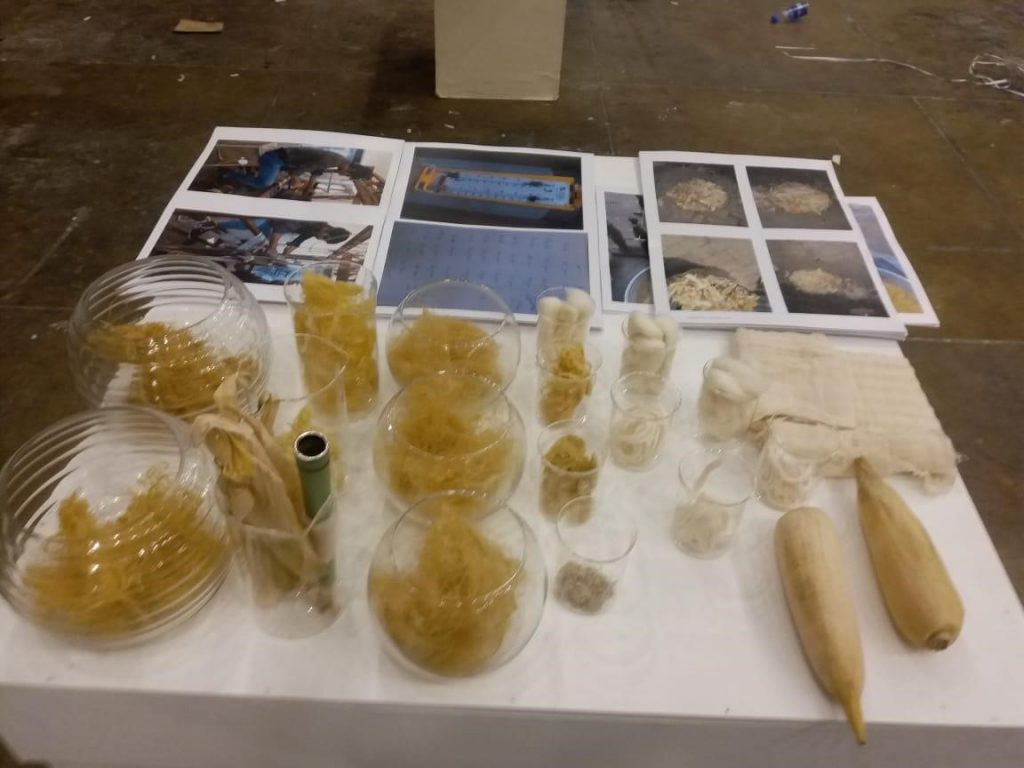
Pakistan-based businessman and entrepreneur Ansir Javed, 25, came up with an idea to make fibre thread from the crops instead of burning it. In 2018, Javed – who graduated from National College of Arts in Lahore – began working alongside London-based fashion designer and entrepreneur Omar Mansoor on a project to create sustainable fabric from corn husks.

People from Pakistan were sceptical to begin with. Javed started off making just 25m of fabric using the thread. Its success enticed others to show an interest.
At first, the husk was not strong enough on its own, so Javed came up with the idea to mix it with cotton. He accomplished this by extracting the fibre from the corn husk and blending it with cotton. It can be biodegradable within 30 days.

“We can expand this project anywhere around the world because I’ve done all the research and can produce fibre anywhere,” Javed told the Holloway Express in a text message from Lahore.

Mansoor told the Holloway Express: “Using agricultural waste and blending with cotton reduces the cost and it is stronger than cotton and can be used in various textile fabrications: weaving, knitting and can also be used as denim fabric.”
Sustainable fabrics attract attention because major retailers such as Adidas and Levi’s these days feel an obligation to use them.
Primark has developed a sustainable cotton program in India in 2013. The aim of the project is to make sustainable cotton produced by independent farmers, therefore extending their reach.
The project was expanded into Pakistan in 2018. It is likely to help farmers there also increase their profit and yield, while helping them to learn suitable farming practices at the same time.

This is great! I am doing a research similar to this and would like to know more about the step-by-step process of turning corn husk fiber into fabric. i would be beyond thankful if you share the process with me. your efforts will not go unnoticed.