

Words and pictures by Charles Adun
African traditional materials are largely environmentally friendly because they are made from cotton and are simple to make. Cotton grown in arid environments requires a lot of water, while organic cotton cultivated in more temperate climates uses less water and is better for the environment.
Before the advent of sewing machines, most of these materials were hand woven and known as “Ankara”. They are dyed with local herbs that are medicinal and don’t hurt the skin.
Rachel Nkaga, 58, has a clothes shop in Dalston market which she describes as the ‘best African clothing in town.’ She says she’s very happy with her African materials because a lot of Africans patronise her store.
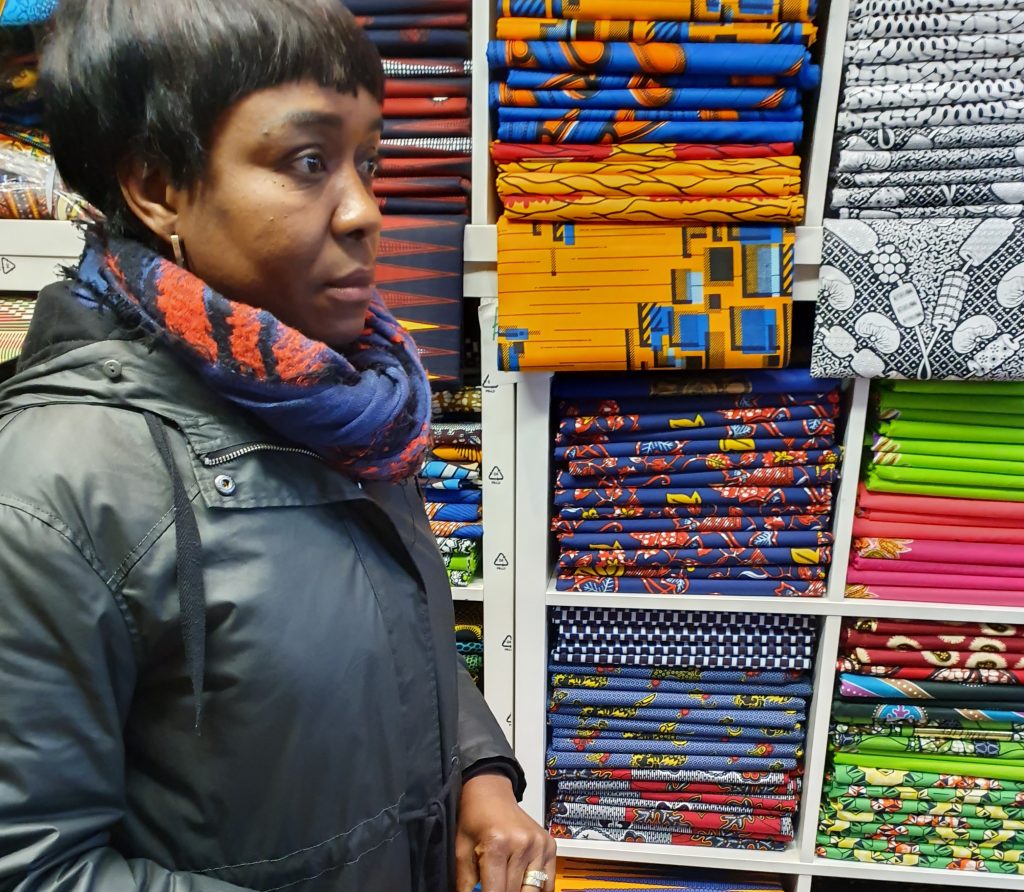
“Cotton materials are better on people’s bodies because they are lighter and don’t make you sweat,” she says.
She sells both ladies’ and men’s wear, some of it hand-sewn in the traditional manner. Most customers like her wares for casual, instead of the normal suits for work.
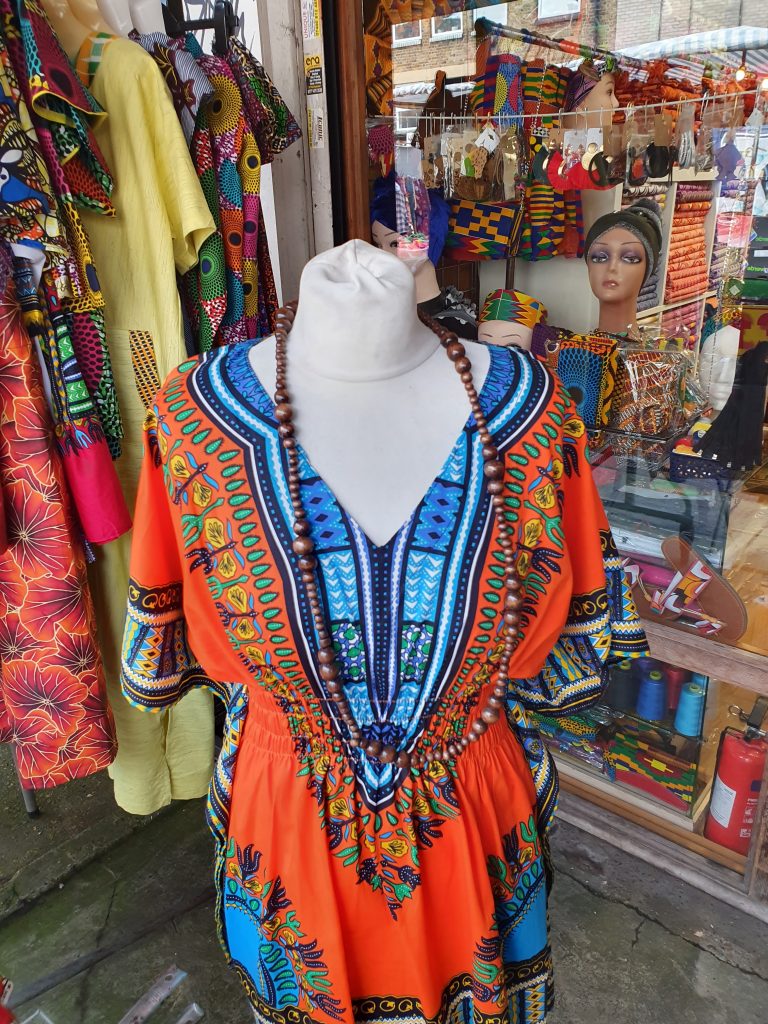
These African materials have a good reputation for high quality and are popular world-wide. Examples of these Ankara materials include boubou and asoke in the Yoruba language in Nigeria. They’re mostly worn by traditional chiefs and kings from the southwest of Nigeria.
Europeans now favour African traditions in marriage, outings, and celebrations. They’re seen on catwalks across the world.
There’s only one snag: they’re sometimes not warm enough for temperate regions. The solution is to wear your normal warm clothing underneath.
The African vogue is now being imitated by those who are preaching climate-friendly clothing.
Buy organic cotton if you can!

Leave a Reply