
By Molly Madden
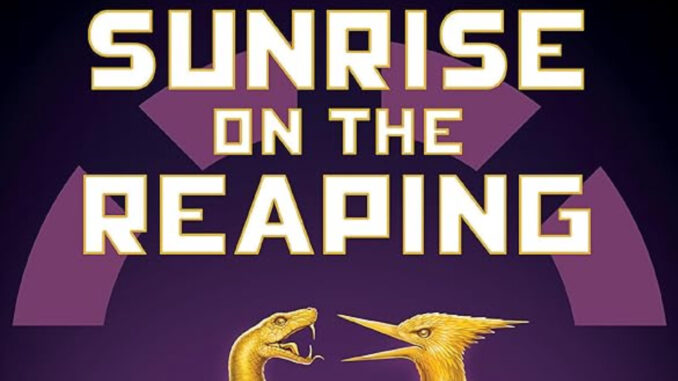
Suzanne Collins, the highly decorated author of the Hunger Games trilogy, returns with the highly anticipated prequel: Sunrise on the Reaping. After the third and final book of the original series came out in 2010, Collins took a break from writing for 10 years before releasing the Ballad of Songbirds and Snakes, a prequel to the trilogy that explores the rise of President Coriolanus Snow and the 10th Hunger Hames.
Sunrise On the Reaping develops the story of Haymitch Abernathy , who is known in the original books as Katniss and Peeta’s mentor. The novel follows Haymitch through the fiftieth Hunger Games, the quarter quell, where twice as many tributes are selected to fight to the death in the arena.
Haymitch, who we previously know as a bitter drunk in the original series, is a product of poverty and hard labour. Collins portrays Haymitch as a character who, while not as outwardly heroic as Katniss or Peeta, is relatable and grounded in his authenticity.
Humour in dark times
His wit offers a sense of humor amid the dark atmosphere of the Games, yet the novel also explores his emotional side, particularly his love for his sweetheart, Lenore Dove, who motivates him to follow through on his attack against the capital, revealing the complexity of Haymitch’s character beyond his tough exterior.
Haymitch is thrown into the arena, where he not only has to survive but begins to uncover whispers of revolution among Capitol elites. This dual task, staying alive and over throwing the system, keeps the suspense high, even though readers know, ultimately, the Games will continue. Despite the inevitable failure in the larger scheme, the novel builds a sense of urgency and anticipation, as Haymitch’s actions set the stage for a future rebellion.
The novel further develops the already beloved characters from the original trilogy and surprises the reader with the unexpected connections between them while simultaneously diving deeper into the treatment of the victors and the total control of the capitol.
Famously known to mirror the political climates of the current day, Collins’ novels provoke deep thought and reflection about those in power. She expanded this concept into a critique of modern society, particularly the deceitful role of media and reality television in shaping public perception and manipulating narratives.
Sunrise on the Reaping continues this tradition, adding yet another layer to the story while introducing a new context to understand the games and power in Panem.
Critics’ choice?
Most critics loved the book. “Hearing about Haymitch’s games for the 50th quarter quell painted such gruesome, yet strikingly beautiful imagery and the twists and turns were truly breathtaking in terms of what was to be expected as a long time fan of the series,” wrote reader Matt Diprose ikn a google audience review.
But some professional reviewers weren’t so sure. “I have always found the books’ attitude to underage violence and the deaths of children difficult, even if it follows a long literary tradition. The tributes are subjected to physical and mental degradation: Sunrise on the Reaping can feel more like A Clockwork Orange than a novel for 12 and up,” wrote the Guardian’s Philip Womack in a review.
Leave a Reply