
Image by Tilly McAuley
By Tilly McAuley
Socialisation is a key part of growing up. From adolescence, connecting and forming bonds with others is a vital process that everybody goes through. That process never stops despite the years passing by, but it does become equally difficult.
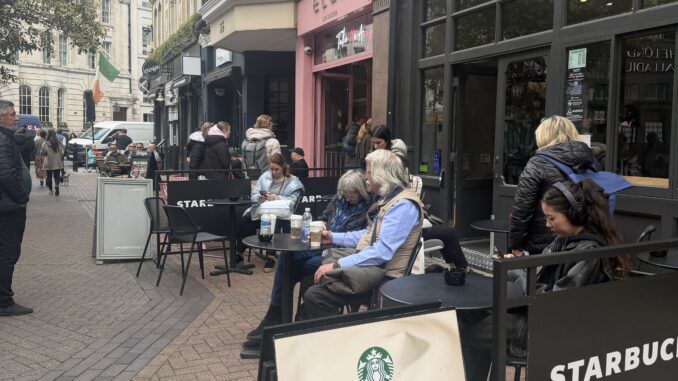
Third spaces, such as cafés, parks, libraries, aid the development of friendships. They offer a place for young people to be present with their friends and progress socialisation, rather than staring down at a screen.
But with these beginning to disappear, where can they go? And what effect would this have in the long term?
While the decline of third spaces did not happen overnight, it is happening and is becoming more evident. In 2023, MyLondon showed how three Costa coffee stores had been closed down on Holloway Road, and had been replaced by kebab shops or simply left abandoned. Considering Holloway Road is home to London Metropolitan University, it would be useful to have more coffee shops for students to carry on with their work, or find a place to sit and chat with friends over drinks.
But with these places shutting down, it makes it much more trickier for them to find somewhere that is suitable. This then develops into a bigger issue – a loneliness epidemic growing amongst young adults, and the increase of social media and connecting over the phone, rather than in person.
Being connected over the phone isn’t necessarily equivalent to being surrounded with people. Texting on social media can allow people to talk to their friends at any time they want, yet this form of interacting can hinder social skills and communication. The chart below highlights how much social media has grown in recent years.
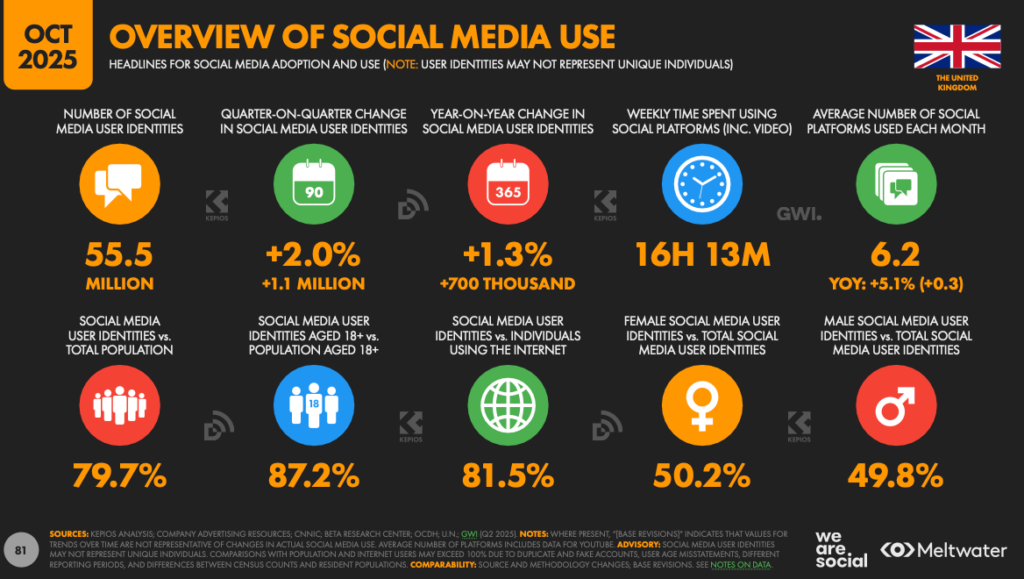
Image by Meltwater
Social skills are built on face-to-face interactions, and with a decline in this, it can lead to miscommunication and more of a struggle comprehending certain situations, particularly if someone isn’t acclimatised to it because of time spent on social media. An article from New Horizon Wellness Services discussed how social media impacts the critical components to communication and the way individuals interact with one another, yet social media shifts this into the digital realm where social cues can be hindered.
“It feels lonely more than anything,” said Liedson Gomes, a second-year student at London Metropolitan University. “Yeah, we can hang out in university, but other than that, there’s nowhere for us to go afterwards. Unless we go somewhere else that isn’t near the uni, and those places can be expensive and far when we just want to go somewhere close by.”
This reinforces how vital third spaces are – they allow for young people to not get wrapped up in the digital world and interact with one another in person, leading to higher levels in socialisation and communication skills. Removing these spaces only aids in the decline.
Tying into the idea of social media, there is a rise of loneliness in young people, what is being titled as the ‘loneliness epidemic’. The BBC said that 33% of Brits aged 16-29 reported feeling lonely ‘often, always, or some of the time’ (research by the Office for National Statistics). While the internet does have its perks, allowing people to communicate quickly and at any time of day, it can grow into the feeling of isolation – feeling connected, but lonely simultaneously.
Speaking to friends online is drastically different from meeting in person. Wrapped in worklife, university assignments with due dates that are rapidly approaching, sometimes it is the easier way to communicate. With the decline of third spaces at the same time, it can feel like the only way.
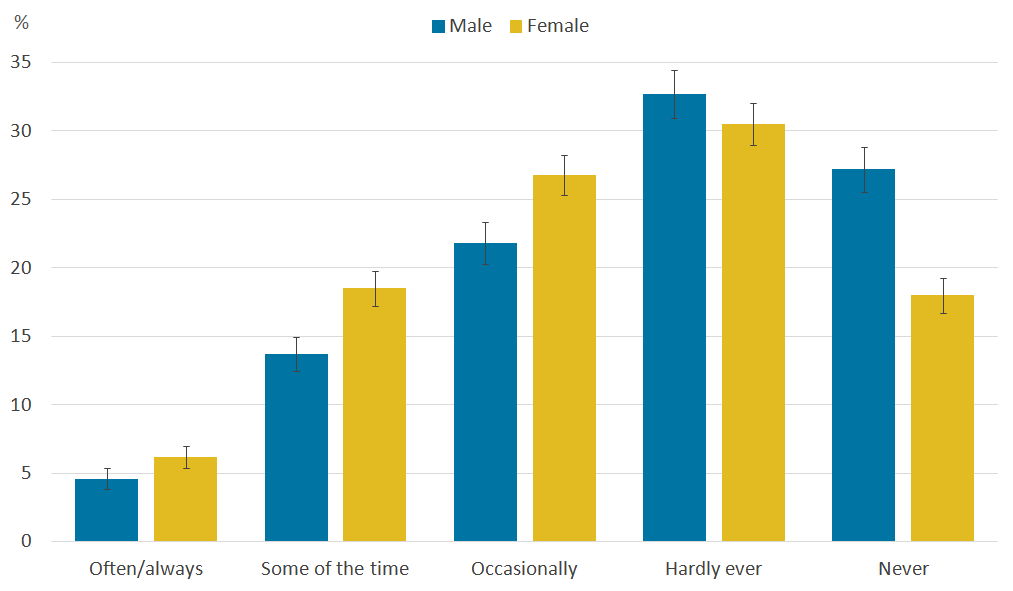
Image by Office for National Statistics
Some third spaces can come at a price, like coffee shops and pubs for example, highlighting the importance of having free places, such as youth clubs or libraries, but the disappearance of these stems into another problem for students. With the cost of living crisis persisting into 2026 and inflation not appearing to be stopping at any time soon, students are struggling more with balancing their bills, alongside the necessity of buying food and getting through the month.
The National Union of Students found that 96% are cutting back because of said crisis, and 90% found this to have an impact on their mental health. Students already have much to handle, dealing with the pressure of their upcoming assignments and completing it, forcing them to handle how they can purchase food is an added stress that is not needed.
A comment from Anna Taylor, the executive directors of the Food Foundation Charity, stated, “food prices rising this high and this fast leaves families on the lowest incomes with nowhere left to cut except the food on their plate. When that happens, people skip meals, children go hungry, and diet-related illness rises.”
This once again reinforces how important third spaces are for students. Free places for them to unwind after a long day of studying, somewhere they can bring their own food, allows them to not worry about the pressure of purchasing over-priced items. Removing these spaces continues to mount the weight on young adults and cause them to juggle more arising problems.
Getting the help you need
As university opens the doors to further education and a wider career search, it also allows individuals to meet new people and form friendships that can develop beyond a lecture room. But these friendships can struggle to blossom, if at all.
Research collected by YouGov found that over half of students, 53%, would feel more uncomfortable seeking help for loneliness, and 43% of 18-34 year olds were worried that they would be judged if they were to admit that they were feeling lonely.
It is rare for students to create firm friendships in classrooms. They develop outside, and reduce the isolated feeling that a wide percentage of students experience, but removing the spots that aids these friendships causes it to become more difficult.
”I really did struggle,” admitted Michelle Buchelli, a second year student at LSBU. “I found it awkward – we would speak in class and over the phone about our assignments, but never outside of our lectures. It was only until a couple weeks in that one of my friends suggested that we go to a coffee shop and work on an essay that we had due, that was when we became proper friends.”
Overall, it’s clear to see that third spaces matter. Students need a place they can feel welcome and without the pressure of assignments, the price of food and drinks, somewhere they can be with friends. But it can be more than that – it is somewhere that friendships form, an environment that is needed amongst the constant pressure.
With the cost of living crisis, inflation, and the feeling of isolation, these third spaces are a way of reducing the reminder and keeping students alive amidst all else they have to deal with. Removing them doesn’t do any good, particularly in areas with a high rate of students, like Holloway Road. Fighting for these third spaces isn’t just about businesses, it is also about fighting for the unheard voices – students.
Leave a Reply