
By Ellie-Eve Bennett
Photo by Ellie-Eve Bennett
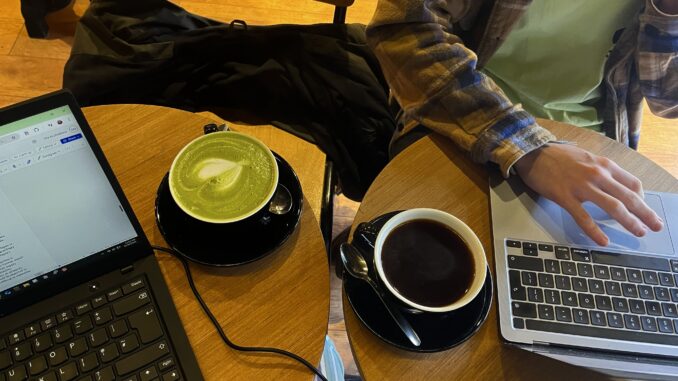
Walk into almost any coffee shop on Holloway Road during the week and there is a good chance most tables will be occupied by people on laptops. Students type up assignments, freelancers answer emails and remote workers sit through Zoom meetings with headphones on and coffee beside them.
Audio clip taken by Ellie-Eve Bennett in Costa
Coffee shops have increasingly become unofficial offices for people who either work remotely full time or split their week between home and the office. Since the Covid-19 pandemic changed working habits across the UK, cafés have become popular places to work because they offer Wi-Fi, a quieter environment than home and a sense of routine.
The trend is not just visible in Holloway. Across Britain, hybrid working has become normal for millions of employees. According to UK flexible working data, 28 per cent of working adults in Great Britain now work in a hybrid arrangement, while almost 80 per cent of employees have access to some form of flexible working.
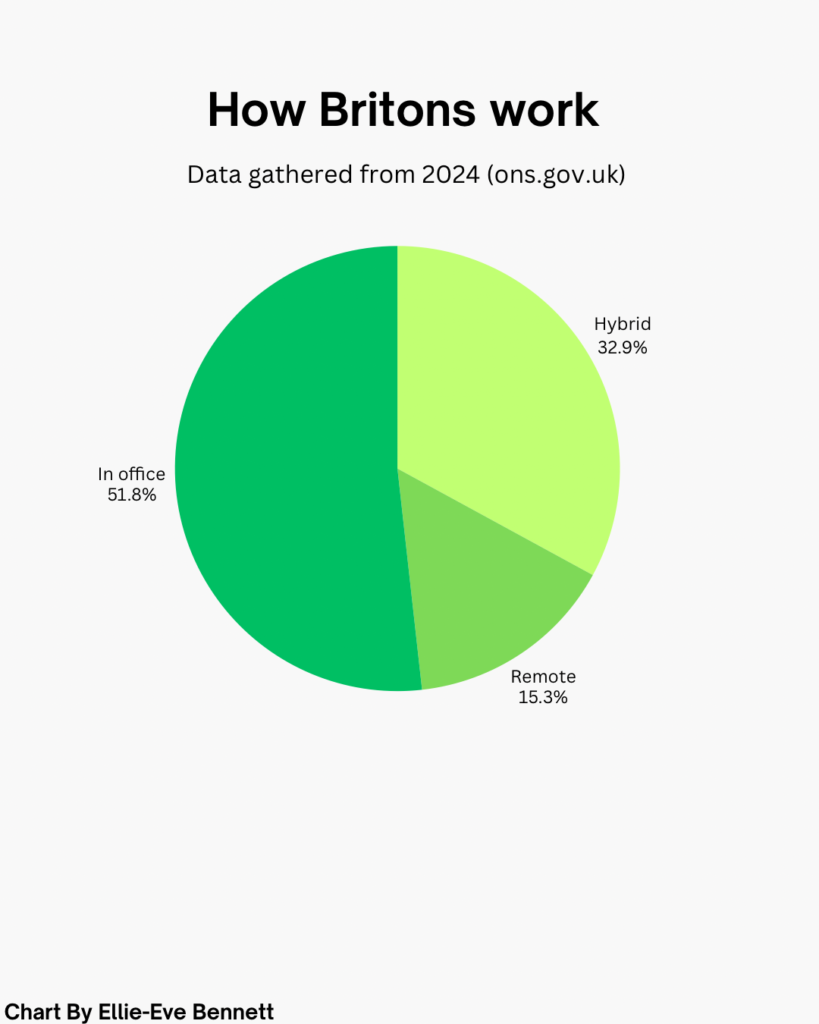
Research by Broadband Genie found that 23 percent of Britons work from a coffee shop at least once a week. The same research showed that 34 percent said they use cafés because they like being around other people, while 27 percent said they feel more productive there than at home.
For many people in Holloway, working from a café is cheaper and easier than renting office space or trying to work in a crowded flatshare. London rents remain high and many younger workers do not have enough room at home for a proper desk setup. Cafés offer internet access, tables, heating and a change of environment for the price of a drink.
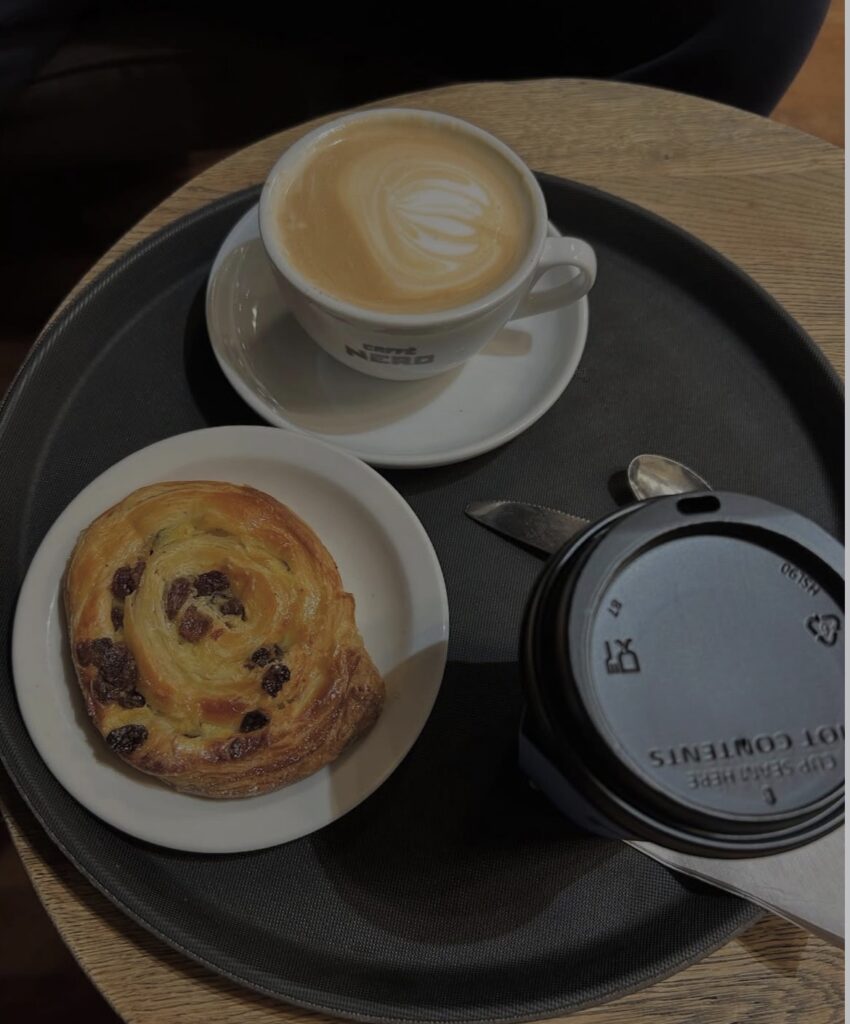
The area itself also helps explain the trend. Holloway Road has a large student population because of nearby universities, including London Metropolitan University. Many students already use cafés as study spaces, and the line between studying and remote work has become increasingly blurred.
Some people simply prefer the atmosphere. Working from home can feel repetitive and isolating, especially for freelancers or people living alone. Cafés provide background noise and social interaction without the pressure of a formal office.
Researchers from Bayes Business School and Goldsmiths, University of London, found that more remote workers are using cafés and pubs as “third spaces” between home and work. The study suggested these spaces can improve wellbeing and help reduce loneliness among people working remotely.
Professor Stephanie Taylor, one of the researchers involved in the study, said these spaces offer “a middle ground between the isolation of home and the structure of the office”.
The idea of cafés acting as social spaces is not new, but their role has changed. Before remote work became common, coffee shops were mostly places where people met friends, grabbed takeaway drinks or stayed briefly while commuting. Now many customers stay for several hours at a time.
As a result, cafés have adapted. Many now advertise free Wi-Fi, charging points and large tables designed for people working on laptops. Some businesses even benefit from remote workers because they bring steady daytime trade during quieter hours.
The chief executive of coffee chain Esquires recently said working from home has been “fantastic” for café businesses because customers stay longer and spend throughout the day.
However, not everyone likes the shift. Some café owners argue that customers who stay all day after buying one coffee reduce business by taking up tables. In some parts of London, cafés have introduced laptop-free areas or time limits during busy periods.
VOXPOP interview of 22-year-old freelancer Bella.
Online discussions about the issue show mixed opinions. Some people argue cafés are now too focused on remote workers and no longer feel social.
Jack Antony, 24 from Highbury, states: “It is just too crowded at all hours now. Workers will hog the tables for hours on end which means i always have to take my coffee to go”
Others believe coffee shops naturally work well as community spaces where people can study, work and meet friends at the same time.
“It is good to get a change of scenery when working. I freelance so have no office to go to so it is great to have a third space where I can be social and get work done,” says Ella Creagan, a grad student from Finsbury Park.
The popularity of coffee shop working also reflects wider changes in London life. Office culture has changed since the pandemic, and many companies no longer require employees to commute five days a week. At the same time, homes are becoming smaller and more expensive, especially for younger people renting in London.
Because of this, public spaces have become more important. Cafés now fill a gap between home and office life. They allow people to leave the house without needing to spend large amountson co-working memberships or travel into central London.
Research suggests younger workers are especially likely to use cafés as workspaces. A study discussed by Swinburne University found that nearly half of remote workers spend some of their working week in cafés or similar public spaces.
Along Holloway Road, the result is visible every day. Coffee shops are no longer just places to grab drinks. They have become study spaces, meeting rooms and temporary offices for people who want somewhere more social than home but less formal than work.
As hybrid working continues across the UK, the number of people working from cafés is unlikely to fall anytime soon. For many people in Holloway, a laptop and a flat white have become part of the normal working day.
Leave a Reply