
By Khadeeja Rahman
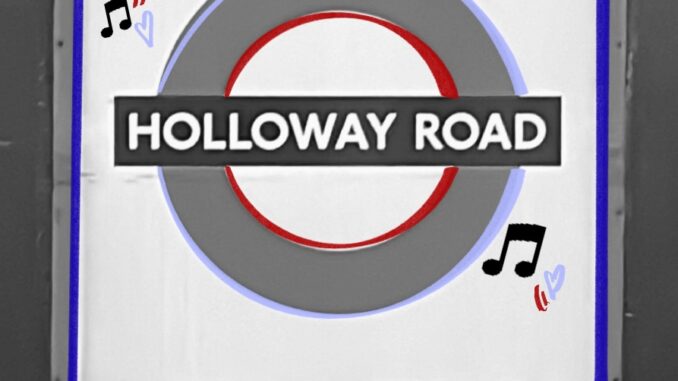
At 9:34am, the platform at Holloway Road station is already crowded. Backpacks brush past hurried shoulders, the low rumble of the approaching train builds, and conversations dissolve into the familiar rhythm of the morning commute.
But for many students, the noise of the city is quickly replaced by something more personal. Headphones go in, playlists begin, and the journey transforms. What might otherwise be a routine trip becomes something curated — a soundtrack that shapes mood, memory, and even identity.
For some, that soundtrack is both soft and electrifying, like Naina Morey, easing them into the day as they walk past quiet parks and familiar streets. For others, it carries a sense of nostalgia and cultural connection, with tracks like Bahebak Ma Baraf echoing through London’s busy transport lines. And sometimes, the choice is purely about energy — something upbeat like Beauty and a Beat to cut through the early morning fatigue.
This isn’t just about music taste. Across Holloway, students are using music as a way to navigate the city — to manage stress, pass time, and create a sense of control in an otherwise repetitive routine. What people listen to on their commute reveals more than preference; it reflects how they experience the spaces they move through every day.
But this experience isn’t unique – ‘’I’ve never had an original experience’’ a popularised notion on online comments has seeped its way through our daily commutes and there is something so collective and humane about that. Across Holloway, this shared rhythm plays out every morning. The same train doors open, the same platforms feel full, and yet each individual steps into their own world, shaped by what they choose to hear. Music becomes a quiet form of control, a way to personalise something repetitive.
The journey itself begins long before the train arrives. For many students, the commute is made up of small, familiar moments: the walk from home, the turn onto a main road, passing by our corner shop and the brief pause before tapping our cards to get through the station. These moments, often overlooked, take on new meaning when paired with sound.
On quieter mornings, the walk feels slower, almost suspended. The streets are still waking up, and music becomes less about distraction and more about reflection. Tracks like Naina Morey settle into that stillness, matching the softness of early light and the rhythmic beat of footsteps. In these moments, the city feels distant, and the commute becomes something personal, a space to prepare, or simply to exist without interruption.
Places along the route begin to hold emotional weight through repetition. A bench near a park, passed every day, becomes more than just a resting point. It becomes part of the routine, a marker in the journey where music and memory overlap. Sitting there, even briefly, creates a pause and music fills that pause, turning it into something more than what it is,a deeper meaning to an albeit mundane bench.

Image by author
As the commute progresses, the atmosphere shifts. Approaching Holloway Road station, the pace quickens. The crowd thickens, conversations overlap, and the sound of the city returns in full force. Here, music takes on a different role not just as background, but as a buffer.
For some students, it is a way of holding onto identity within the noise. Songs like Bahebak Ma Baraf carry cultural familiarity, creating a contrast between the internal and external environment. In a city as fast-moving and diverse as London, that contrast becomes a grounding way of staying connected to something personal while moving through a shared space.
“I listen to music from home a lot when I’m commuting,” says Zainab, a student in their first year. “It just makes everything feel a bit more familiar, especially when the train’s packed or it’s a stressful morning and I haven’t had time to myself.”
Others describe music as a way of managing the emotional pace of the day. “When I haven’t had much sleep, which is more likely because of finals season, I’ll usually have a heavy based song playing ” says Jasmine, explaining how their playlist changes depending on their mood. That shift becomes most noticeable in the final stages of the commute.
The transition from platform to train, from waiting to rushing home, often brings a change in energy. Upbeat tracks like Beauty and a Beat cut through the monotony, turning the journey into something more dynamic. The rhythm of the music begins to align with the movement of the train, transforming a passive experience into something more exciting, almost cinematic.
“I feel like I’m in a film sometimes,” she says, laughing. “Like everything just matches the music I’m listening to, it makes the commute so much less boring.”
These small adjustments to slower songs in quiet streets, nostalgic tracks in crowded stations, and energetic music on the train reveal how intentionally students shape their journeys. The route itself does not change,the route stays repetitive but the power to alter and customise the experience makes it all the more fun.
According to Daniel Levitin, music has the ability to regulate emotion, influence perception, and even alter how we experience time. In the context of a daily commute, this can make a journey feel shorter,exciting and more manageable. What might otherwise be a routine part of the day becomes something structured and meaningful, giving us way to make our commute not something we dread.
In Holloway, this is particularly significant. The area is defined by movement students, workers, buses, trains all passing through at different speeds, from different backgrounds. The music people carry with them reflects that diversity. From classical influences to Arabic melodies to mainstream pop, the commute becomes a quiet intersection of cultures, each person moving through the same space but experiencing it differently.
And yet, despite those differences, the act itself remains strikingly similar. Headphones go in. A song begins. The outside world softens. For a few minutes, the city becomes something you move through on your own terms.
What begins as a simple habit — listening to music on the way to university — reveals something much larger than us all. It shows how students navigate not just physical space, but emotional space while we are all busy trying to get to our classes on time and meet deadlines . How they create moments of comfort in routine, and meaning in repetition.Because in the end, the Holloway commute isn’t just about getting from one place to another. It’s about how that journey feels — and for many students, that feeling is shaped, track by track, into something uniquely their own, even if the experience itself is shared.
Leave a Reply