

By Oana Orzac
Propolis, wax, royal jelly, honey…these are some of the sweet things that bees give to us.
These “gifts” have been known since Ancient Egypt. At that time, beekeeping was practised by all classes of people. They used honey to sweeten food as well as for health and beauty.
Apparently, Egyptian women used to make face masks with milk and honey for moisturization.
Unfortunately, in recent years, research has shown significant declines in species of bees in the UK. Pests and diseases are an important cause of loss among bees.
Also, beekeeping has fallen by 78% since 1953 in England and Wales. This is due to bee diseases and low honey prices that discourage people from taking up the profession.
However, there are still people who are beekeepers as an addition to their daily work. More importantly, beauty products that containing honey are natural, beneficial and cheap.
“Honey is like magic”
Gratian Roatis is a Romanian Mobile Developer and beekeeper. He sells the honey on his website called Gradomi.
With five years in beekeeping, Gratian knows the benefits of honey on the skin. He said: “In addition to strengthening the body and wound healing, honey is also used for acne, skin hydration and is good for protecting your skin in cold seasons.” He added that the antioxidants present in honey’s composition also have a role in preventing wrinkles.
“Honey is like magic”, said Honey Bee Beautiful, owner Catherine Clark, 49.
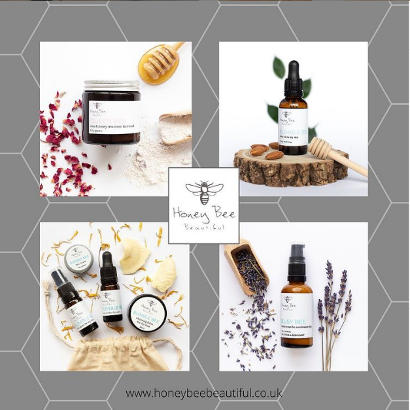
Honey Bee Beautiful is a sustainable honey skincare business from Usk, Wales. Catherine started beekeeping 9 years ago but she also works full time in an industrial unit. She worked as a litigation lawyer for 20 years before this. “What I do now is where my heart lays – in nature every day!”, says Clark.
The passion for beekeeping and sustainability came from her mother who produced their food and clothes, and nothing was wasted.
“I learned about the importance of nature and developed a connection with it. When I first had my own honey and beeswax, I wasted no time in turning these things into my own natural therapeutic skincare range.”
Honey Bee Beautiful products are naturally antibacterial, anti-inflammatory and deeply moisturizing. According to Catherine, these products help with skin dryness, breakouts, and skins prone to eczema, psoriasis and rosacea.
Honey for dry skin
Here are some recommendations from Catherine for dry skin using Honey Bee Beautiful products:
- Cleansing Balm – to provide a deep cleanse and skin massage.
- Spritz cleansing – pad then wipes face for final cleanse and pore tightening.
- Take 2/3 drops of face oil – and tap onto the face. Overnight is when your skin is repairing itself and the nourishment provided by a face oil.
- For added moisture, roll a little under-eye serum
Sustainable skincare brand
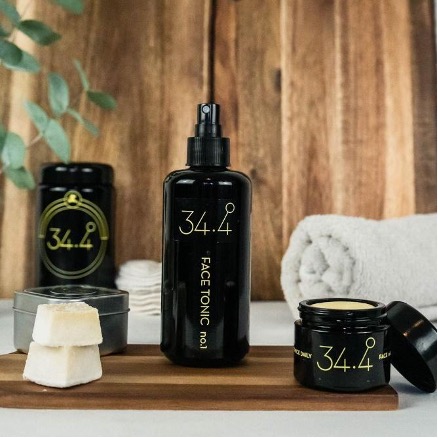
34.4º is a small local business that sells skincare products and helps the bees by donating on every order to Natural Beekeeping Trust.
Elka de Wit, the founder of 34.4º, said she wanted to create a sustainable skincare brand for people, the community and the environment. The 34.4º mission, as Elka described, is to provide good, organic, sustainable skincare while guaranteeing a great environment to all the people who work in the company.
Elka has worked in many fields until she found her passion for environmentally friendly products. She said: “I work the entire week for 34.4º and quite often also during the night or in the early morning. The huge passion for this project keeps me going.”
She got the idea of honey skincare after helping the community apiary.
She started her brand because she was dealing with bad skin and honey helped her. Soon she realized that she could have her own brand that would not follow the “sell a lot and get rich quickly”- type of philosophy.
Elka also explained that they have a “collection for people with sensitive skin, but also make quite a few products which are multi-purpose”.
34.4º procure honey and beeswax from the Azores, Portugal. It’s the only place in Europe where the bees are still free from varroa mites (an external mite parasite that attacks bees). Most people treat bee’s disease with pesticides. “Buying from the Azores ensures that the beeswax and honey that we’re using is pesticide free,” says Elka.
Here are Elka’s recommendations for sensitive skin using 34.4º:
London Met bees
Did you know that London Metropolitan University has bees on the roof?
About 40,000 bees live on top of the Rocket building at the Holloway campus. They produce around 40 jars of honey every year. Thanks to the University’s Green Sustainability programme and contributor Oliver Holmes, you can watch them live (https://hml.londonmet.ac.uk/Live/8). Follow their progress on Twitter at @GreenLondonMet.

Leave a Reply