

By Evie Smith and Adams and Giulia Zanatta
Since the beginning of the pandemic, there has been a rise in mental health issues. The Health Foundation reported that personal well-being levels during the first and second lockdown were among the lowest seen since the start of the data collection in 2011. The research shows that it affects some groups much more than others, such as the elderly and people that live alone.
In addition, the Health Foundation reported that more than 70% of adults in the UK reported feeling somewhat or very worried about the impact of Covid-19. Common concerns included thoughts about the future (63%), anxiety and stress (56%) and feeling bored (49%).
Hand-in-hand – or paw-in-paw – with that, there has been an increase in pet ownership since lockdown began. The PFMA (Pet Food Manufacturers Association) confirmed a dramatic rise in pet acquisition over lockdown, particularly among millennials.
With social distancing de rigueur and social life kept to a minimum, many young people are suffering from a lack of human contact due to Covid restrictions. “There’s reason to think that pets can mitigate some of the stress and loneliness arising from public health restrictions — and provide that much needed physical touch,” said a recent article in Forbes, explaining why pet owners have “smaller decreases in mental health and smaller increases in loneliness compared to those without pets”.
Pet ownership on the rise
The PDFA research showed that over one third (35%) of young adults have already embarked on their lives as new pet owners, while 11% of all households in the UK welcomed a new pet during lockdown. Their research highlights that dogs were the most popular addition to people’s households.
Louise John, 37, works in the construction industry and is a pet owner. She has a dog called Waffle and a cat called Timmy. Her cat became part of her family in 2008, while her dog entered the scene in May 2020.

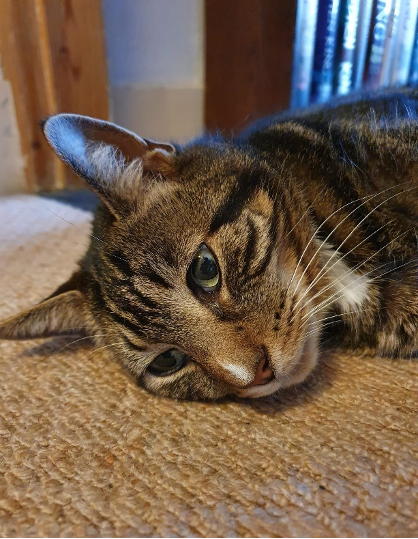
Ever since the first lockdown Louise has been working from home five days a week. As a result, she lacked social interaction and felt as though her mental health was suffering.
“I have moments when I have felt more anxious than normal,” she admitted. “Sometimes I have felt down about things that wouldn’t normally get me down.”
Louise felt that her feline friend helped alleviate her loneliness, but once she got her dog it made a bigger impact in a more positive way.
“Once I was able to take him walking, I could start talking to people I wouldn’t otherwise have met,” she said.
“It was a good reason to get out and about and not become isolated. It gave me fresh air, exercise and the opportunity to socialise with other dog walkers,” she said, adding that without Waffle she would have got increasingly isolated.

A pet “would have helped me”
Ashley Jones, aged 30, a London Metropolitan University student, didn’t have a pet during the Covid-19 period. It’s something she regrets.
“I think having a pet would helped me… the only reason I don’t have a pet currently is due to a lack of space in my home,” says Ashley.
She explained that her mental health didn’t suffer during this time but she often found herself feeling lonely and isolated.
Although she characterises herself primarily as a “cat woman”, seeing how dogs have impacted people lives around her has tempted her to adopt a dog.
But don’t forget – a pet isn’t just for lockdown but for life…
Leave a Reply