

By Maria Calabrese
Picture this: you’re sitting in class in Year 9, and you’re dreading the teacher asking for the homework assignment. You’re dreading it because you haven’t done it. Usually, the worst that could happen is getting detention or maybe having to do some extra work for the following week.
But when I was sitting there in my history class without having done my homework, what I’d get from my teacher was a torrent of abusive language and humiliation: “You’re useless”, “You’re lazy”, “You’ll amount to nothing, I’d say you give up now”.
These were just the daily things; sometimes, he would deliberately make me read complicated texts aloud to watch me struggle, even though my parents and I had told him that I was dyslexic and struggled with reading. Other times, he would empty my entire school bag onto the floor just because I had forgotten to bring a school book. It felt like the more he humiliated me, the more he was enjoying himself.
Suppose it was a student doing these things? It would have been labelled as bullying. Maybe if it had been a student, they would have gotten reprimanded. But because it was my teacher and he held all the cards, I could do nothing.
Bullying is common
I am not the only one this has happened to. It is an alarmingly regular occurrence that teachers bully students, which can affect not just their studies but also their mental health and their motivation to go to school in the first place. In 2019 in the UK, around 8% of students dropped out of their A-levels. Admittedly, this is lower than in most countries. Yet any student who feels the need to leave school prematurely is concerning.
School is supposed to be a safe space for children and teenagers to learn, socialise and discover their passions. Teachers are integral to creating this environment. But when teachers abuse their power and target students, this environment becomes toxic very quickly.
Sarah Zaugg is 21 and a former classmate of mine. “Seeing how Mr X treated you and the others made me terrified to speak up. I didn’t want to be the next victim, so I said nothing, kept to myself and tried my best not to stand out.”
Now a single mum, Sarah worries about something like this affecting her four-year-old daughter Gulia in future. She said: “When I think about something like this happening to her, I get beside myself with worry. I saw what it does to people, and I don’t quite know how I am going to make sure that she’ll be ok.”
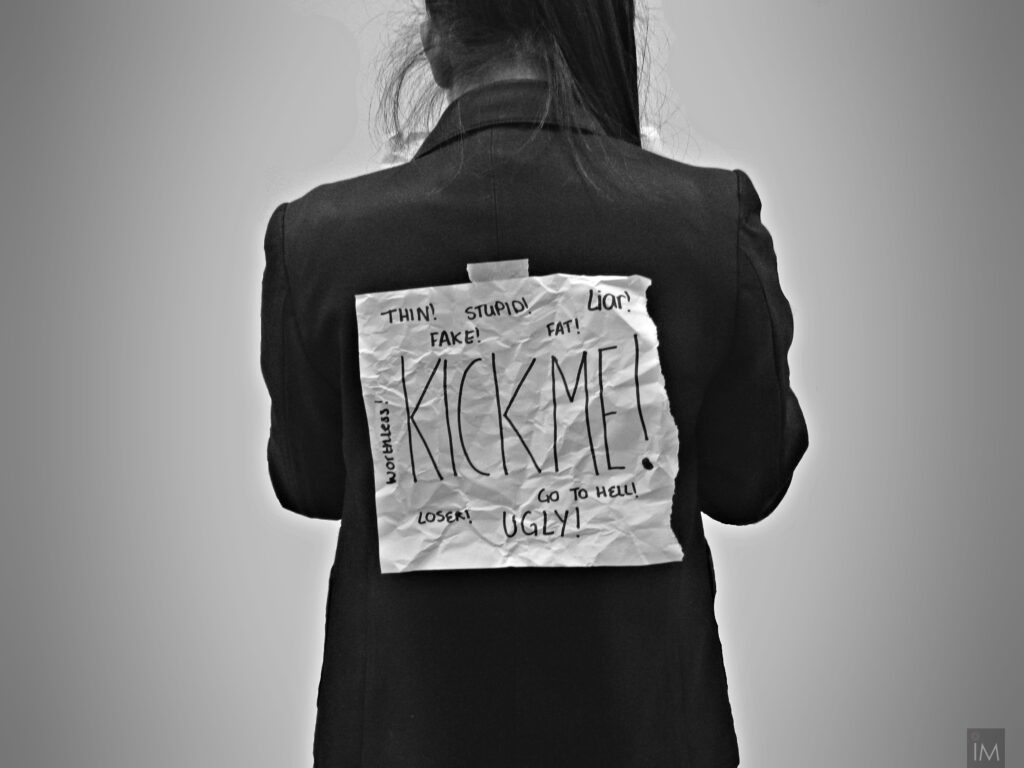
Affecting mental health
The long term mental health effects of bullying are well documented. Children who are bullied are more likely to develop an anxiety disorder or suffer from depression. A lack of motivation may not be depression, but it still can be detrimental to a person’s academic success.
Aaron Patel, a 24-year-old communications officer, said: “I just didn’t want to have anything to do with school. I didn’t want to do homework and I certainly didn’t pay attention in class.
“Of course, mental health affects people’s academic success and if you don’t have any way of making sure students are being treated right you’re putting that at risk.”
The effects that teachers bullying their students have on academic performance do run deep. Madeleine Hjelmstierna dropped out of her Mathematics Higher Level course because of the toxic environment created by her teacher.
“Every time you would ask anything he would just scoff at you or say something condescending. At some point I just didn’t want to ask any more questions. I stopped being able to keep up and eventually I dropped out of that class because I feel like I would fail if I continued being there.
“A Lot of the people that remained didn’t do well on their exams either. I believe it is because they were just too scared or embarrassed to ask questions.”
Who is responsible?
But who should be held responsible for interfering? Desshiken Elangovan, a 23-year-old psychology student, said that other staff members should step up. He grew up in Malaysia where he experienced a lot of discrimination because of the colour of his skin.
“The teachers and students would make the same jokes over and over again but at the time I just treated it like it was normal. Of course it was hurtful but there was nothing I could do about it.
“It is the responsibility of the faculty to make sure students are not targeted. Because what can your peers do? They too are just kids and they don’t know what to do either.”
Children and adolescents need a space where they can learn in a safe and protected manner. Teachers must be held accountable for their actions and they most certainly need to be reprimanded when they cross the line. Bullying is unacceptable in any iteration but the power imbalance between teacher and students makes this much worse because students have no way of defending themselves.
Finding a solution
But there is a solution if you or anyone you know are going through something like this. There are organisations that can help parents as well as students recognise and navigate their situations.
BullyingUK has a page explaining how to deal with a teacher targeting a student. It advises talking to the head of year first, and then following up with a letter to the head teacher or chair of governors if the complaint is not resolved. “It is much better to try to sort the problem out diplomatically at a much earlier stage, where possible, because your child is likely to have contact with a teacher over a number of years,” it says.
It suggests giving your child space and encouragement, so that they feel comfortable talking about the issues as openly as possible. “For some children, they may feel like they are causing issues, but reassure them that this is not the case and if they are feeling bullied, you are there for them and will get this sorted out,” it adds. “They may need lots of reassurance and comfort at this time so be on hand to be there for them whenever they need your support.”
Something must be done to effectively target this issue so people like me or the other people like me become an exception – and not the rule.
Leave a Reply