

By Ana Sencenko
Exploring the modern approach to vintage fashion: how a subculture shifted to being a new market sector.
An old saying states, ‘keep a dress long enough and it will come back in style’. North and East London are famous for their markets and vintage shops, making the area one of the most popular ones for shopping the must-haves from previous decades. Locations like Camden Town, Shoreditch and Brick Lane Market have become even a tourist attraction for the ones seeking an alternative view on London’s culture and fashion.
Vintage has greatly evolved over the past years. It has grown from something targeting a niche market, to a whole new sector in the industry. However, there is a distinct division into high and low cost vintage, both of which have a distinct place in the industry.
East End Thrift Store has been open for more than a decade in East London. This is a place that if quietly hidden in the streets of Mile End, but for the ones who know about it – this may be a real-life treasury.
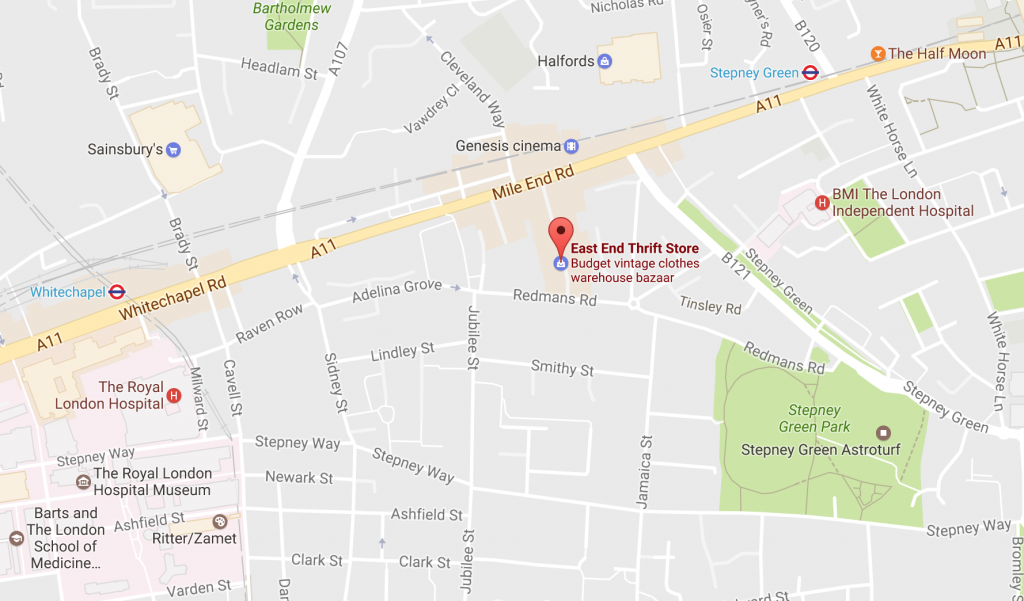
The store specialises in selling vintage clothing in a bulk – fill-a-bag style. A bag of clothing will cost up to 20 pounds, depending on the size. But having in mind, that instead of getting one top you might end up with 10, the bargain is obvious. The most sought-after pieces from the store are also sold on ASOS Marketplace.
Regardless of your needs, vintage is something that can be shopped for various items: “Mostly people come to get casual items such as flannel shirts and sweatshirts or to find very unique items that you wouldn’t find in shops.” says Holly Warren, Sales and E-Commerce Assistant.
According to Holly, the store is popular with resellers, as well as people “sourcing costume for theatre, film and TV”. Another big part of their clientele are fashion and art students, who use the old pieces for their artwork by adding new twists and breathing in a second life into the garments.
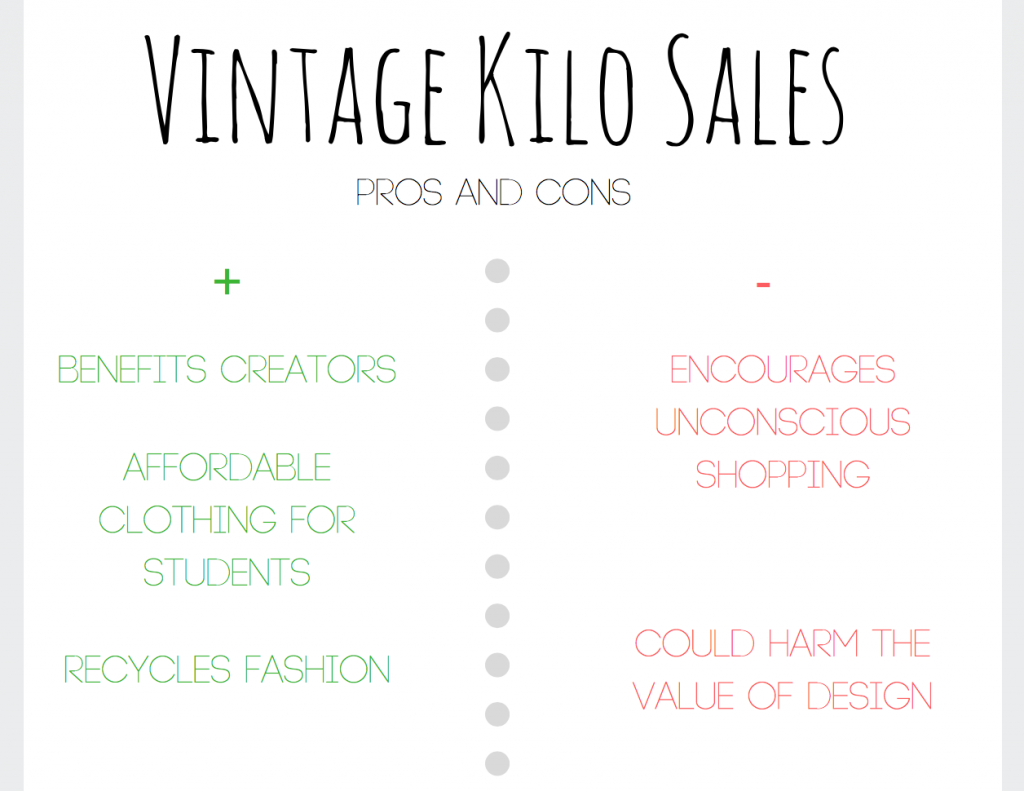
While being very wallet-friendly, such approach has a side that is common with fast fashion – the sense of consumerism. Pound and fill-a-bag sales encourage people to buy more and more, which high street brands are criticised of, as that encourages unconscious shopping. But second-hand vintage has a strong point to it – its sale doesn’t harm the environment:
“Fashion always comes back around again. It doesn’t make sense to throw a decades worth of clothes away when you can resell them because they will come back in style and someone else will breath new life into them at no cost to the environment!”
Holly Warren, Sales and E-Commerce Assistant
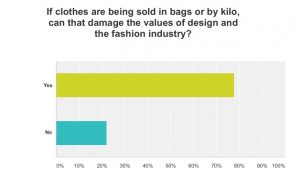
Another worrying thing, is whether such approach may damage the value of design and fashion in general, as it encourages to shop for quantity, rather than quality. Even though the effect might not be too dramatic, a recent poll suggested, that shoppers do consider it damaging for the industry.
Anyway, affordable vintage clothing does also benefit those, who create fashion as it gives them a chance to customise and experiment their garments without spending a fortune. “A lot of the time people come in specifically to buy bulk to sell on or to customise or use in a project,” says Holly, “most of our customers do spend a lot of time searching for items they love and have no problem filling their bags!”
Meanwhile, there are more expensive vintage stores – a sort of luxury for the sector. Blitz on Brick Lane is one of the top vintage spots not just in the area, but all across London. It has become a place for vintage lovers, as well as a tourist spot, which definitely shifted the clientele.
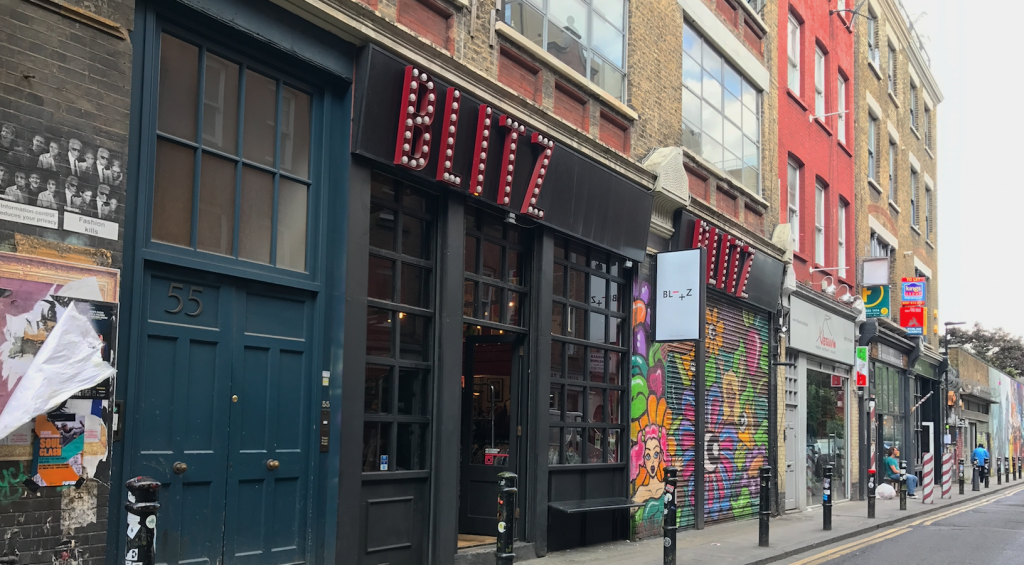
“It used to be a lot of like 25-year-olds when we opened, because it was popular among ‘young, but not that young’ people. And now, I would say – everyone. We are very famous. A lot of tourists are here, and when its tourists – its families…” says Anais Noirot Pierre, Blitz Manager.
The key to success is the variety: “Everyone can find something here. It’s [Blitz] not too pretentious for people to think ‘I don’t know if I fit in the image’ ”, says Anais, “you can go home with a book if you don’t find any clothes, but you go home with something.”
What also differs such stores with just hand-picked items is the non-consumerism approach to vintage in general: “Vintage is about brands, vintage is about fabric, vintage is about the way it was made.”
The phenomenon of kilo sales comes for American culture. “It is a culture of thrift shops, more like charity shops than vintage… People find items like flannel shirts, leather, denim, but not one-of-a-kind pieces.”
However, such sales seem to have no effect on vintage in terms of popularity. Retro has become a part of English culture, that people want to see and experience, especially in London.
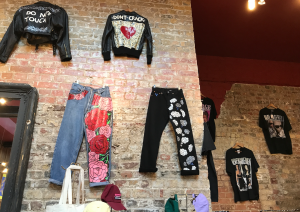
“People want to dream. People who don’t know anything about vintage and street art they come to dream…They want to experiment with something.”
Anais Noirot Pierre, Blitz Manager
As for the industry in general, Anais says it doesn’t mean that much anymore: “Style is not dead, but fashion is… Trend doesn’t mean anything”.
Vintage itself has grown from a niche market to a whole new sector in fashion. It is becoming more modern, especially with social media. “Vintage is not a luxury, it’s not fast-selling. Vintage is just a way to find clothes… Vintage is retail now.” But as Anais says, it is a positive change:
“Because of this evolution, people are more looking at themselves in terms of creativity. Even though the subculture of it is gone, which is sad, it is a good thing for people’s creativity.”
WATCH: Blitz Manager Anais on Vintage culture
Leave a Reply