
By Daniela Forresu
Is Holloway Road going cashless?
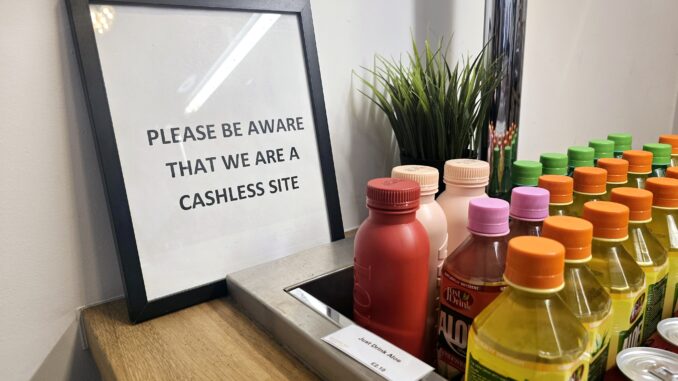
London Met cashless sign. Credit: Daniela Forresu
More and more businesses are moving to card payments only. While some people along Holloway Road find this way easier, others are facing challenges, especially those who still rely on cash for daily expenses or don’t have a bank account.
According to Reuters, cash was used in just 12% of transactions in the UK last year. However, around 1.5 million adults and 2.6% of the population overall still use cash for their daily spending.
The struggle for cash users
Harsh Chauhan, 22, a full-time student at London Metropolitan University, recently arrived in the capital without a bank account, so is still relying on cash at the moment. He admits that he finds daily transactions challenging.
‘’Many cafes, pubs and restaurants don’t accept cash anymore. It’s frustrating for me,” he says. For people like Chauhan, going cashless isn’t an option, making daily life more difficult.
For others, using their cards for transactions is much more convenient. Lirojan, another 29-year-old student who didn’t want to give his surname, says he hasn’t used cash for a long time.
‘’It’s easy; you just tap and pay; caring cash in those days can be risky because of theft. That’s why I only use card payments now,” he explained.
He’s not alone: figures from Link, which is behind most cash payment machines in the capital, says that Londoners are taking out £500 million less than before the pandemic. Additionally, there are “2,069 fewer cash machines than there were in 2019”, according to the BBC.
Are all businesses in Holloway Road going fully cashless?
For now, cash is still accepted in some places, and many businesses find card payments easier and safer. Sellina, 20, who works full time at Eroma Cafe, says: ‘’We take cash, but the majority of people here prefer to pay by card. As we run out easily of change, I think businesses like ours would benefit if we switched to card payments only.”
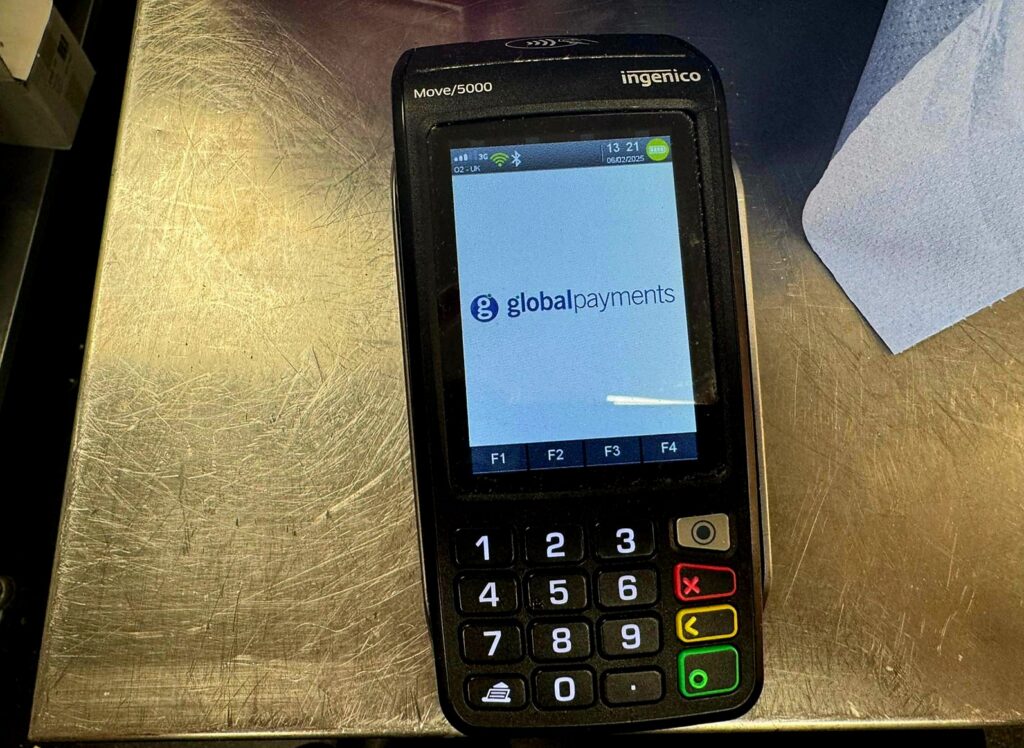
Pos card terminal. Photo credit: Daniela Forresu
However, not all business owners agree. Gabriel, 33, who owns Momo Wraps with his brother, prefers cash as well. ‘’Many businesses now take cards only, but we try to ask our regular customers to bring cash if they can. Card payments come with extra fees, and everything is already expensive,” he said.
‘’I also think with cash, you know exactly what you are spending. With cards, banks have more control over your money.”
How banks are adapting
Carmen Viscito, 32, who works for Barclays Bank of England, explained how banks are dealing with this situation. ‘’More people are using cards and online banking, but the banks are supporting those who still rely on cash and customers who are less comfortable with digital platforms, including the elderly,’’ she said.

Cash machine at Holloway Road. Credit: Daniela Forresu
She added that the Financial Conduct Authority has set up new rules to make sure people can still withdraw and deposit cash as usual, and the goal is to ensure that people who prefer the use of cash are not left behind, as digital payments are becoming more common.
People with smaller incomes – especially the elderly – are relying on cash more than others, said Viscito. Part of the reason could be that older people find it more difficult to use technology, including when it comes to paying bills. Many elderly people still pay large bills in cash via the Post Office, she said.
Leave a Reply