

By Neo Lekhela

High street clothing shop in London. Photo by Royal Trinity Ldn.
A worrying phenomenon is taking place on the once vibrant and bustling streets of London’s fashion district, as a number of high street clothes firms succumb to a wave of closures. Industry experts are unravelling the fundamental causes behind this rapid drop in the fashion retail sector as iconic stores fall victim to financial challenges.
Popular fashion brands that previously dominated London’s High Streets have recently been forced to close their doors, leaving empty premises and a gap in London’s fashion scene. For these traditional brick-and-mortar apparel retailers, the development of online shopping, shifting consumer preferences, and unpredictable economic conditions have created the ideal storm.
The beginning of the decline of clothing stores
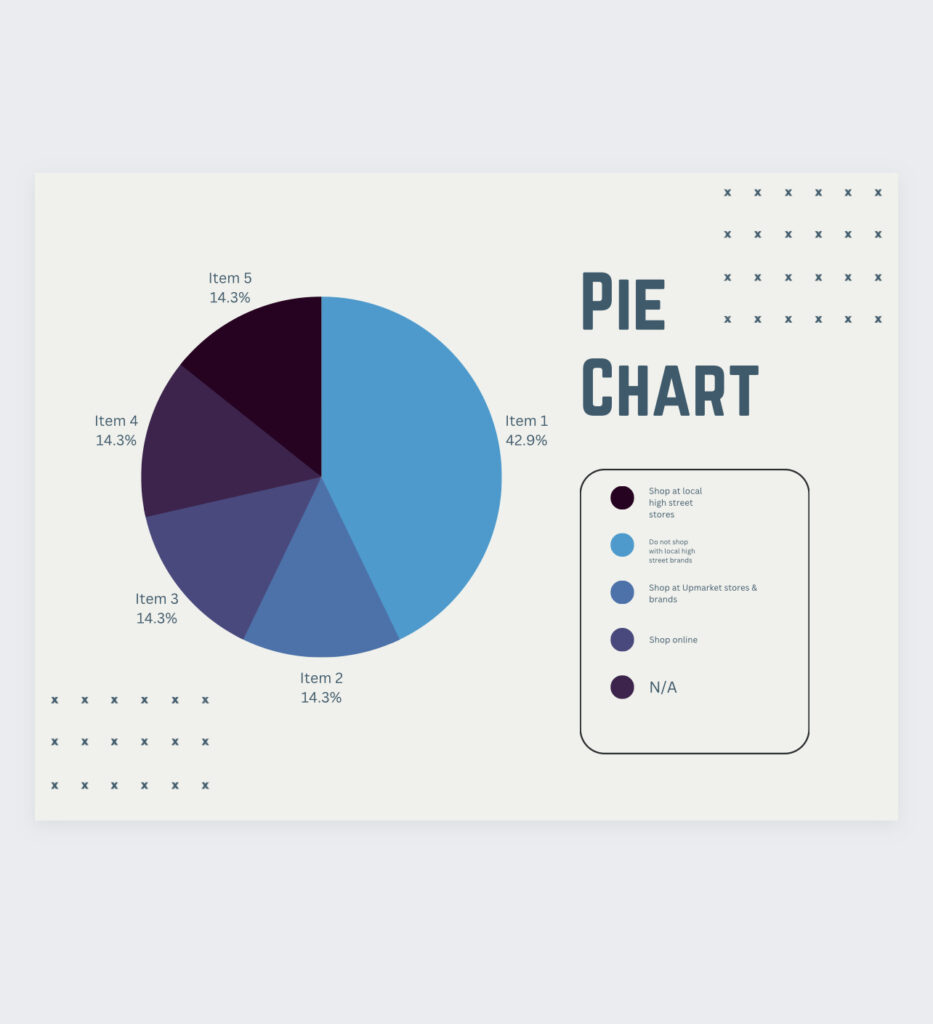
Chart showing the percentages of where 35 local Brent residents shop. Pie chart by Neo Lekhela
According to freelance fashion stylist P Jobe, a major contributing reason to the demise of high street apparel firms has been the transition towards e-commerce. Consumers today seek ease and a flawless purchasing experience, according to Jobe. Online retailers have successfully seized a substantial portion of the market thanks to their wide selection of goods, affordable prices, and simple returns policies.
She adds that the lockdowns brought on by the pandemic served as a major catalyst, encouraging many people to embrace internet shopping for its convenience and safety. Retailers have been forced to rethink their strategy as a result of this paradigm change, which has hastened the demise of physical stores.
“At the end of the day High Street fashion companies are renowned for their ability to quickly identify, interpret, and make the most recent fashion trends available to a larger audience. These firms frequently excel at creating reasonably priced, fashionable clothes that enables customers to stay up to date without going over budget,” she said.
“High Street retailers encourage inclusion in fashion by catering to a varied client base and providing a wide choice of styles, sizes, and pricing points. Regardless of the clear decline they will always appeal to a lot of people.”
THE DECLINE OF THE HIGH STREET: Video By so called fashion
New opportunities for innovation and adaptation
Although the closing of high-end clothing retailers in London may seem troubling, it presents new opportunities for creativity and adaption within the fashion sector. Local High Street stores have become a symbol of affordability as Londoners hunt for ways to stretch their hard-earned pennies.
These companies, which have a reputation for providing stylish but affordable solutions, expanded their product lines to appeal to a wider spectrum of consumers. These merchants have developed into a one-stop shop for shoppers on a tight budget.
The rising cost of living in London is one of the primary causes causing this trend. Many locals are looking for cheaper shopping alternatives due to skyrocketing rents, rising transit expenses, and rising utility rates. High Street brands have established themselves as the go-to option for consumers trying to stretch their dollars farther without sacrificing quality thanks to their reasonable pricing and ongoing sales deals.
In addition, local High Street shops are often dedicated to sustainability, which is being recognised by Londoners. The environmental effects of fast fashion and consumerism have received more attention in recent years. High Street companies have reacted to this trend by implementing more sustainable practises, like employing eco-friendly materials, supporting recycling campaigns, and boosting supply chain transparency.
These companies have been successful in meeting the rising demand for ethical consumerism by providing reasonable yet environmentally friendly options
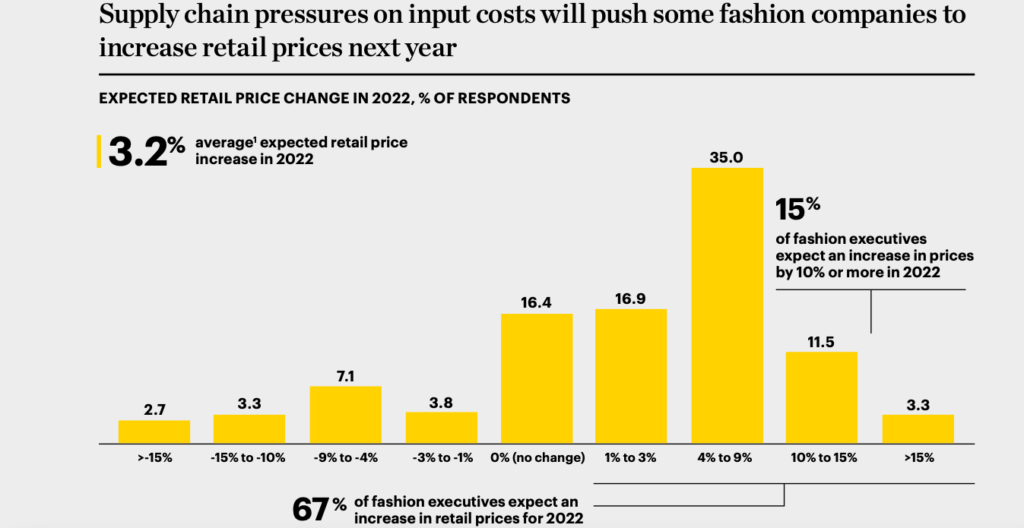
By the state of fashion 2022 by McKinsey
Covid-19 hit to retailers
According to the Guardian, Great Britain’s high streets lost more than 17,500 chain store outlets in 2020.

Guardian article on high street stores
Following the pandemic, London’s high street clothing businesses saw a sharp drop in foot traffic, with lockdowns and restricting measures having a substantial effect on patron behaviour. Numerous well-known fashion brands that previously graced the city’s renowned shopping areas have closed as a result of this perfect storm’s disastrous knock-on effects.
These establishments had to adapt to a new environment where internet buying became the main form of consumption due to the strict social distance rules and frequent lockdowns. A lack of foot traffic and inadequate web infrastructure made it difficult for many firms to adapt to changing consumer expectations.
Small and independent retailers and shop owners, who are frequently admired for their distinctive products, have also suffered greatly. These shops found it more and more difficult to remain viable as huge online retailers dominated the digital market. Many small-scale fashion businesses were unable to survive the immense financial hardship, despite community support initiatives and government aid programmes.
These closures have an effect far beyond the retail industry. Numerous jobs have been lost as a result of each store closing, further weakening an already precarious economy. Workers who committed their careers to the fashion business are now dealing with uncertainty and unemployment, which is adding to the rising social and economic difficulties Londoners are facing.

Morsons clothing store in Harrow. Photo by Neo Lekhela
Local high street clothing store, Morsons, has seen a surge in business as shoppers flock to the store, seeking affordable fashion options despite growing inflation. With a focus on value for money, Morsons has been successful in attracting a devoted client base that is increasingly choosing affordable alternatives to upscale stores like Zara.
Local resident Farah Malik, 47, a Morsons client, spoke about the shop and changes that have taken place over the last couple of years.
Farah believes that there has been a clear link between low clothing prices and more customers that has been the only thing that has kept the shop still alive. The re- emergence of the shop has only started taking place since inflation but otherwise the shop has been struggling.
Similarly, Bumni Stevens, a 42-year-old local resident and shopper at the store, says: “As an independent retailer myself, I’ve seen the landscape change dramatically over the years.”
This entire High Street used to be lively and had a wide variety of stores with many customers rushing from one independent shop to another. Now, though, it appears that every other storefront is deserted. This loss has been exacerbated by the dominance of huge online merchants and the resistance of High Street firms to change.
“Local High Street clothing shops really need to reinvent themselves to stay in business. To resurrect the industry, companies must embrace digital platforms, concentrate on distinctive in-store experiences, and forge closer relationships with their customers,” said Stevens.
High street clothes brands’ future is uncertain. The result will not only influence London’s fashion scene in the future, but it will also teach the global retail sector a larger lesson.
Leave a Reply