

By Simone Limbu, Sahra Sancar and Tessa Larcher
The Paris-based L’Ecole welcomes visitors of all skill levels to learn about jewellery-making techniques, the world of precious stones, and the art history of jewellery. Established in 2012 and fully supported by the French jewellery house Van Cleef & Arpels, it is one of the few places where visitors can learn about the history of jewellery while also getting hands-on practice.
The School of Jewellery Art in Paris and Hong Kong offers jewellery workshops, exhibitions, books and catalogues, and talks led by teachers and artisans who are experts in their fields. The permanent locations will soon be expanded to Shanghai and Dubai, as well as travelling events around the world.
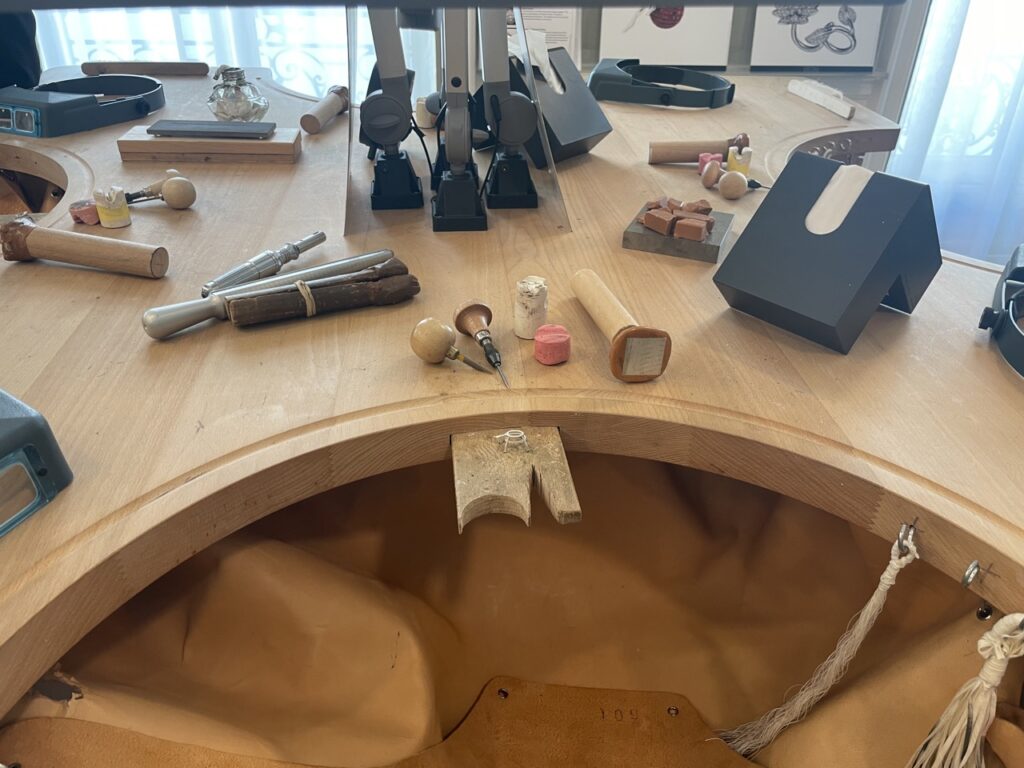
Highlights include “Savoir-Faire,” in which students sit at a traditional and authentic jeweller’s workbench and handle the tools and materials themselves, learning about designs, mock-ups, jeweller’s techniques, and more while being guided through each step by the artisans themselves.
Chloe Vandermersch, a spokesperson at L’Ecole who also works as a tour guide for the School, said: “Ateliers can be very secretive about their jewellery-making techniques, so it is a unique opportunity to learn and meet the artisans.”
She gives informative talks to prospective students who wish to study at the school. “Jewellery is the oldest human form of art, and it represents us. When you talk about jewellery you talk about power, gender and religion.”
For a limited time, visitors have the rare honour of admiring the ‘Petite fée ailée’ clip, the emblem of L’Ecole, the Spirit of Beauty created by Van Cleef & Arpels in 1941 during the second world war. “The idea behind it was to bring back some poetry and lightness in the world, what better figure than a little fairy,” said Chloe.
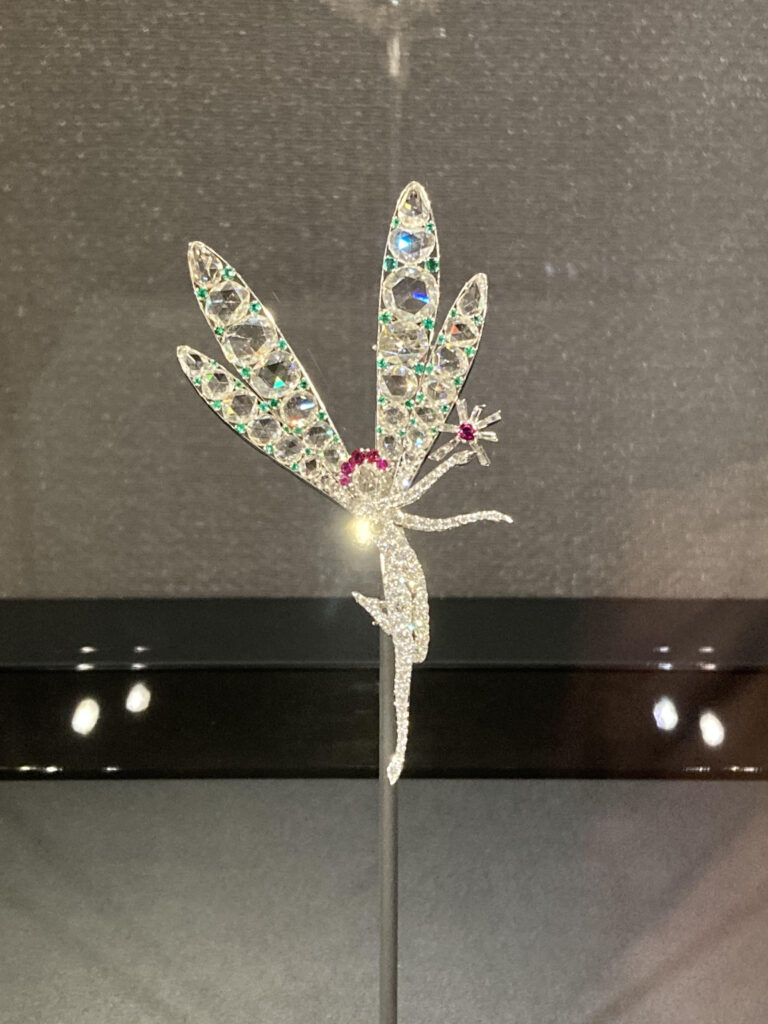
Chlee says that the fairy is very precious as it is composed of platinum, emeralds, rubies, and diamonds. You can count more than 160 diamonds, more than 40 emeralds and 6 rubies on the crown and on the magic wand. The spirit of beauty is now part of Van Cleef and Arpels’ heritage after they reacquired the clip in 2001. The monetary value remains unknown as the fairy will never be sold.
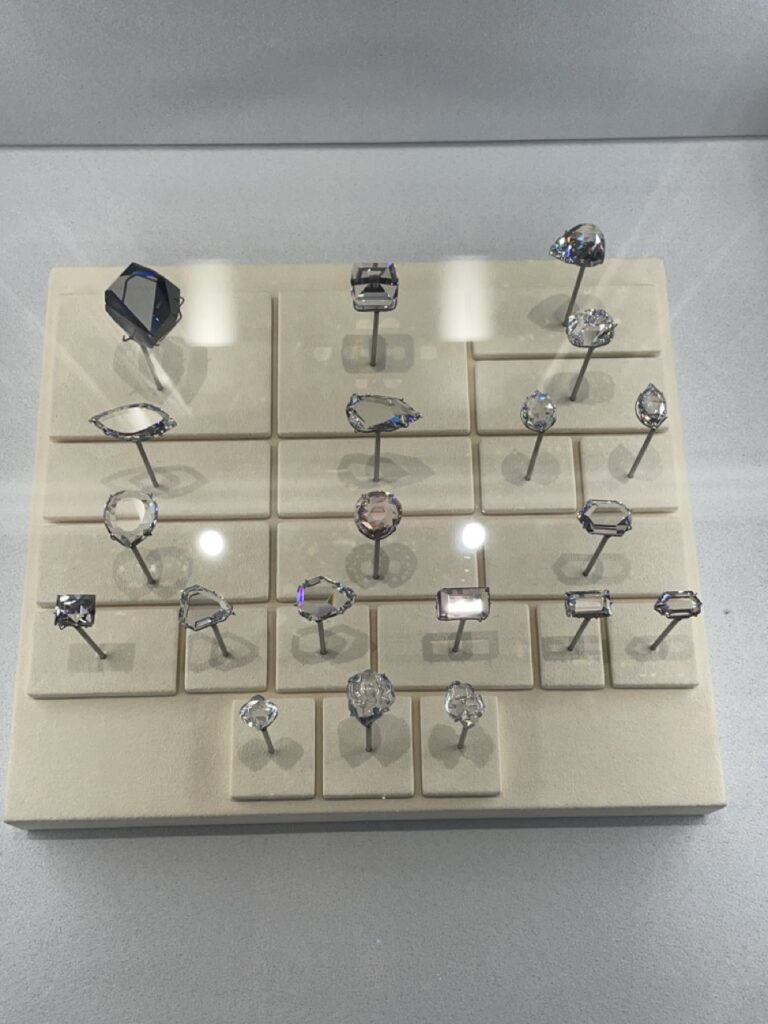
Chloe ends the tour by displaying a collection of stones in various cuts and colours. She explains that because Indians preferred the natural appearance of the stone, which resembled a water drop, it was only polished with very small cuts.
She explains that different colours and levels of appreciation differ greatly depending on the country and culture. Blue is a colour of royalty in France, whereas in India, they prefer rubies, emeralds, and diamonds and associate blue with an evil eye. In 1666, Jean-Baptiste Tavernier purchased a 116-carat blue diamond from India for a very low price.
Leave a Reply