
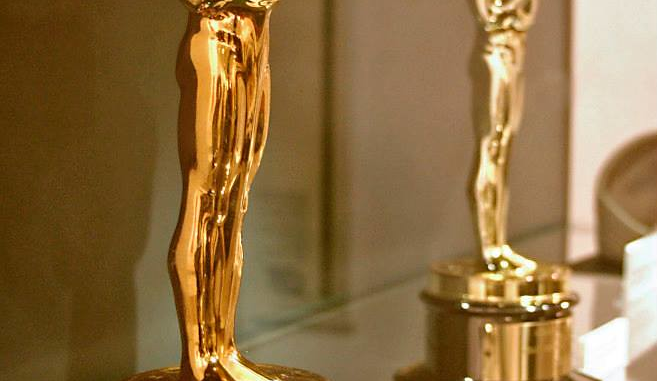

Photo by: theglobalpanorama via Creative Commons
By Carolina Piras
Art is often a mirror-expression of culture and politics, and that’s what many of the movies presented to the 2021 Oscar reflect. But will the Academy Award be fair towards the footprint that Black History left this year? Or are Oscar still #SoWhite?
2020 hasn’t be like any other year; we all know that. Along with the Covid-19 pandemic outbreak, Brexit, Donald Trump’s first impeachment, the Stock market crash in March, Australia’s bushfires, the #MeToo feminist movement protests, Biden running and then winning the US presidential election and the Beirut gas explosion – ending with the vaccine rollout effort from all the countries in the world – this year has been quite overwhelming.
In the middle of all these chaotic events throughout the year, something else happened: in Minneapolis an innocent and unarmed black man was the victim of police violence, when Derek Chauvin, one of them, kneeled on his neck for more than eight minutes, as Mr. Floyd kept repeating “I can’t breathe.”
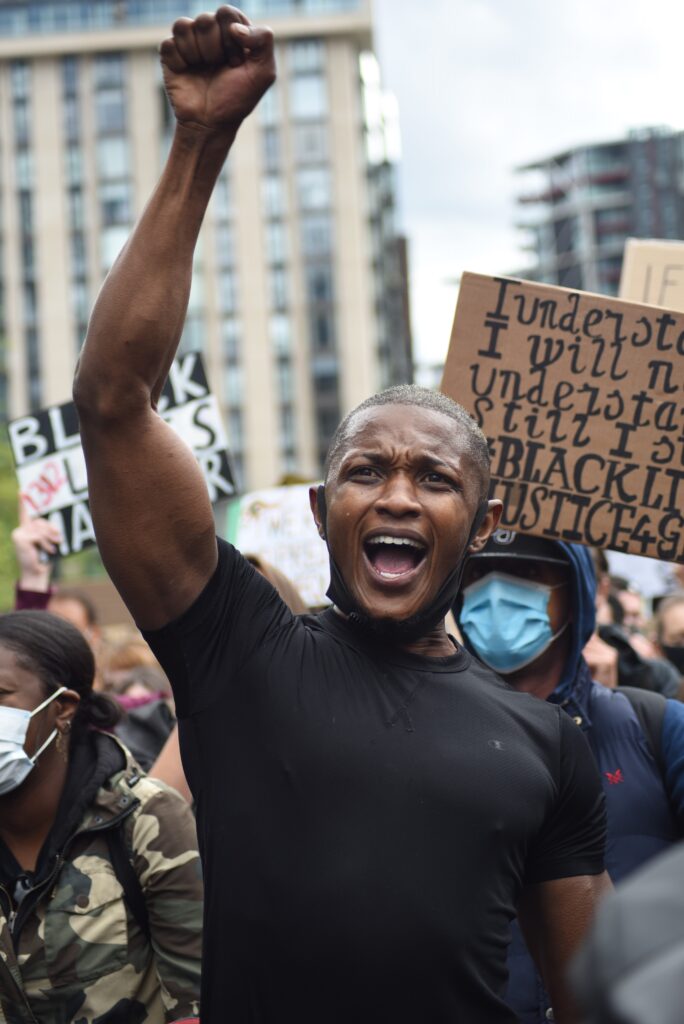
Photo by: Alexandra Cimpeanu.
George Floyd was 46 years old and he died after those eight minutes, but most of all, he became a symbol of the thousands of victims of racial discrimination, and abuse of power, from the US police.
George Floyd was innocent, and people didn’t forget this; on the contrary, his death sparked protests against racism and police violence first all across US, and after the protests spread all over the world.
Many other names start to come up after the police-involved killing of Mr.Floyd: Ahmaud Arbery, Breonna Taylor and Jacob Blake are just a few of them. The Black Lives Matter movement through riots – sometimes peaceful, sometimes violent – strongly stood up, and demanded the end of police brutality and racial injustice against Black people.
In 2020, the Black Lives Matter Movement not only shocked the world when mass protests took to the streets, but all those names, all the stories of Black people who died because of police brutality and discrimination, were all over social media, crashing Instagram, Twitter and Facebook.
A political outcry took hold in the name of Black people’s lives, and it had a global impact.

Photo by: Alexandra Cimpeanu.
As our political and historical reality is well often reflected on cinema, and the way movies are represented, some movie directors brought this political outcry straight to the 2021 Oscars.
The last year’s Grammy Awards edition left a lot of space for accusations of racial bias in the award ceremony, where Canadian pop star The Weekend stepped up alleging the Grammys of corruption, and criticised the Recording Academy’s shortlist evaluation process for 2021 nominations.

Accusations against the Oscar’s Award Academy commenced 5 years ago, when the the social justice campaign #OscarsSoWhite was launched, claiming the discriminatory act of 92% of top film directors were men, and 86% of top films featured white actors only.
After a so turbulent year, many people showed concern of a deliberate discriminatory act on the Oscar awards for this year’s edition, even though this year, a lot of movies regarding Black history and white-privilege are nominated. People wonder if the valuation process will be fair and balanced, and also argue if the cinema industry should take a step on the side of social matters.
Which movies are we talking about?
Currently, the most discussed are:
Ma Rainey’s Black Bottom , inspired by a true story, and featuring the so-missed movie star Chadwick Boseman and actress Viola Davis, is set in Chicago during the 1920s and deal with issues of race, religion, white-privilege, music, and historic exploitation.

The Trial Of The Chicago 7, based on the true story of a trial set-up from the US government, to convict seven anti-Vietnam War protesters. It features actors such as Eddie Redmayne and Sascha Baron Cohen. The movie puts the spotlight also on how the rights of the only black men convicted, where even more abused.

Da 5 Bloods, which follows the story of a group of four black men and Vietnam War veterans who return to the country looking for the remains of their fallen squad.

“I feel like the black community is still not represented in the right way, in both cinema and media, as they always put us into a category where its either gang, and drugs related, and that is not who we are as Black people,” said Maame Takyi, 21, Film and Journalism student and part of the BAME Community.
“The way I see it is that we as Black people are naturally talented and we are more than what people say about us, so no I don’t think we are represented properly in that way, in both media and cinema.”
The 21-year-old photo-journalism student remarked what was said at the last Oscar edition in 2020, when Joaquin Phoenix claimed how the Oscars need more diversity and representation.
“I still see this division amongst us Black people, and I don’t understand why there is still so much discrimination against us, like we Black people should have the right to feel known in the industry, and for award shows not diminished, or discriminated.
“We shouldn’t have to tell the industry what to do – they know what to do, but choose not to act on it,” she concluded.
Nicolò Marfella, Photography student, said: “To be fair, I believe there’s all kinds of holes around the way the Academy Awards system works.”
The 22-year-old student, who claimed to have a deep interest in the role and inclusivity of Black community in the cinema industry, explained: “Most of the cinema festivals are nothing but a huge showcase, where the most pleasing movies are presented, in order to sell them for the next season’s entertainment.
“I said the most pleasing are sold, and not the best ones, because its silly to think that The Academy Awards will reward the actual quality of the movies: just think about how many masterpieces have been snubbed through the years and how much space was given to platitude. The main issue of the cinema festivals and the Oscars in particular, is the competition itself.”
Marfella talked about movies as a form of language and art: “We get to the conclusion that an estabilished objective evaluation is not reachable. I could never rate The Gioconda from 1 to 10, exactly as I could never rate with stars The Sistine Chapel. […] It’s ridicolous in first place to create a contest that ranks from the best to the worst artwork. This yardstick can only diminish the artworks themselves, since there is not a deep and real analysis of their complexity. This becomes even worst because we are putting those artworks –the movies- in a competition context.”
“As I said before what wins at the Oscar is not the quality, but the saleability of the film product: what makes money and what makes people talk about it. The Academy is not only prioritising certain movies over others, but is also deciding which social themes will have resonance in the further time after the award ceremony.”
“Hence, I believe the competition in the art enviornment can only be toxic,” he added.
“This year we have at least four movies related to issues of race and two of them related to feminism topics. Rewarding one of those movies instead of another one is not really about the award itself, is a political declaration.”
The Photography student brought into play the example of last year’s most award-winning movie, Parasite, directed by Bong Joon-ho.
“Not by chance Parasite, which is the very first movie of not-American production, won the Best Movie Award at Oscar 2019 during the most isolationist presidency of the past 20 years.”
He summed up: “My stance about all of this, is that cinema festivals rather than being more inclusive should dramatically change their valuation system and the way they select movies, trying not to create a competitive environment but, on the contrary, focusing to demonstrate what the cinema industry is able to offer. There should not be the conditions to rank what is more or less important in the social sphere.”
“That said, Ma Rainey’s Black Bottom, is amazing. Chadwick Boseman left us too early,” he concluded.
Leave a Reply