
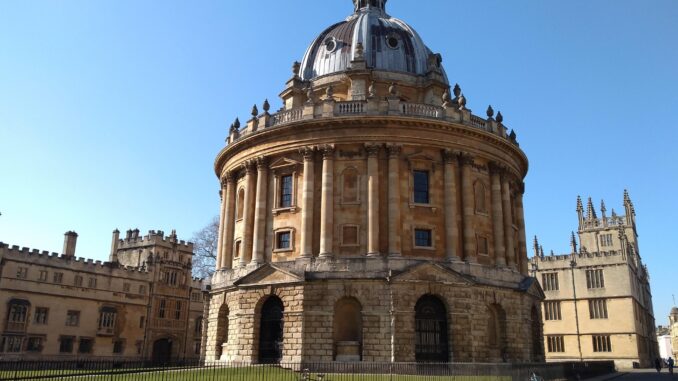
Image by SJ Price
By Leo Ward
As a university student who completed my A-levels and has been in the education system since the age of two, I still fear for my future.
Will this degree land a career for me? Will I be guaranteed a well-paid life?
I am a 19-year-old student studying journalism. I will owe debt once I graduate, but was it all worth the studying and money, or is university an outdated system in a ridiculously competitive job market? And is it possible to choose a degree that has not been taken over by AI?
Only 59% of students will go on after university to full-time employment, and many say the university they attend will impact on their future employment. Some argue that in an ideal world, the only thing that matters is enjoying the course. On the thornier side, prestige matters, says the BBC.
Broad spectrum of earnings
Published research on graduate earnings across England analysed the incomes of 260,000 graduates, and showed a very wide spectrum of likely earnings.
The top of the spectrum was a cluster of graduates from the London School of Economics, Oxford, and Cambridge, with 10% of their male graduates earning above £100,000 a decade after leaving university. The LSE also had 10% of their female graduates in the top earning bracket.
“There is an earnings pecking order’’ – BBC
In an ideal world, classist and elitist universities with long-standing reputations, where only the rich or lucky few can attend, should not hold the high ground in education and employment. But that does not really reflect the true nature of the current world. So, should we accept this fate – or fight to beat this bourgeois system?
Although there must be a “pecking order” with employment, as not everyone can be an astrophysicist or earn £100,000 a year at the least – otherwise other industries and services would die – there should be a less elitist approach about who is qualified to do the job, After all, all universities train their students to dedicate their life to that field of work and be the highest quality professional, so why would a institutional name matter?
Does a binman need a degree?
But is university more of a tailored qualification to certain fields? In other words, does a binman need a degree in waste management, and does a doctor only need to go to college?
Certain life ambitions do not require a degree, as opposed to professions such as such as doctors, nurses, and accountants. However, with such a wide variety of degree options available, has university become something people pursue mainly out of personal interest? Have universities over-expanded?
Villie Justice, a 19-year-old London Metropolitan University first-year student in Fashion Marketing and Journalism, said that she doesn’t find it necessary to have a degree for the industry she wants to work in.
“For the sector I want to get in, there is a way to get in there without university,” she said. “A lot of it is characteristics and your own work.” She acknowledges, however, that university helps develop skills quickly, helping build an early-career portfolio that can help land a job.
John Brook, a 25-year-old graduate in IT from UCL, says that his degree has helped him in securing a job. “I went to a well-known university, so that helps,” he said. However, he added, “more and more apprenticeships are coming up”.
Do what you feel is right for you, but keep in mind that student loans exist. I was happy to go to university because I didn’t want to take the apprentice route at 18 years old, and I still don’t regret my decision.

Image by Robert_RS3 from Pixabay
Leave a Reply