

By Agatha Kempf, Cheryne Fourdrigniez and Giulia Mura
London Metropolitan University’s Journalism department hosted a virtual debate with expert panellists to discuss how COVID-19 has impacted fashion trends, and what effect this will have on the environment and issues of sustainability.
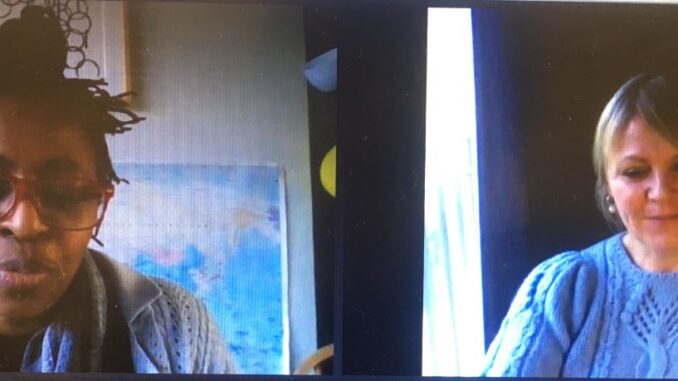
A panel composed of Irene Shelley, Barry Laden, Alex Erinle, Sabinna Rachimova and Lauretta Roberts joined students and staff at the event, to share insight on the relationships we have with clothing and fashion trends amidst the pandemic.
According to RSA House, 52% of people expect to change their fashion habits post-COVID. A third of women also say that they will be purchasing less clothing as a result of the pandemic.
Co-founder and Editor-In-Chief of The Industry Fashion, Lauretta Roberts, says: “I think there will be an element of comfort in future trends but I do firmly believe that one of the areas of fashion that will bounce back quite quickly is formal wear.”

This opened up discussions about future businesses and the importance of sustainability and ethics within the fashion industry.
In response to the event’s name, British fashion entrepreneur Barry Laden, cried out: “Do we care what we wear!? Let’s hope we do. Otherwise we might as well pack up.”
“The whole industry is built on exploitation so there needs to be a shift,” says Sabinna Rachimeva, founder of London-based fashion brand SABINNA.
“Whoever starts businesses now should really think about the concept as a whole in order to treat everyone properly and get rid of the hierarchy.”
Irene Shelley, Editor-In-Chief of Black Beauty & Hair, shared her dissatisfaction with the fact that Black beauty products have been put aside this past year, leading the industry to lose millions. In certain shops, Black beauty products aisles were closed, while other beauty aisles remained open.
“I have a problem with Afro hair shops not being seen as essential,” she says.
Although there seems to be a rise in awareness in the fashion industry, Rachimova thinks its abrupt popularity is not serving the movement.
“All of a sudden being sustainable became a trend, without people really understanding the essence of it,” she said.
“That was really dangerous because it allowed companies to green-wash a lot of their products.”
Discussing the ethics of sustainability, Rachimova asked if it was possible for businesses to be truly sustainable if the mentality is to push people to buy and consume.
“No business brand can truly be sustainable because they produce products people don’t always need. They still push consumerism,” says Rachimova.

With lockdown restrictions to be lifted on April 12th, questions were raised on what the future of the high street might look like.
Rachimova said: “There will be a shift, something will change in customer behaviour, the way we approach shopping will change and you will see a lot of companies trying to offer a combination of digital and in-store shopping experiences.”
Roberts added that although there will be fewer shops on the high street, there are no surprises in the brands that we’ve already lost.
According to an article published on The Guardian, over 17,532 outlets have closed down across the UK in 2020.
Laden, who also believes that the high street is changing, says that it will be the stores that supply a sensory experience for customers which will survive in the future.
This pandemic has radically changed our needs and the way people view fashion. It has changed mental patterns in both positive and negative ways and (now that dressing up has become almost trivial) is forcing brands to approach consumers in completely new ways.
Leave a Reply