
by Michelle Sit Aboha

The ‘Living with Covid’ plan
Students and staff working at the London Metropolitan University are no longer forced to show a negative antigen lateral flow test to enter the campus.
After almost five months of the reopening of the university, which was remaining closed due to the spread of the COVID 19 virus, the British government has set out its “Living with Covid” plan on the 21st of February.
According to the BBC, “People are no longer legally required to self-isolate and routine contact tracing has ended”. Also, “masks are no longer legally required in most public spaces (…) and face coverings are not mandatory on Transport for London’s tubes, trains or buses,” it said.
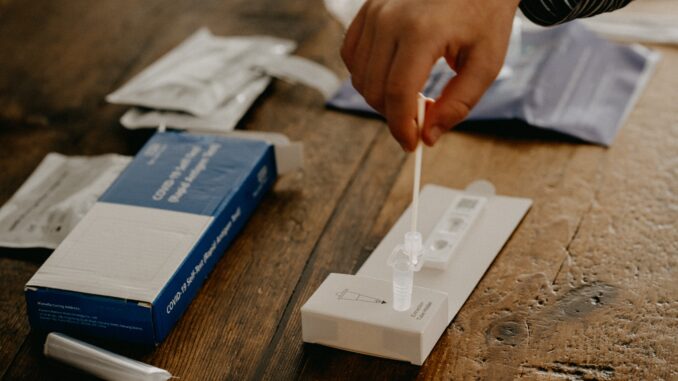
Considering this scenario, London Met cannot operate its Test to Access policy as of Friday 25 February, and as Lateral Flow Tests are no long provided free of charge by the government, students must pay for them themselves.
The university decided to move to “Test for Safety” which encourages London Met students and staff working to “take a test before coming onto campus, and claim a sticker when you arrive to show you are helping to protect the most vulnerable people in our community”.
Student opinions
Two students out of three interviewed do not feel safe in these circumstances but, at the same time, they don’t think that doing a Covid test every three days is the right way to avoid the spread of the novel coronavirus.
“It would be nice to know that people in our lectures have had a negative test, but I have also had people admit to me that they just scan the tests without doing them, thus there is already not a guarantee that those in the uni are indeed Covid-free,” said Megan Morgan, 20, who studies Journalism, TV & Film Studies.
“I have not really felt that our uni is the safest place in regards to Covid because if someone does have the virus, especially if they have it unknowingly, we are having to spend 3 hours in the same, often cramped, room as them at a time.
“As a student rep, I have found other students and even lecturers expressed concerns to me about safety at the uni in regards to Covid, prior to the relaxation of the rules too. Unfortunately, after I expressed concerns during a meeting, nobody followed up with me as was promised.
“This is more worrying than concerns that don’t seem to be listened to.”
The efficacy of “Test for Safety” was criticised by another student, Jerusalem Girmay, 27, who is attending her second year of the Media and Communication course.
“I think that it’s still necessary to do Covid tests for one way because we’re a lot of people sharing the same space on campus,” she said.
“But, to be honest, I don’t feel 100% safe because it seems like some people don’t take the test results seriously and only register that they’re negative without actually taking it,” added Girmay.
Managing to live with Covid
But there are some students who believe that it’s time to turn over a new leaf.
“At this point in time, I am pretty sure we can manage to live with covid without a single doubt,” said Davide Cotti, 21, a second-year student of Media and Communication.
“The “fragile” ones are already protected with a numerous amount of vaccine shots which technically speaking mean that they’re most likely to not get Covid or barely suffer from any symptoms, that implicates that now everyone can feel safer in going around and meet their grandparents or someone considered fragile without stressing too much about transmitting Covid,” said Cotti.
Cotti doesn’t trust the efficacy of doing a Covid test at the entrance as Morgan and Girmay do.
“I personally think that it’s not necessary to have people getting tested every three days to get into university since for example, you might test positive the day after and the whole testing for a reason goes to trash,” he said.
Safe environment
On the other hand, the London Met says it will continue to provide a safe environment even though it’s not allowed to require proof of a negative Covid test.
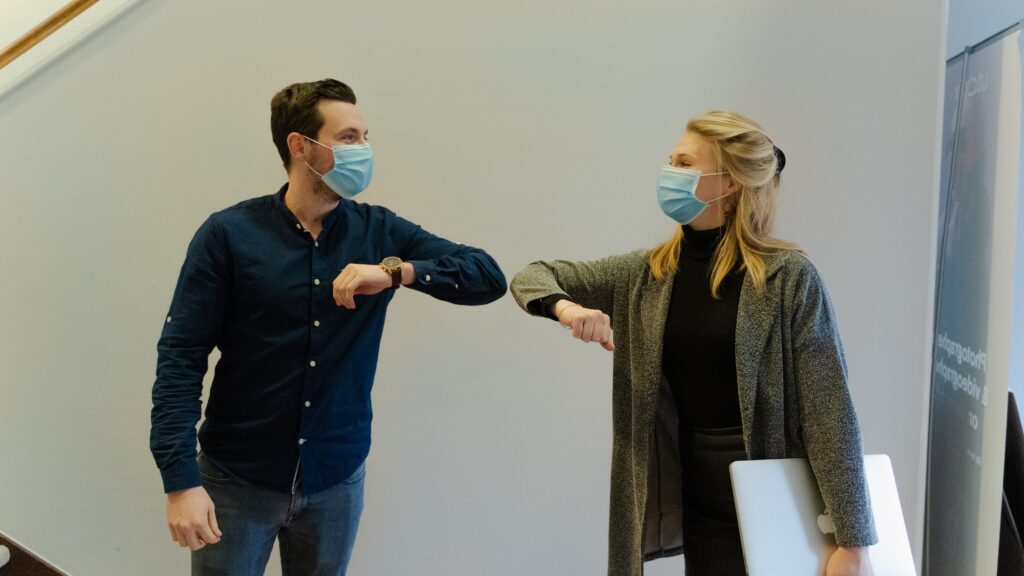
“We will continue to create a safe environment by undertaking Covid safe risk assessments, keeping in place environmental mitigations such as hand sanitising stations, enhanced cleaning and ventilation until the end of the academic year,” said Deputy Vice-Chancellor Julie Hall in an email addressed to students and staff working on the 23 of February.
“We still think it’s a good idea for you to take a test before coming onto campus, and claim a sticker when you arrive to show you are helping to protect the most vulnerable people in our community. Our on-campus test rooms will remain open until the end of this week, Friday 25 February.
“While face coverings are no longer a requirement, we are asking everyone to consider wearing one when on campus.
“The most important thing you can do to help keep our community safe is to get vaccinated and boosted. Getting vaccinated significantly reduces the risk of death or serious illness from the Covid-19 virus.”
The data and insights on Coronavirus today
GOV.UK says that during the last 7 days 234,103 people tested positive and 752 people died from Covid.
Apparently, cases have increased significantly in the period between the end of December and the end of February, according to Worldometer. For example, have been registered 13 011 649 positive cases on the 28 of February and 18 886 701 on the 28 of February, it says.


Leave a Reply