

By Holly Skipp
The cost of living has vastly increased not only in London but throughout the UK mainly due to high inflation and recent tax increases. The CPI (cost price index), calculated by the Office of National Statistics, is at 7% in the months up until March 2022. This has impacted prices of housing, gas, electric and transport (including petrol and diesel prices).
It is said that an average household in the UK could be facing an energy bill of around £2,800. Individuals are also noticing that everyday items in supermarkets are also raising in price, including food, toiletries and pet products.
The average price of petrol in May 2022 is £1.70 per litre, while for diesel fuel it’s £1.81 per litre. In the height of the Covid-19 pandemic in May 2020, petrol and diesel prices were at an all-time low. Now, due to various factors including a higher demand for gas in Asia, depleted storage supplies in Europe and the war between Russia and the Ukraine, prices are higher than ever. And according to the RAC, they are likely to rise even more.

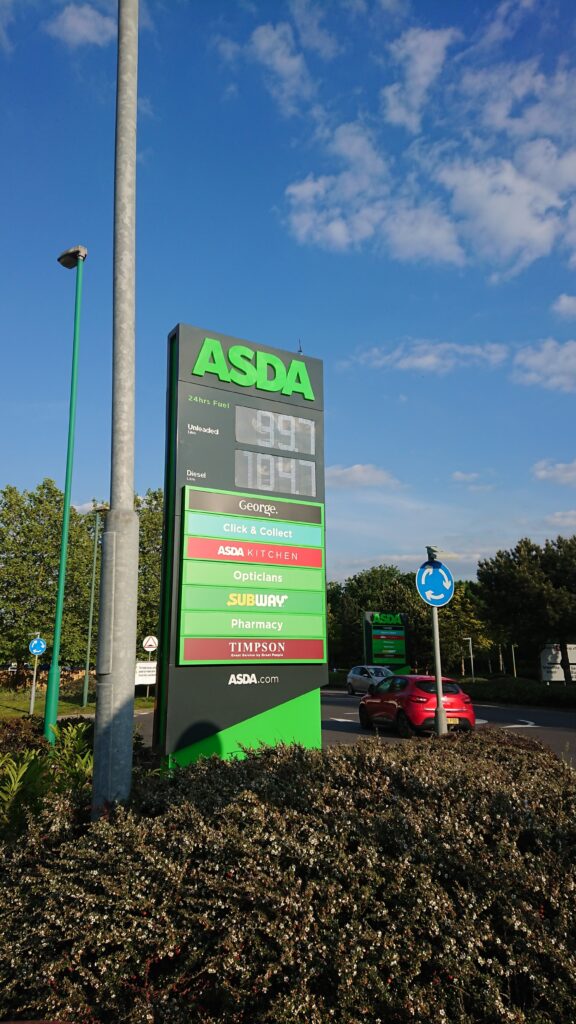
Due to the coronavirus pandemic, many factories in Asia were forced to close. This resulted in shortages and global shipping price increases as firms had reduced capacity by 11% as they anticipated a reduced demand for fuel.
It now costs roughly £90 to fill a typical family car, in comparison to two years ago where at average it cost £66. This is now placing a challenge on employers who pay mileage to their employees for trips made during work hours.
Care worker Claire Evans, who drives to and from work, describes the issue as an “ongoing battle”. Her employer has now risen the price of mileage she can claim from 25p per mile to 35p per mile.
See video here:
Lower incomes mean higher inflation
Micheala Cotterill, 36, is a mother of three from Kent who is unable to work due to suffering with a genetic disability. She relies on her benefit to get by and says that the overall cost increases are having a huge impact on her and her family.
“It’s disgusting, how do they expect us to be able to afford to live and provide for our children, with costs going up and benefits staying the same. I struggle to even do a monthly shop any more with everything going up.”
It costs Cotterill nearly £25 a day to take her children to school due to being unable to drive, and she believes this will only go up because of fuel price increases. On top of this, her electricity payments have gone up by around £15 per week.
She said the crunch will hit her most during school holidays. In the past she could afford to take her children on educational trips and days out. Now, she says, “I consider myself lucky that I can even afford to pay to get them to school.”
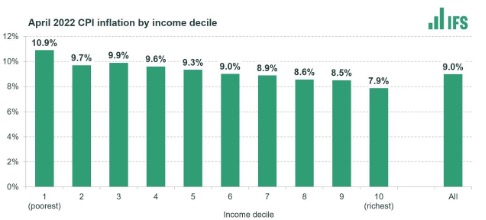
Those on a lower income like Cotterill are likely to feel more pressure due to inflation because they have less disposable income to spend. Inflation hits those who are poor at a far higher and quicker rate than those who are considered rich. Those who are in a 1 income decile are hit with a 10.9% inflation rate whereas those who fall under the 10 income decile are only hit at 7.9%. Experts say that this could hit 14% in October 2022.
Even Netflix has gone up!
Even those who do not rely on benefits, like Nicola Cirket, 50, from north London have said that inflation has massively impacted her everyday spending.
Cirket said she now has to be very careful with her spending as supermarket prices have risen so much. “I have noticed little things rising in price, such as meat and milk. Even Netflix has risen their subscription from £7.99 to £10.99. Although some may not see Netflix as a necessity, it used to be a reasonable price and something to do at the weekend to save money.”
Cirket works full time and lives with her husband and elderly dad. She said that she is lucky enough to work from home a few days a week which saves her money on travel, but “it all adds up!”.

Will it ever end?
Andrew Bailey, Governor at the Bank of England, said that that the rising of global food prices are “a major worry”, which is why shopping bills are increasing. “It is a very difficult place for us to be in”, he told the BBC, although he defending the fact that things could have been done differently, as they couldn’t have foreseen a war in Ukraine.
The Bank of England has said that the rate of inflation depends on what happens in the economy over the next few years, but they are doubtful that it will rise to the very high levels some have experienced in the past. They have confirmed that they are working on bringing inflation down to 2%, which is a target that the government has set for them.
Like the Bank of England, many central banks are lifting interest rates in attempt to slow the increase in prices which has led some experts to warn the risk of a recession. Kristalina Georgiev, leader of the International Monetary Fund, told the BBC that “supporting poor people should be the priority”. She is also concerned that lifting interest rates may impact those higher borrowing costs will have on the governments who must repay debts they took on in the pandemic.
Leave a Reply