

By Tsvetelina Stancheva, Michelle Sit Aboha, Carmen Garcia and Enrique Sandoval
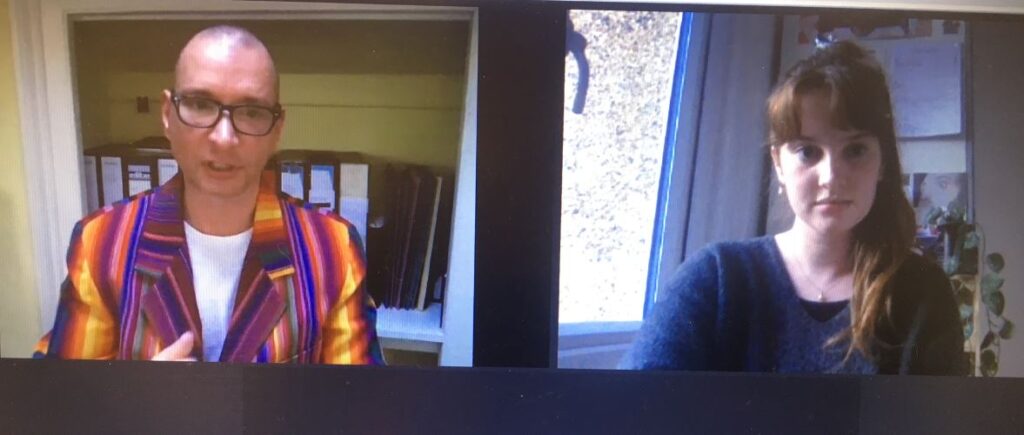
Do we care what we wear? This is the question leading the debate at London Metropolitan University this evening with Journalism students, staff and guests.
Today’s speakers make up a distinguished panel from various sectors in the fashion industry, including Thrill Digital tech-specialist Alex Erinle ; Co-founder, Editor-in-Chief and CEO of The Industry.fashion, Lauretta Roberts; forward-thinking designer, consultant, lecturer, public speaker and owner of SABINNA, Sabinna Rachimova; Editor-in-Chief of Black Beauty and Hair, Irene Shelley; and ex-CEO of East End Manufacturing Ltd and Laden Showroom, Founder of Barry Laden MBE, company director, artist, investor and entrepreneur Barry Laden.
16:55 – The guests are preparing for the discussion from their remote locations. Staff, students and guests wait for the remaining panel members to join
16:58 – Journalism Course Leader Wendy Sloane says hello to everyone and introduces Senior Lecturer Gill Wood to the panel
17:02 – The event has properly started now
17:06 – Wendy Sloane opens the ‘Do we care what we wear?’ event and panel discussion
17:09 – Senior Lecturer Gill Wood is hosting the event and says hello to students, panelists and guests
17:12 – Gill introduces the panel to the students
17:16 – The first question is asked by student Vicky Calabrese and it’s for Irene: “Do you dress fully – top to bottom – for your zoom meetings, and why? Are you fully dressed now?”
17:20 – Irene Shelley replies: “Yes, I am fully dressed right now. I really like to look good and also feel good, especially when I have to work. We are expected to look certain way when we have meetings and have to be around people.”
17:23 – Question from student Claudia Schergna to Barry: “How much help has been given to small fashion brands and companies from the Government and has it been enough? Have business owners taken up courses or training to help their businesses grow online?”
17:26 – Barry Laden explains: “There are lots of COVID loans available to existing businesses, but for many small businesses, especially start-ups, it is a struggle because if they haven’t made any profit yet, they won’t be able to get any loans from the Government.”
17:28 – Question from student Louis Parker to all of the panelists: “Do you think that COVID has killed high-street shopping for good?”
17:30 – Sabinna Rachimova says: “No, I don’t think so. I think that the fashion industry will always be big enough for everything—for sustainability, for retreat, for luxury. Different types of people are shopping for different types of fashion.”

17:31 – Sabinna continues: “I think the high street will not be affected, the way we approach it will change. There will be some changes in the way we shop.”
17:33 – Barry chimes in, referring to Claudia Schergna’s earlier question: “COVID loans are different from normal loans, they are usually not personal.”
17:34 – Barry then answers Louis’ question. “When we talk about the high-street we also talk about the experience of buying a product. That experience is the future and I think that is how the high-street will survive.”
17:35 – Alex answers: “I think that everything is going to change… this is an opportunity to change, an opportunity for innovation.”
17:36 – Irene Shelley: “I enjoy shopping online, but I think there will be a change in the high-street. It is happening in the beauty industry where technologies are used to find your base shade. Maybe this method can appear also in fashion. I don’t know what’s going to happen but I’m excited.”
17:40 – It is Lauretta’s turn to answer the question: “If we look at the data we can see an interesting change. For example last year all customers over 45 years old did not like to shop online, but since COVID that has completely changed. It’s been young people queuing at stores between lockdowns.
“This year stores have focused on surviving, now they have to innovate.” Lauretta Roberts adds
17:47 – Student Gianluca Barbazza addresses his question to Alex Enrile: “Non-physical products sold by luxury brand digital markets (For example, Gucci’s $18 digital sneakers) will likely lead to the extinction of small, medium and niche brands, since they won’t be able to keep up with this new technology/market for long. Is this the path the industry is going to follow? If so, what can smaller businesses do to keep up with these changes?”
17:49 – “In the next four to five years these things will develop. I think it will be more an opportunity than a problem for small businesses,” Alex says.
17:53 – Student Nikos Papanikolaou asks: “Pay and conditions can be very bad for people who make clothes in poorer countries for us to consume in the UK where we want cheap clothes. Will COVID make things even worse for workers?
17:54 – “I always like to be close to the products that I create and I produce in the UK,” says Sabinna.
“A change is needed, anyone starting a business now should think about how to take care of their employees,” she adds.
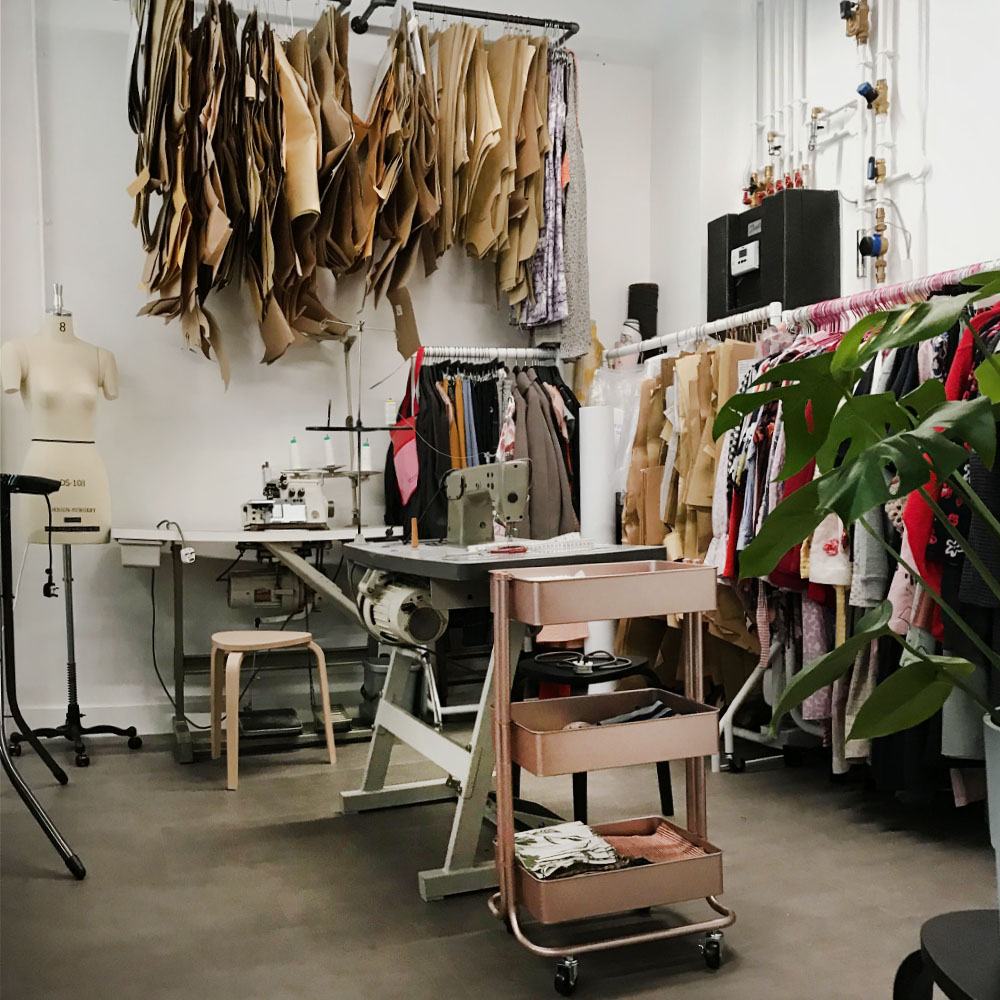
17:56- Gill directs the question to Barry
17:57 – Barry replies: “When I started my business, I think one of the most important things was the way we were going to treat employees. Many of them were even surprised at this fair treatment even though we were simply following the law.”
18:00 – Student Thaddeus O’Connor-Dunphie asks Sabinna if people are more interested in their clothes and shoes being ethically sourced than the prestige big brands offer
18:01- Sabinna mentions the business view she had when she was younger, defining it as “naïve”. She explains that six years ago people weren’t demanding sustainability but today it is necessary to visit the factories and to understanding who is working for the brand and how they are treated. She says that the pandemic increased this demand
18:04 – Gill Wood asks Sabinna about the difference between sustainable and ethical fashion
18:04 – Sabinna answers that the term “sustainable” is usually used when there is a focus on a material’s impact on the environment. The term “ethical” is used to define if the material is ethically produced. She refers to many cases in which the products are sustainable but the workers sourcing or making garments are unpaid interns or labourers
18:07 – Student Efstratia Nasioula asks Sabinna what is her opinion about brands that use the word “sustainable” purely for commercial reasons
18:07 – Sabinna mentions that there is the necessity to think about the future and that the “dream” could be to create a circular system where everyone could take items back
18:11 – Student Olivia Smith-Cairns asks Irene if there is a more eco-friendly alternative to synthetic hair, as it is usually made from plastic fibres
18:12 – Irene answers that sustainable synthetic hair is made from fake hair and the hair of people who decided to donate. She says: “They are selling more sustainable synthetic hair these days.” She mentions the fact that using synthetic hair makes it possible to create coloured wigs which are in-demand
18:15 – Student Alex Cimpeanu asks the panel how it is possible to make sustainable fashion affordable while protecting the environment and the people who make it
18:16 – Irene answers that it is really difficult to produce cheap products and still pay workers fairly

18:19 – Loretta mentions the number of products that have been not sold through the pandemic. She explains: “It is necessary for businesses to change their purchasing strategies. Then again, it’s not okay to demoralise people who buy cheap clothes (encouraging a non-sustainable system) because many people can’t afford expensive clothes.”
18:22 – Barry encourages students to see sustainability as an opportunity to make clothes with unusual products. “Brilliant students can show big brands how to improve sustainability for real.”
18:25 – Student Carolina Piras asks Irene: “How has the pandemic influenced people’s confidence and self-care/self-love?”
18:26 – Irene responds: “Many people demanded surgery after lockdown because they felt as their skin became bad. People are conscious of the fact that their skin has been damaged during lockdown. Many people have started to create ‘beauty salons’ at their houses.” She adds that the use of makeup has changed; it is still used to cover people’s insecurities but is also a form of self-care, and that people now more than ever are asking for “tweakments”
18:31 – Student Shaelyn Stout asks everyone if they have tips for those who want to embrace new styles and feel fashionable but may have a hard time going out of their comfort zone
18:32 – Barry says that if a person lacks confidence they should embrace the fact that staying at home, there is the possibility to be surrounded by a familiar environment which is less stressful than meeting people every day. He suggests trying different things at home and having fun with fashion
18:34 – Loretta says that it can be normal to feel less confident than before. She explains how trying something different can improve the mood. Loretta adds: “Social media has negatively influenced us; people fell judged all the time. Remember that almost everything published online is fake and not real.”
18:37 – Irene agrees with Loretta and says that when she was younger people were more confident and more willing to try new things. She explains that there used to be more freedom of expression and encouraged students to try something small at first, like a new lipstick or a home manicure
18:42 – Sabinna suggests unfollowing people that make you uncomfortable or feel less confident
18:45 – Alex agrees and says students should “Follow positive vibes and reject things that are not inspiring.”

19:45 – Thomas Hughes asks Sabinna about the changes she made in response to the pandemic and if she thinks that these changes will remain permanently
18:46 – Sabinna says that they weren’t prepared to keep these changes for such a long time. She explains that it has made sense to move everything online and that they decided to speak with the customers open and honestly throughout the process. She mentions the fact that it is really hard to be constantly flexible and remain positive at the same time
18:50 – Student Gennaro Costanzo asks Barry: “How are small independent businesses taking advantage of the fact that big fashion brands are being put on hold?”
18:50 – Barry answers that big fashion brands are surviving because of their online websites. He says that despite the economic possibilities and the opportunity to have an online site, it is necessary to do everything to be noticed. “If you have confidence in what you do, you can do anything,” he adds
19:01 – Gill Wood thanks the panels and notes the importance of self-expression behind the screen and every day in “fresh air”
19:02 – Course Leader Wendy Sloane thanks students, panellists and guests, and also bids a fond farewell to Fashion Journalism Lecturer Olivia Pinnock, who is sadly leaving London Met. She brought “not only a flair for fashion but a dedicated academic eye to everything she taught”, Wendy says
19:04 – Event ends
Leave a Reply