

By Sahra Sancar, Evie Smith Adams and Simone Limbu
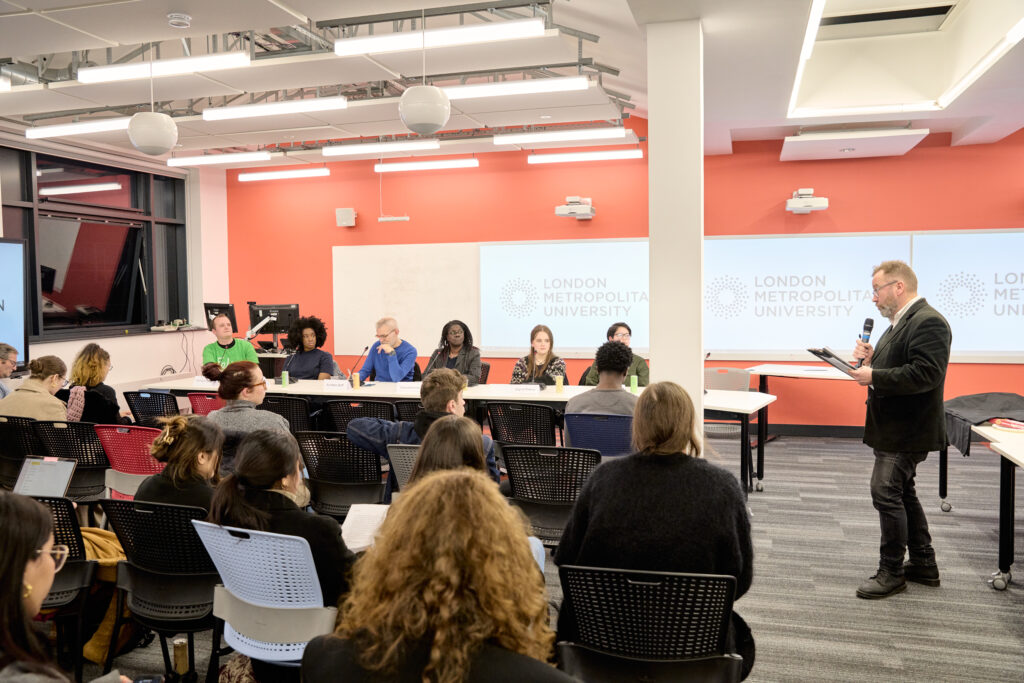
Cost-of-Living Crisis: how will we survive? This was the topic of a debate that was held at London Metropolitan University yesterday evening with Journalism students, staff and guests.
The panel featured a diverse range of speakers from various backgrounds with expert opinions on the current economic turmoil to discuss the causes of the crisis and what can be done to overcome and change it.
Panellists included Nicholas Kerle, The Felix Project; Nikki Iyayi, Bloody Good Period; Andrew Boff, London General Assembly; Grace Graham, Federation of Small Businesses, and Sophie Balmer and Liv Eren, End Child Poverty Coalition.

16:55 The panellists have arrived and the students are preparing to ask their questions.
17:00 Journalism Course Leader Wendy Sloane opens the Cost of Living Crisis event by welcoming the guests and panellists. Wendy explains what the event will discuss and the impact of inflation and cost of the increase in prices. Wendy introduces each panellist and the work they do. She hands over to Simon Cadman.
17:05 Senior Lecturer Simon Cadman takes over. He starts off the debate with the first question to the whole panel relating to mental health impacts of poverty: “According to the Food Foundation, 2.4 million adults had gone a whole day without food because they could not afford to eat. What impact is the cost-of-living crisis having on our physical – and our mental – health?”
17:06 Nicholas Kerle talks about the importance of providing nutritious and delicious food to children as it can have impact on a child’s long-term development. Kerle tells a heartbreaking story : “There were five kids who said that the last time they ate was when the chef fed them in school.”
17:07 Liv Eren says: “ During half term, there was not even one hot meal for children to eat.” She stresses there is still a big stigma for families to ask for help when they are struggling for food, and we need to normalise asking for help and talking more.
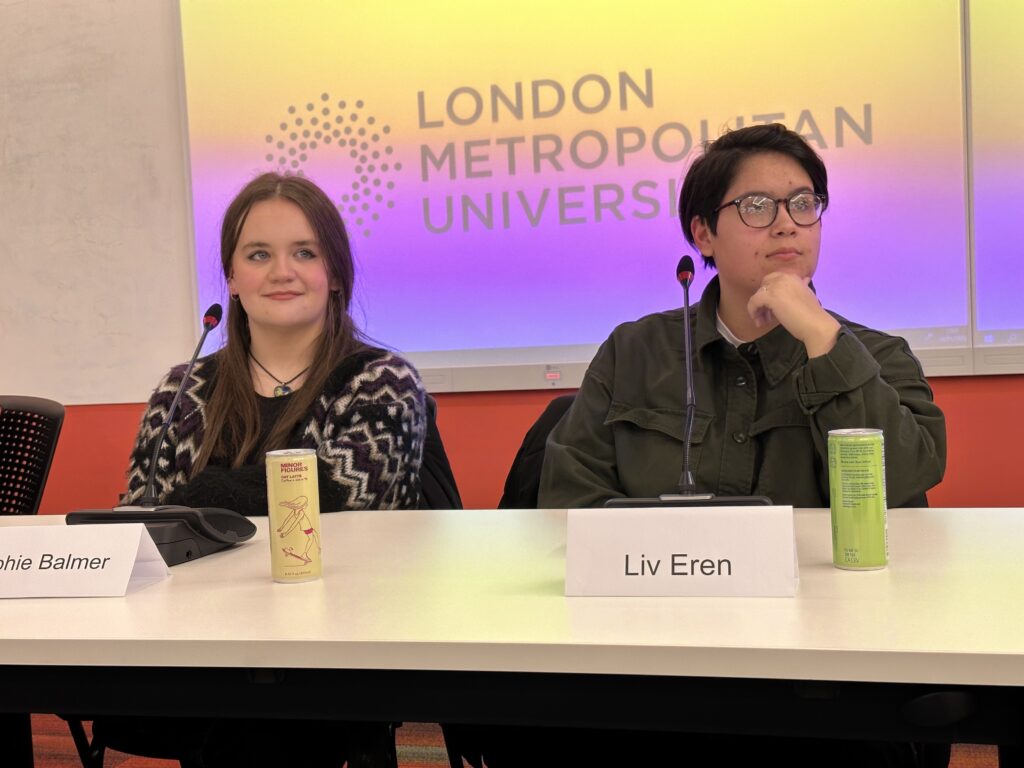
17:09 Sophie Balmer talks about how running the campaign was channelling her own experience as a child who grew up in a low income household.
17:10 Simon asks a question to Andrew Boff, asking if as a Conservative party representative he feels ashamed about the current situation.
17:10 Andrew Boff says: “Every hungry child makes us ashamed and not enough has been done.” He says the solution to this problem lies in tackling poverty by creating jobs and providing support for people. He emphasises that poverty is a complex issue which cannot be solve overnight.
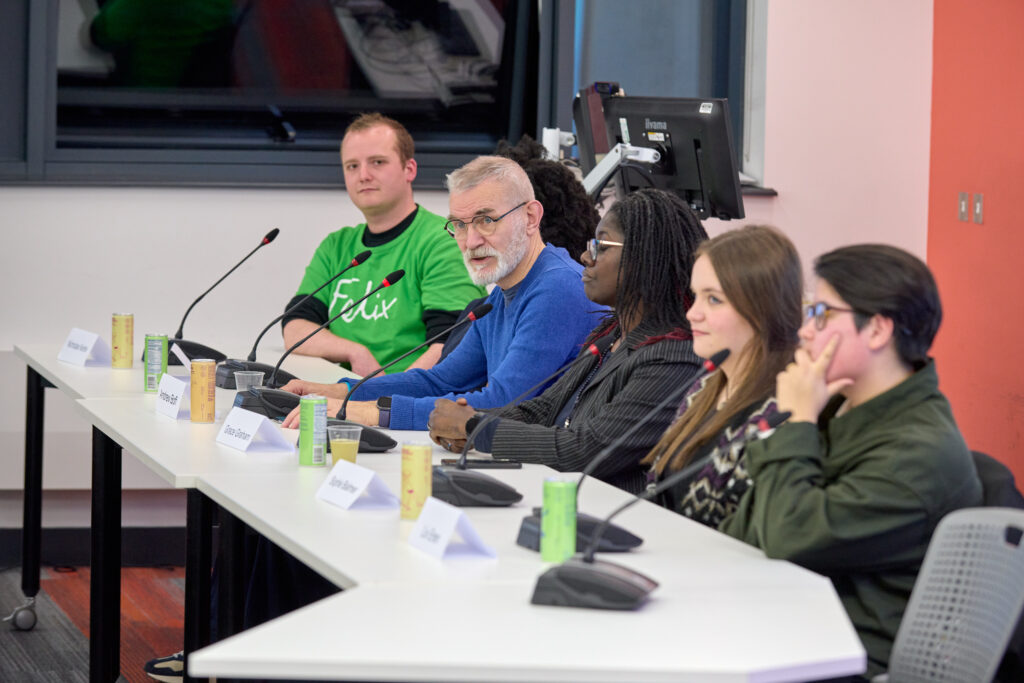
17:12 Simon asks Nicholas Kerle what he thinks the GLA should be doing about the current situation in London.
17:12 Nicholas Kerle says: “There needs to be action that would put an organisation like mine out of business; our waiting list grew by about 180 organisations in three months. This is a decades old problem, there is no support, only some boroughs have a single hot meal a day. We shouldn’t be here and we shouldn’t be needed.”
17:15 Simon now moves to speak to Grace Graham and about asks her perspective in terms of small businesses.
17:15 Grace Graham says: “The big issue is we’re still reeling from the pandemic. The government may help with electricity but they’re not helping with gas. Business owners have to put their prices up as their stock prices have increased. Many business owners are operating their businesses whilst they’re struggling with their mental health.”
17:17 Nikki Iyayi says we have coined the term “cost-of-living crisis.” Ninety percent of people who are food bank users are working families and she believes it’s a “disposable income crisis”, and questions if working to just pay off the bills is considered living or surviving.
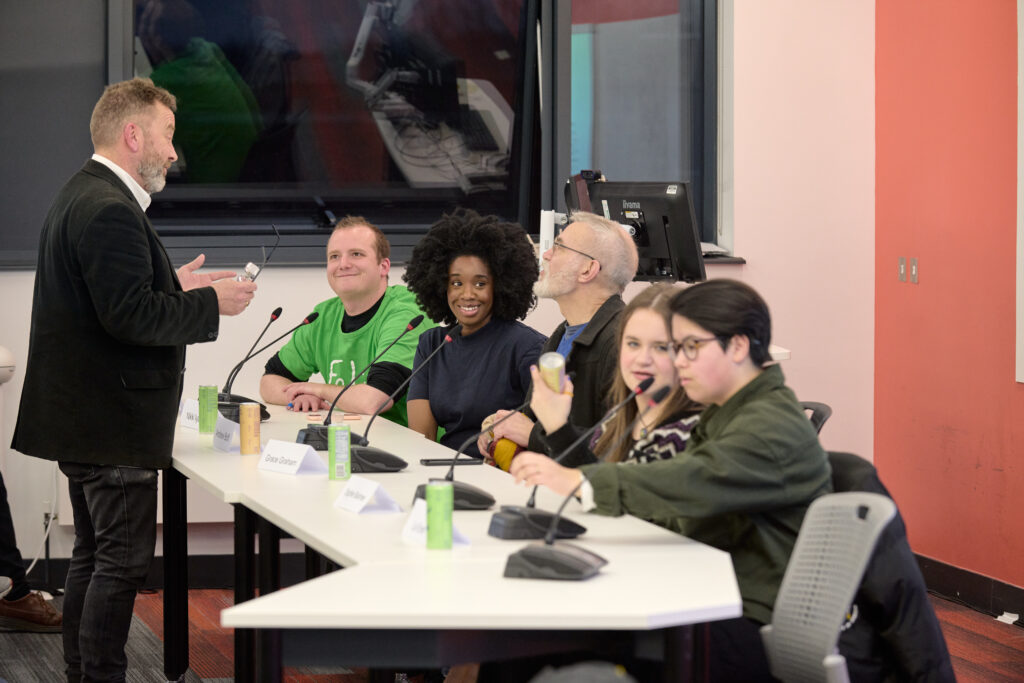
17:20 Simon asks a follow up question to Nikki Iyayi, about her perspective on Scotland’s free sanitary products for women.
17:21 Nikki Iyayi says : “I hope England and Wales can follow in their footsteps. People need to be educated about menstrual cycles and we need to normalise periods and there are lots of myths about periods as dirty and we need to talk about it more.”
17:23 Question from student Alexandra Flores: “You represent small businesses. What are the major concerns facing small businesses in 2023? Who’s to blame? What policies would you like to see introduced to ease the strain?”
17:24 Grace Graham says: “The biggest concern is paying back loans that they were given, also people who have buildings, they have to get rid of staff to afford their rent.” She says Covid and poor mental health can be to blame for this issue. Micro businesses with 1-4 employees are struggling to survive; she would like the government to take into consideration micro businesses who didn’t receive help during Covid and are currently operating at a loss.
17:28 Simon asks the panellists if the UK still supports Ukraine, and if the public feels that we are paying the price of fighting the war for Ukraine.
17:29 Nikki Iyayi says that as an organisation they have provided help to the Ukraine, however now the help has reduced and they are focussing more on the UK.
17:30 Andrew Boff: “The Ukraine war is not about Russia invading a piece of land, it is jeopardizing the entire world order, rules we established between countries after WWII.” He says we can’t afford to not support Ukraine; support is as strong now as it always was.
17:33 Simon asks the audience if they still support Ukraine.
17:34 Journalism Course Leader Wendy Sloane says: “Ukrainian refugees are privileged refugees- they are allowed to work, they get help with their housing and receive a three-year work visa.” She says we should be treating asylum seekers and refugees equally and poses the question if government policy is to prioritise white European refugees?
17:35 Grace Graham talks about how Afghan refugees are treated differently compared to Ukrainian refugees.

17:36 Question from student Seham Al Ansham: “You report on your official website that 3.9m children were living in poverty in the UK between 2020 and 2021. According to the Joseph Rowntree Foundation, the number rose to 4.3 million children in 2022. How do you think the current socio economic crisis will affect these numbers? Given your work in this area, what examples can you give us of the levels of child poverty here in the UK?”
17:36 Liv Eren says: “ One young mother at a food bank had to terminate her pregnancy as she couldn’t afford to keep her child… one child asked Father Christmas for school shoes.”
17:38 Sophie Balmer says: “There were children who came with empty packed lunches and pretended that there was food in them – it was quite a few and it was scary.”
17:39 Liv Eren stresses that child poverty has been there for ages and did not appear because of Covid; the pandemic has simply exacerbated it.
17:40 Andrew Boff talks about levelling up. “We mustn’t forget some of the poorest most disadvantaged areas are here in London, levelling up has to include here in London as well.”
17:41 Question from student Sam Sorabjee: “Some people might argue that your party has destroyed our economy. What would you say to this considering there’s an election next year?”
17:42 Andrew Boff: “There is no excuse for the mess we made, as a result of that we’ve got the right approach, which is not to promise false promises. I don’t think the economy is going in a wrong direction – and we shouldn’t go for quick fix solutions. It started with austerity, the government uses the credit card to make us seem wealthier than we were.”
17:45 An audience member shouts to Andrew Boff that Tories blame everyone except themselves.
17:46 Grace Graham blames Brexit for the prices of items continuing to increase regularly. It has affected business so much as there are now many additional fees and taxes to pay.
17:48 Andrew Boff says he has no regrets for voting “leave” in the Brexit referendum, to which the crowd boos. He says: “I wanted to see the UK as a bureaucratic country. We want to trade with other parts of the world, for example Africa. We neglected that part of the world which has so much potential.”
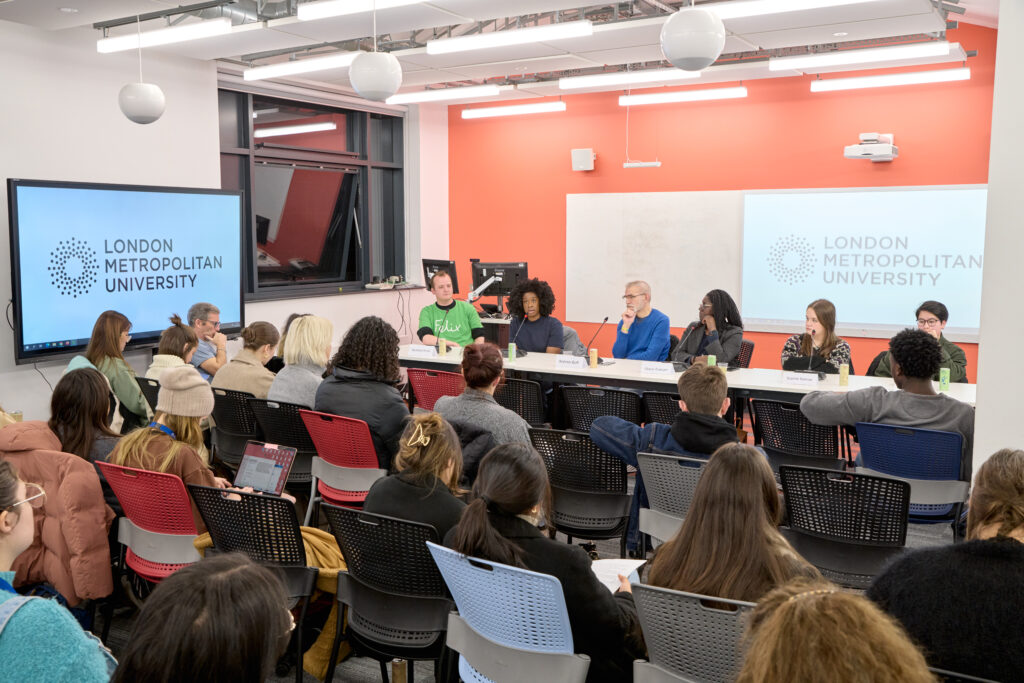
17:49 Simon hits back at Andrew Boff’s comments, asking when we will feel the benefits of leaving the EU?
17:50 Question from the student Sara Scheeres: “What do you say to those who claim people who go to foodbanks are just not working hard enough?”
17:51 Nicholas Kerle says: “The short answer is that is nonsense, the majority of people using food banks are families who work full time and get minimum wage.” He responds that it’s hard to survive on minimum wage in London, people who earn the lowest money in London are the ones who work the hardest and do the toughest jobs that people with a lot of power and money don’t want to do.
17:54 Nicholas Kerle tells a story about a lady who was in tears at the charity, after she had to be turned away because there was no more food left to give out, saying this is happening a lot at their depots all over the country. He says: “400,000 children in London alone will go to bed without dinner tonight.”
17:56 Simon asks Andrew Boff’s opinion on the recent Daily Mail article titled “Covid convinced Brits that they can have something for nothing, Tories claim.”
17:56 Andrew Boff says: “The Daily Mail story is made-up nonsense. People go to food banks because they need to go to food banks. They provide a marvellous facility and I do hope to see a day where we no longer need them.”
17:58 Liv Eren says that she believes that Brexit has really divided the public, she thinks working class people are always being blamed in the news and face the brunt of the scrutiny by the government. “Wheeling out the kids on national news and parliament to explain how hard their mum works is very insulting.”
18:00 Simon ask the panellists opinion on the strikes in line with the cost-of-living crisis
18:00 Liv Eren says: “I think working class people have had enough, we’re constantly being blamed … wages need to change.”
18:01 Andrew Boff says: “I don’t support strikes. Increasing the cost is what a strike does, which doesn’t help in a cost-of-living crisis. Nurses are offered more than the other public sectors.”
18:04 Grace says she is affected by the strikes but also believes the power lies with the people, and that some people support them. “Any strike, especially tube strikes, affects small businesses. If you can’t get from A to B how do they get to work? We are affected by it, but as an activist ‘power to people’.”
18:06 Question from student Amalia-Elena Radu: “The strikes create the bigger hole in our economy, why is the government not giving pay rises to the people who are striking?”
18:06 Andrew Boff says: ”The biggest enemy is inflation, big pay rewards equal increased inflation. Nurses want a 19% increase but have we got that money at a time when inflation is at 10%? It would make food more expensive.”
18:08 Nicholas Kerle says that nurses who are using food banks are highly skilled professionals and raises the question of whether we want to build this kind of society where we mark our lives by just surviving. “Being a nurse or a teacher should give you a good quality of life.”
18:11 Andrew Boff says nurses received a 4.5% pay rise, and as for the benefit of Brexit, he says that with the business not being able to earn money during Covid, the economy went bust. So it was a tough year and half, and it’s too early to see the benefits of Brexit.
18:15 A student asks why MPs get a pay rise every year but not everybody else.
18:16 Andrew Boff says: “All MPs get the same amount.”
18:17 Sophie Balmer says: “It is hypocritical.”
18:18 Nikki Iyayi says all the people that she knows who worked for the NHS now all work in different sectors or work for agencies, and says that if people can’t strike then what else can they do to make a difference? She says there is no alternative because changes aren’t happening, and poses a question about money being reallocated.
18:21 Simon asks Andrew Boff how badly the Tories are going to get bashed in next election.
18:21 Andrew Boff says: “The reason we get back in is we don’t give up, I think we’ll win the next election.”
18:21 Grace Graham talks about how the strikes are not just about the money but working conditions, where workers can’t get holidays or get time off during a bereavement, and when nurses aren’t able to go to the toilet during shifts.

18:23 Question from lecturer Daniel Schweimler: “The UK is the 6th wealthiest country per capita, there is an ideology that bulk of that wealth goes to the tiny minority, as we are not being taxed adequately.”
18:24 Nikki Iyayi says: “There is a huge inequality. My age group would never be able to get on the property ladder, I might only be able to buy a tiny shed.”
18:26 Liv Eren adds: “Poverty is a political choice. Free school meals are a simple solution, but when it’s suggested, people gets ridiculed. We spend so much time arguing and bickering.”
18:28 Simon askes Nicholas Kerle his opinion on tax avoidance and how HMRC are not collecting 5% of total tax, which counts to 42 billion a year.
18:30 Nicholas Kerle says: “ I think it comes back to a structural issue where the largest corporations pay little or no tax and can write it off through completely legal means. We need to invest in longer term solutions.”
18:32 Nikki Iyayi talks about how the rich and big corporations use London as their playground, where they can come and pay little to no tax. She suggests there is no incentive anymore for people to study for degrees when they will end up barely making ends meet.
18:32 Simon asks Andrew Boff if it would make a difference in cost of living crisis if HMRC collects that remaining 5% tax.
18:33 Andrew Boff says: “It is always not the case – one percent of elites pays 25% of the tax in government.”
18:34 Simon thanks the panellists for their contributions and the audience applauds.
18:35 Guests and panellists adjourn for refreshments.
Leave a Reply