
By Maria Luiza Montejano Pedrosa
There are more than 2.2 billion people worldwide declared visually impaired, of those 2 million are registered in the UK. Yet it is safe to say that beauty and fashion industries have not made many advances towards accessibility.
Accessibility: A life-long issue
Claire Sisk, a content creator, shares her life as a blind person on a series of videos called “I’m blind and this is how I…”
As mentioned by Sisk, most brands have packages that are not accessible and some have “accidentally accessible” packaging like Charlotte Tilbury. Selena Gomez, the CEO and founder of Rare Beauty, ensures that their packaging was made exclusively to be accessible for those with any disabilities.
“Because of my personal experience, I’ve always been drawn to packaging that’s easy to open and close, hold, and apply,” she says on their official website.
The brand set a new standard for inclusivity in the beauty industry, undergoing deep research and partnering with Casa Colina Research Institute to kick off their Made Accessible Initiative that studies easy-accessible packaging for individuals with dexterity issues.
The fashion industry is not so different. There is a lack of brands that carry accessible clothing for disabled individuals, and few initiatives to change that. These include simple details like braille tags describing the clothing pieces, a voice guide in stores or any preparation for staff that could assist disabled clients.
Geisa Sovegni, a 45 year-old personal stylist with seven years of experience in the fashion industry, reinforces the importance of making fashion accessible and shares some strategies she suggested to brands and individuals she works with.
“I can teach them how to combine colours and put an outfit together, read the colour of the piece to separate them to wash properly with the same colours, how to understand which colours to buy clothes, where they can find brands with QR codes or braille to be able to read the details about the pieces,” she said.
When talking about what led her to work in this area she shared the importance of true inclusivity.
“Enjoying fashion for real people, not just for celebrities. I mean, mums, different body shapes and ages, people with disabilities or other possibilities,” she says.
“It is about promoting accessible fashion for them,” she adds.
Another beauty and fashion creator, Lucy Edwards, has shared her experience as London Fashion Week has included some of its first accessible designers that included braille in their clothing.
AI Solutions
A rapidly growing machine, AI has become a vital piece for accessible beauty and has improved the lives of many makeup and fashion users worldwide.
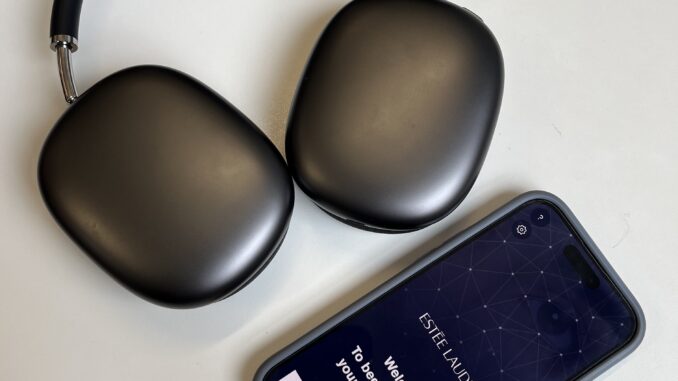
Introduced in 2023, Estee Lauder took a step towards inclusivity with an innovative app called EL VMA, a voice-enabled makeup assistant that guides visually impaired individuals to do their daily makeup.
The AI mechanism can capture any issues with your look, from an unblended foundation to an overlined lipstick, to help you look your best. Many users have captured the app in action, assisting them towards something that is so essential for their routine: a proper makeup look that expresses their true self.
Have you ever wondered how a blind person identifies shades and colours? Thinking of that, Bruna Tavares, owner of the Bruna Tavares beauty brand, partnered with the Dorina Foundation to launch Colorfeel, an AI powered platform that assists makeup users to be colour matched with a makeup look.
The platform is able to describe shades by smells, flavors and weather, for example. Think of a red shade, the app would describe it as fire, warm, tasting of peppers or cinnamon. This helps partially or totally blind individuals to understand not only the shade but its hues, the complexity of it. The project was introduced in the Cannes Festival in 2024, taking a major step towards beauty inclusivity.
Matthew Blakemore, an AI strategist and CEO of AI Caramba, explains that there are already advances and new mechanisms created to assist the visually impaired in different ways.
“Envision had a project displayed a couple of years ago, which now they have made much progress with. They were glasses for visually impaired people to wear at the theatre, providing context for what was happening in the scenes live. The idea was to make musical theatre in London more accessible to them. AI opens the door for a lot of these things, these improvements.”
Blakemore ensures that there is hope for new AI-powered platforms and apps to assist social group projects and make the world more accessible in the future.
“As technology continues to improve, undoubtedly, for overcoming challenges such being visually impaired or other disabilities, AI can really potentially help a lot of people.”
“Investors, especially, are always looking for youth cases like that offer good social opportunities,” he adds.
Hope it is what has been moving us through the future, of which we hope is more accesible.
Leave a Reply