

What representation looks like around the world
Photo: Molly Madden
By Cydneii Lung’aho and Molly Madden
The fashion industry loves to call itself global. Pulling inspiration from every corner of the world for their runways, designers reference cultures beyond their own, campaigns are shot everywhere from Tokyo to Nairobi, and models are representative of the people around the globe.
Or they should be. When it comes to the models actually representing these ideas, especially in the Western world, the industry’s definition of “global” can still feel surprisingly sheltered.
On the other side of the world, the modelling industry tends to reflect the population, mostly because of the smaller scale in diversity. In countries like Kenya or Vietnam, the models you see in campaigns and on runways often look like those outside. But, even there, diversity in size, complexion, and ability are just a few areas for improvement .
Maria Pedrosa, a 20-year-old Brazilian Fashion Marketing and Journalism student at London Metropolitan University said: “Brazil has much more diversity, but it’s something that happened in the last two decades, when the media started to embrace more black women and minorities. During Sao Paolo Fashion Week, you can see the diversity racially, but you only see the typical ‘super model body.’”
Similarly, 28-year-old beauty specialist Hajaratu Kamara felt the same growing up in London with African heritage and a curvy build. When asked if she felt represented in fashion whilst growing up, she said: “Not so much in the UK, more so through general media like That’s So Raven and The Parkers – where there was more plus-size representation wearing mainstream fashion. UK media representation started in the mid to early 2000s and fashion within itself is very limited.”
There’s a sense that the industry is drawing directly from its demographic, but in countries like the UK, where diversity is one of the defining characteristics of the population, representation doesn’t translate the same way. London is one of the most multicultural cities in the world, yet fashion still tends to favour a specific version of beauty.
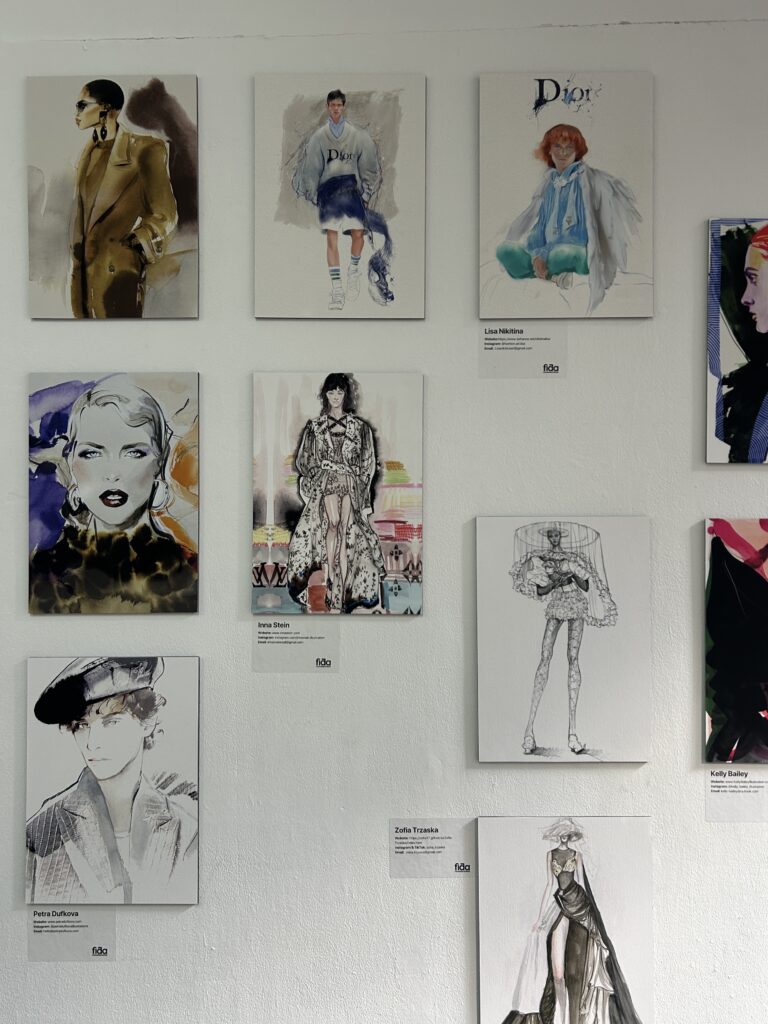
Model & design sketches at fashion show venue Protein Studios
After living in London for three years, Pedrosa compared her experience with representation and said: “I see myself represented more in London Fashion Week, but I don’t see myself represented in the industry, or in senior positions. I think there is space for representation to be made and there is more opportunity in London rather than other cities like Paris or Milan, so if any city can change it is London.”
Luke Mantle, a 20-year-old fashion marketing student and drag queen, recalled these limits during his upbringing in Wales and even now, but also spoke of his exposure to MUA’s and queens whilst working at Boots as a teenager. Since then, moving to London has only opened his world and made him feel “much more represented.”
He said: “[London] has every single facet of the queer community and straight people. I don’t even feel like I’ve gone from a small fish to a big pond, I just feel like I’m a fish – a rainbow fish – in the pond with a lot of other rainbow fish and I love it, because it’s not just me.”
That being said, there’s still a lot of progress within representation that often feels like a “first.” Recently, Chanel named its first Indian house ambassador, Bhavitha Mandava. A New York fashion model scouted on a New York metro, turned ‘ordinary girl’ to ‘best of both worlds’ virtually overnight.
Aadya Shrivastava, a 23-year-old Indian international who grew up in Dubai, had plenty to say on Mandava’s success.
“Growing up in Dubai, UAE, I actually did feel represented in fashion, at least locally. Dubai is very multicultural and also has a large Indian expat community, so Indian designers such as Sabyasachi Mukherjee, Manish Malhotra, Anita Dongre and Rahul Mishra were household names and discussed around me as much as, if not more than, Western fashion houses like Chanel or Dior,” she said.
“Seeing Bhavitha Mandava become a Chanel house ambassador feels huge. For Indians, especially darker-skinned Indians who’ve historically been underrepresented, it’s a really proud moment and a sign of real progress. Representation is also improving more broadly across fashion and media. Seeing artists like Lara Raj in KATSEYE appear in campaigns with brands like Gap shows South Asian faces in spaces that weren’t commonly inclusive.”
It’s a major moment for one of fashion’s most powerful houses, but the response highlights another issue: even with such a historic achievement, the recognition barely reaches the same level that typical skinny, white models often receive for far smaller milestones.
At the same time, the industry is slowly expanding its idea of who gets to be visible. In 2024, Alex Consani was named Model of the Year at the The Fashion Awards, becoming the first transgender woman to win the title. Her rise signals a shift in what fashion looks like and who gets to define beauty.
“It’s vital for fashion to have different voices as fashion is always about the next big thing: a trend, a colour, a texture etc. Therefore, the more vibrant fashion is, the more robust it is. London is one of the most multicultural fashion capitals on the planet and having voices from various countries is what makes it unique,“ said Olenka Martynyuk, a fashion lecturer and journalist who has been to over 1000 fashion shows worldwide.


A collection of fashion shows in London | Top to Bottom: London Graduate Fashion Show (2025), The W Online! (2023), AGRO Studio (2025)
These brief moments of representation stand out because they’re rare, and rather than celebrating the achievements of those making strides for inclusion it often becomes overshadowed by an overwhelming desire for it to become a norm rather than a token.
Fashion yearns to be groundbreaking, but true representation would likely be its greatest showstopper. When the runway finally looks as varied as the streets outside the venue, the industry might actually live up to its global reputation.
Leave a Reply