

By Fiona Vitija, Claire Shaw and Evie Smith-Adams
“They seem so like us. That is what makes it so shocking. Ukraine is a European country. Its people watch Netflix and have Instagram accounts, vote in free elections and read uncensored newspapers. War is no longer something visited upon impoverished and remote populations. It can happen to anyone.” (Daniel John Hannan, Baron Hannan of Kingsclere, Daily Telegraph, February 26th).
As the world watches the war unfold in Ukraine, some people believe this war is somehow different to the others. Why are people more interested in a war in Ukraine compared to the Taliban takeover of Afghanistan, or the years of endless shelling and devastation in Syria?
The answer should be: this is the first time in recent history that a European country has invaded another sovereign state. Add to that the veiled threat of nuclear attack, and you’ve got something to worry about.
But instead, it seems as if the answer is more pedestrian: people “care” more about people they relate to – and for people such as Lord Daniel Hannan, the photos of young, blonde Ukrainian women wearing western-style clothes seem pretty relatable.
He seems to have summed it up in his Telegraph article. “They seem so much like us,” he said, referring to Ukrainian refugees. Vladimir Putin’s invasion “is an attack on civilisation itself”, he added.
Explicit and implicit bias
It’s not just in the UK that the coverage of the war in Ukraine has shown “implicit and explicit bias”, according to the Arab and Middle Eastern Journalists Association (AMEJA). “In only the last few days, we have tracked examples of racists news coverage that ascribes more importance to some victims of war than others,” AMEJA said.
It lists several examples, including a CBS News programme where the US journalist said: “But this isn’t a place, with all due respect, like Iraq or Afghanistan, that has seen conflict raging for decades. This is a relatively civilised, relatively European – I have to choose these words carefully now, too – city, one where you wouldn’t expect that, or hope it’s going to happen.”
And Philippe Corbe of BFM-TV in France told his viewers: “We’re not talking about Syrians fleeing the bombing of the Syrian regime backed by Putin, we’re talking about Europeans leaving in cars that look like ours to save their lives.”
“AMEJA condemns and categorically rejects orientalist and racist implications that any population or country is ‘uncivilised’ or bears economic factors that make it unworthy of conflict,” it said.
“This kind of commentary reflects that racist mentality in western journalism of normalising tragedy in parts of the world such as the Middle East, Africa, South Asia and Latin America. It dehumanizes and renders their experience with war as somehow normal and expected.”
Above war?
While it’s true that Ukraine has made war relatable to the western world, has modern European society been conditioned to believe that our society is somehow above war? Is war just for the desolate and poor? Until now?
Ukraine’s suffering, alongside Vladimir Putin’s veiled threats of nuclear attack on the west, has brought with it the realisation that war is now on our doorstep. We can no longer disregard it as something that will never happen to us.
Images of Ukrainian families queuing in 17 kilometre long queues to escape the violence now haunt us all.
We are also at the beginning of a huge refugee crisis – but what about the one we already have? The refugee crisis in Europe reached its peak in 2015 and has continued to rage on since then. Refugees from countries including Syria, Iraq and Afghanistan continue to this day to risk their lives trying to find safety away from war in their countries, living their lives in unsafe refugee camps where the police burn their tents and belongings.
Negative refugee coverage
You don’t need to look hard to see that the media coverage of this crisis in the United Kingdom has been incredibly negative.
‘The mass media can set agendas and frame debates. They provide the information which citizens use to make sense of the world and their place within it. Research in many countries has found that refugees and migrants have tended to be framed negatively as a problem, rather than a benefit to host societies. However, it is also true that, on occasion, the media can have positive impacts on public attitudes and policy.’
We can see this currently with the quickly growing refugee crisis caused by the war in Ukraine. France is one of many countries welcoming refugees “300,000 Ukrainians are already here” said France’s Home Affairs Commissioner, Ylva Johansson. “All those who have to flee will be welcome.”
This seems a different approach to when the Syrian refugees wanted to enter France.
Even now in the refugee camps in France, the police burn the tents and belongings of the refugees who are seeking shelter there. Julie Adams, aged 47, is a regular volunteer at camps in France. “Most refugee tents last from 24 hours to one month before being slashed and burned by authorities in France, often whilst they’re still in the tent,” she said.
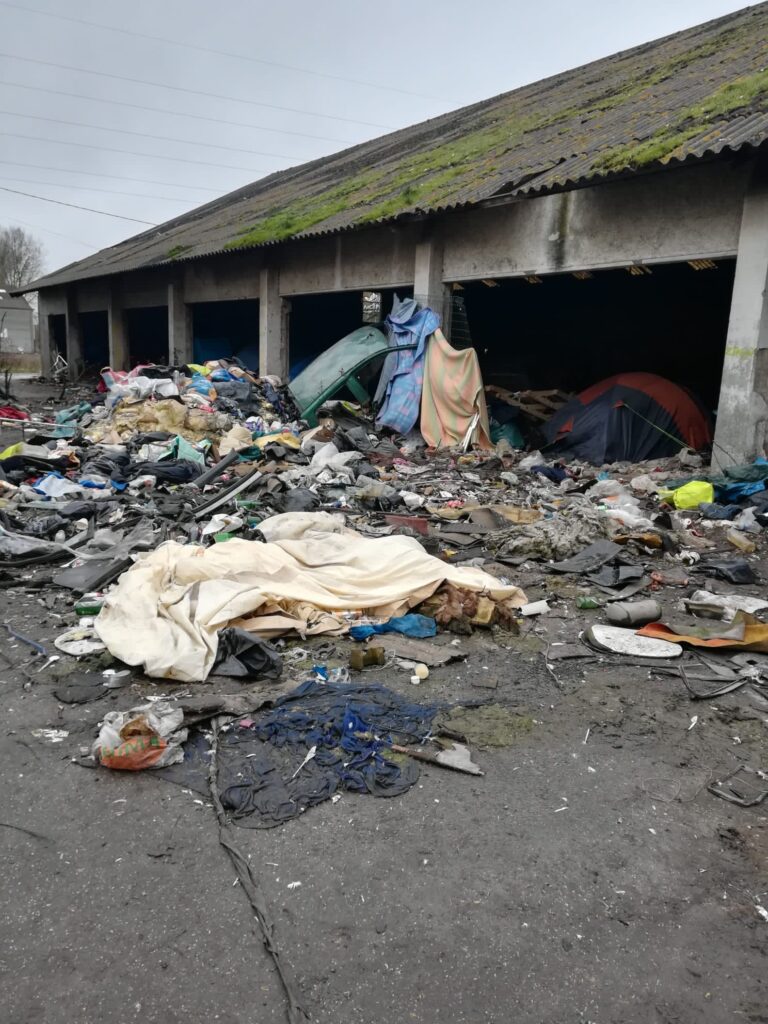

Why was this different with the Syrian refugee crisis? Is race to be blamed?
Adams works closely with a refugee charity operating in France that supplies food and essential items to the refugee camps in Dunkirk. Julie runs an organisation in the UK that collects donations and takes them over to Dunkirk.
‘Initially when war happens people have compassion. However, when society begins to feel they are burdening their country’s health services, benefits system and employment, they then change stance on how they feel about those people coming over often because they feel threatened.
“I also feel that when people see others so similar to themselves suffering they relate to it more and realise that it could be them.
“Unfortunately it can often be seen as a race issue.’
Leave a Reply