

Empty Movie Teather by Janine and Jim Eden, Wikimedia Commons
By Maria Luiza Montejano Pedrosa
The art of going to the cinema has been a natural part of human relationships, as creating friendships and connections that start on a screen can eventually take you anywhere. But with the rise of streaming and decline in admissions, cinemas in London are paying the price – with some showing their last screening ever.
The seventh art has had an immeasurable and undeniable socio economic impact ever since its formation, shaping strong communities and economic prospects. From the very first film showing in London in 1896, the city has taken a step towards cultural evolution by embracing the film industry and cinemas.
In 1933, the British Film Institute was created with a standing mission to keep film screen culture alive by connecting the public through promoting the widest possible range of national and international films. Now, with more than 800 cinemas around the UK, London plays a crucial role as one of the most important cities for the film industry, home to many productions and film premiers that went on to become classics. There are certainly more to come.
An enduring art?
It is safe to say that cinemas have survived a lot during history, guiding society through two major world wars, revolutions, technical advances and recently a worldwide pandemic that froze time, keeping the world away from unnecessary gatherings for quite some time.
In fact, the Covid-19 pandemic severely impacted the cinema industry, leading to hundreds of cinemas permanently closing everywhere and leaving a painful scar for ages to come. Just in London, the numbers of cinemas operating decreased by 17% since 2019, according to the United Kingdom Cinema Association (UKCA). That number keeps on growing, with recent closures of cinemas in Bromley, Stratford East, Fulham and Surrey Quays shutting their doors at the end of the 2024.
At an all time low, ticket admissions suffered a fall from 40.2 million sales in 2019 to only 10 million in 2020, according to the British Film Institute. In 2024, admissions numbers rose from the previous year but still remained with a lagging decrease in sales of 28% as opposed to 2019.

The impact of streaming
The eminent decline on public attendance on cinemas seen could be traced by many factors like the pandemic but also the relevant rising on streaming services available worldwide now, a technological advance that made watching films more convenient – and cheaper – than ever in the comfort of your home.
Nicole Chunga, a 22-year-old student, visits the cinema frequently but still prefers to watch films at home. “You have to wait 30 minutes with ads, sometimes you are in [the cinema] with annoying people so it is better to be at your house,” she said. “I think there are some movies that are better to watch at the cinema.”
It is evident that streaming has come to stay, a change that was adapted by the film industry and welcomed by the public. These technological changes have similar effects to the cinema industry as seen before through different times in history.
A recent example is when DVDs were popular in the early 2000’s, though this might have caused commotion and worry for the future for quite some time, cinemas everywhere were able to adapt to these changes.
A similar movement was seen decades ago, with the advent of television. “TV was a terrifying prospect for the film industry in the 40’s and 50’s, said Dr Jeremy Collins, a specialist in Film and Television production at London Metropolitan University.
“They tried to offer something different not always successfully but things like Cinemascope, technicolour, Vistavision. These are all different ways of projecting, exhibiting and in fact, to some extent, filming films to make them different from TV.”
These new mechanisms introduced to the industry enriched filmmaking in a way never seen before, leading to the production of many classic films like The Wizard of Oz, Singin’ in the Rain, Valley of the Dolls and The Sound of Music.
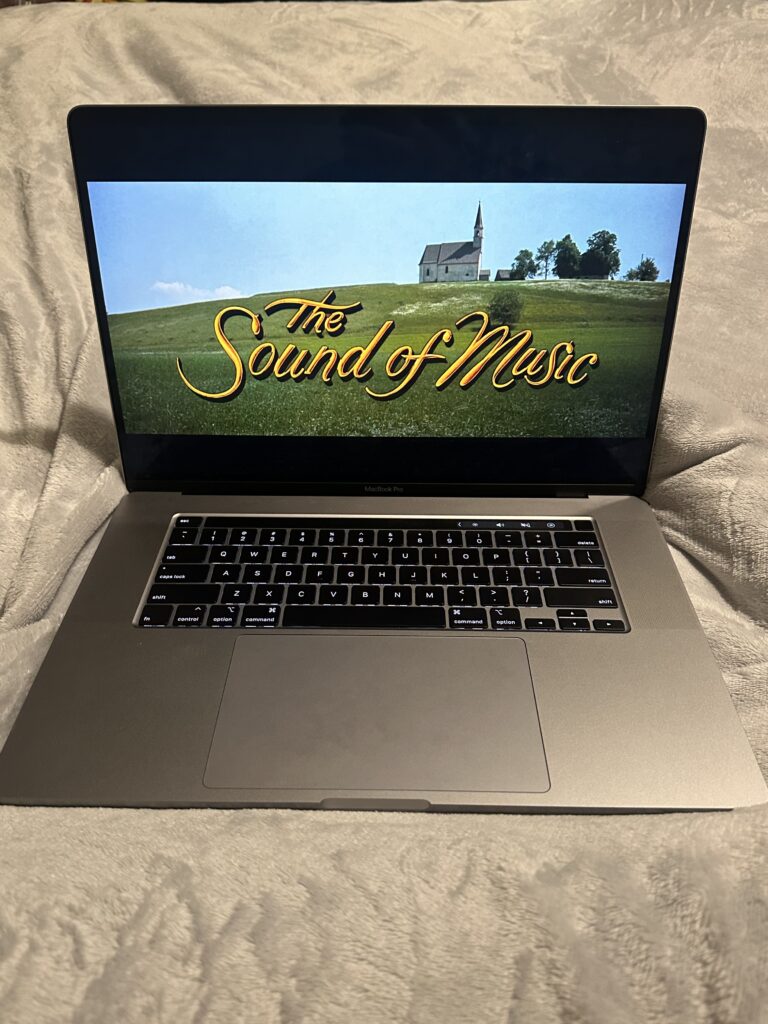
At private home screening of The Sound of Music (1965) in a rainy day in London by Maria Pedrosa
The experience of watching a film from wherever you want whenever you want is certainly inviting. For many, this option is more accessible as cinemas are not available in every city as it is cheaper seeing that cinemas have raised their ticket prices by 47 percent, according to the British Film Institute (BFI).
Streaming services, however, have done a great deal of work on archival of older productions, making renowned films that might’ve not been available elsewhere watchable again, which could raise the interest of younger audiences who have not yet had the experience of going to a classical film screening.

Watching Sabrina (1964) anywhere made convenient through streaming, even on an airplane in the sky.
In contrast to this, cinemas offer the element of public socialization that is ever so important and cannot be replicated with streaming. The activity of cinema-going to watch a film on a specialized screen with others is an unusual experience.
“In the ’50’s, people would say ‘Why would people go out to the cinema? It’s crowded and noisy, they can watch Tv at home’ but people enjoyed going out to the cinema, people enjoyed going out,” said Dr Collins.
The cinema subject creates conversations, genuine human bonds that gather in communities both online through social media, that now has cinema-related platforms like popular app Letterboxed that gathers millions of users discussing films online, and in physical space with clubs and groups that go every day to meet at the cinema.
The reality is that it is false to say that cinemas will not walk side by side with streaming platforms, as the cinema industry has always found a way to adapt to new mechanisms, but there are ways that this change could be done smoothly.
“One of the ways it could do that is to emphasise the social aspect of it, making things comfier and more enjoyable when you are sitting there like reclining seats, putting a little table to sit food and drinks on top and that kind of stuff,” Dr Collins suggests.
Changes are inevitable in an industry that is always changing by the second, “I don’t think it [Cinemas] will die, I think it’ll always be there for the conceivable future but it’ll adapt and it’ll change,” Dr Collins said. It is evident that whatever the future reserves, certainly cinemas will follow and adapt to their best interest.
Leave a Reply