

By India Gustin
“Historically, anything that society needed out of metal, the blacksmith would do,” explains Keaton Goddard. At age 26, the American has garnered over half a million subscribers on Youtube and was a winner on the hit US TV series, Forged and Fire, in 2020. “It’s always going to be a lost art in terms of the fact that we’re never going to need it as we did in the past,” he says.
After deciding to quit his job selling leaf blowers at Home Depot to pursue a professional blacksmithing career, 6ft 4in Goddard has been balancing his craft between Youtube and selling knives on the side. The Nantucket-based blacksmith, who has both a bachelor’s and master’s degree in Chemical Engineering, is among the few left who practise this craft in the area where he lives – and was ten years younger than anyone else on the History Channel’s programme.
With his recent win on Forged and Fire and the audience he is receiving on Youtube, scores of people have been asking him for classes. Social media platforms and TV series are a great way to attract the younger generation. and he can prove it. “[Youtube] is how I started. I saw a Youtube video, I tried it, it worked and it completely spiralled out of control from there.”
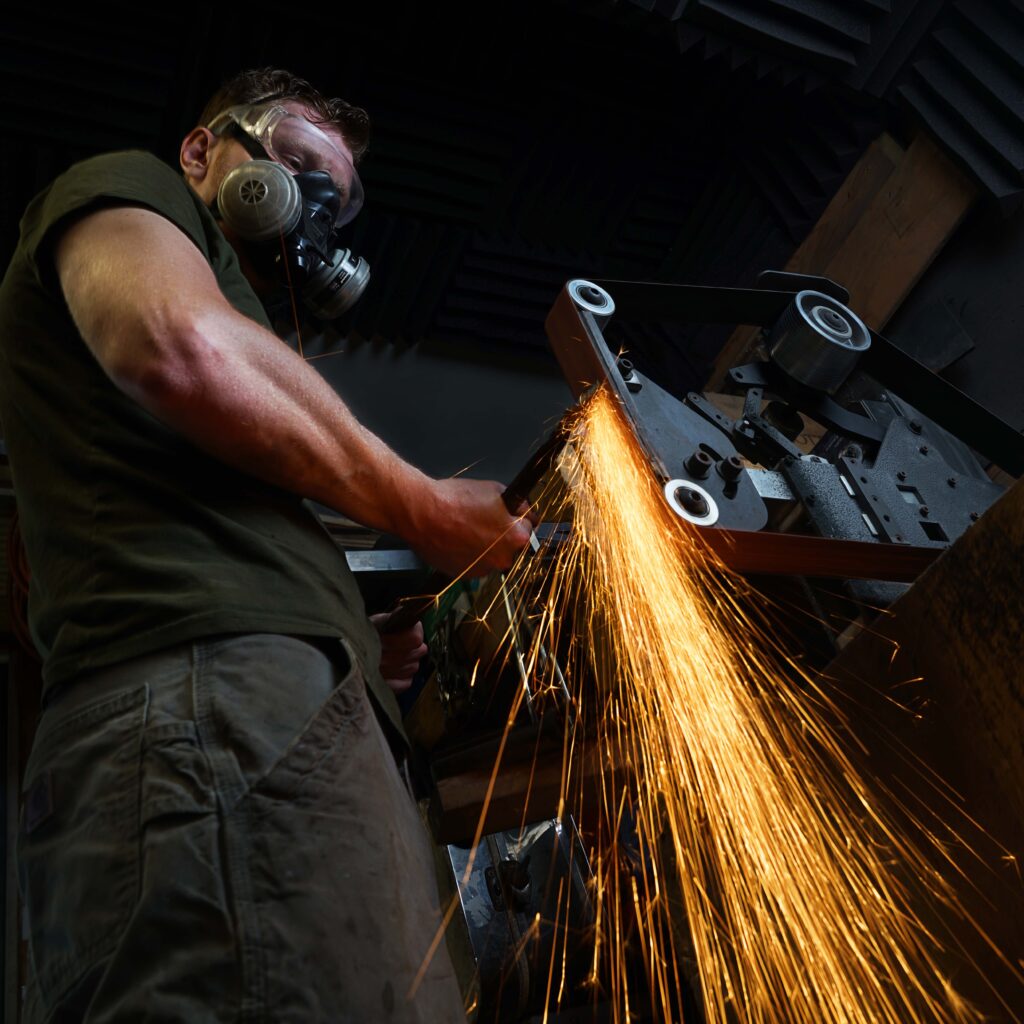
Blacksmithing is one of the oldest professions in history, going back to 1,500BC. “Blacksmithing as a whole is that art of heating up metal and turning it into something else,” explains Goddard. By doing this, blacksmiths can essentially turn any piece of metal into an object, such as knives, swords, gates and decorative pieces.
Early craftsmen gradually learned more and more about metallurgy and how to use it to their advantage to make tools and weapons. This skill was passed down from generation to generation and by the medieval period, blacksmithing was a staple in every town.
“Nobody really needs a sword… but it’s just kind of a cool thing”
Keaton goddard


By the 20th century, however, industrialisation transformed blacksmithing from an essential craft to an obsolete trade. “It wasn’t until the second world war that blacksmithing became, for want of a better word, redundant,” says Adrian Legge, a council member of The British Artist Blacksmith Association (BABA).
BABA was founded in the late ’70s to act as a stepping stone to revitalise blacksmithing as a craft. “It started with a dozen people or so getting around a table and deciding that modern blacksmithing needed some form of voice, representation and support network,” explained Legge.
“We’re all volunteers, a mixture of mostly professional and some amateur smiths like myself,” added Ned Willett, secretary at the association who joined around 15 years ago. “When I started [at BABA], blacksmithing was already gaining in popularity and people were very interested in the creativity that was coming through. It’s been really humbling and enjoyable to watch.”
Organisations in the UK, such as the National Heritage Ironwork Group (NHIG), help BABA to encourage the younger generation in taking up the craft as a profession. As the secretary, Willett receives a lot of queries on this: “It seems that the majority in this country want apprenticeships.
“It’s seen as a rural and old-school craft and the apprenticeship scheme hasn’t existed for the last 30 years. To get it going again has been 15 years in the making.” Apprenticeships would support young people aged 16 and over to merge working with studying to gain specialised experience.
“The current training is full-time college based at the moment,” explains Legge. “It’s very difficult for people to get that linkage from learning in college, or on their own, to owning their own business. It’s there, but there aren’t many opportunities for it. […] We’re very hopeful of getting the apprenticeship scheme up and running by the end of this year.”
“There’s a lot of metallurgy that goes into making blades,” Goddard clarifies. Willett agrees, adding: “Whilst there’s a lot of science underpinning [blacksmithing] and you end up having to learn all of that, it’s still not seen as something academic.
“Weirdly, a lot of blacksmiths are dyslexic,” continues Willett. “They could be fabulous blacksmiths but if you put them in an academic environment then they’re not good at all. Yet you can teach them all the very complicated metallurgical sciences.”

In 2010, there were around 600 traditional blacksmiths in the UK, with the number predicted to rise. “There’s been a movement back to having this desire for quality, handmade products instead of the cheap, mass produced stuff that we’ve become accustomed to,” says Goddard.
People are starting to recognising the value of a handcrafted item, attracted by the personality that it has over a cheap, mass-produced object. “Machines are very good at doing the same things over and over again, it’s what they’re designed to do,” says Willett. “Human beings, on the other hand, are very good at doing bespoke and one-off things.”
Blacksmithing is a labour-intensive craft comprised of heavy metal and tools. Even with its resurgence as an art and hobby, people still remain surprised to think of women working in this industry.
“I was told that a woman blacksmith was as rare as a unicorn”
Ai Iijima
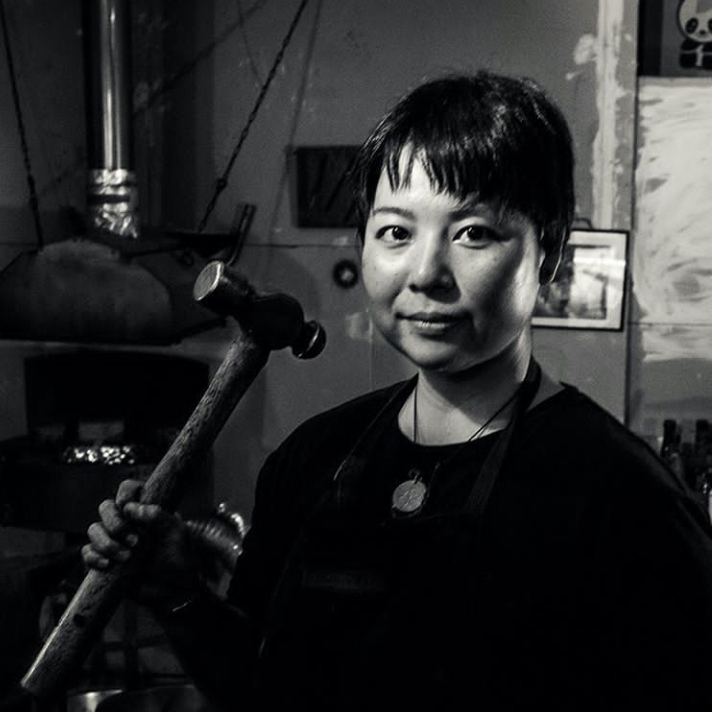
“When I started my business in 2017, I was told that a woman blacksmith was as rare as a unicorn,” recounts Japanese blacksmith, Ai Iijima. “Officially, I am the only blacksmith in my city where more than 200,000 people live, and probably the first woman blacksmith in the history of Yachiyo city.”
Portrait of Ai Iijima. Courtesy of Ai Iijima.
No matter how tech-savvy our society gets, these blacksmiths are certain that this craft will always have a place. “Although machines can produce almost anything, only by human hand can you repair them,” Iijima says. “Blacksmithing is so deeply connected to human life from ancient history to now.”
“In some ways it’s primal — you’re playing with fire, hot metal and heavy things,” adds Willett. “You physically can’t make the same thing twice. I can make you a pair of something, and there will be differences because the metal will react slightly different with the fire and the hammer every time. Another big part is the self-reliance. If you need a tool to make a job, you make the tool. If you can’t make the tool, then you make the tool to make the tool.”

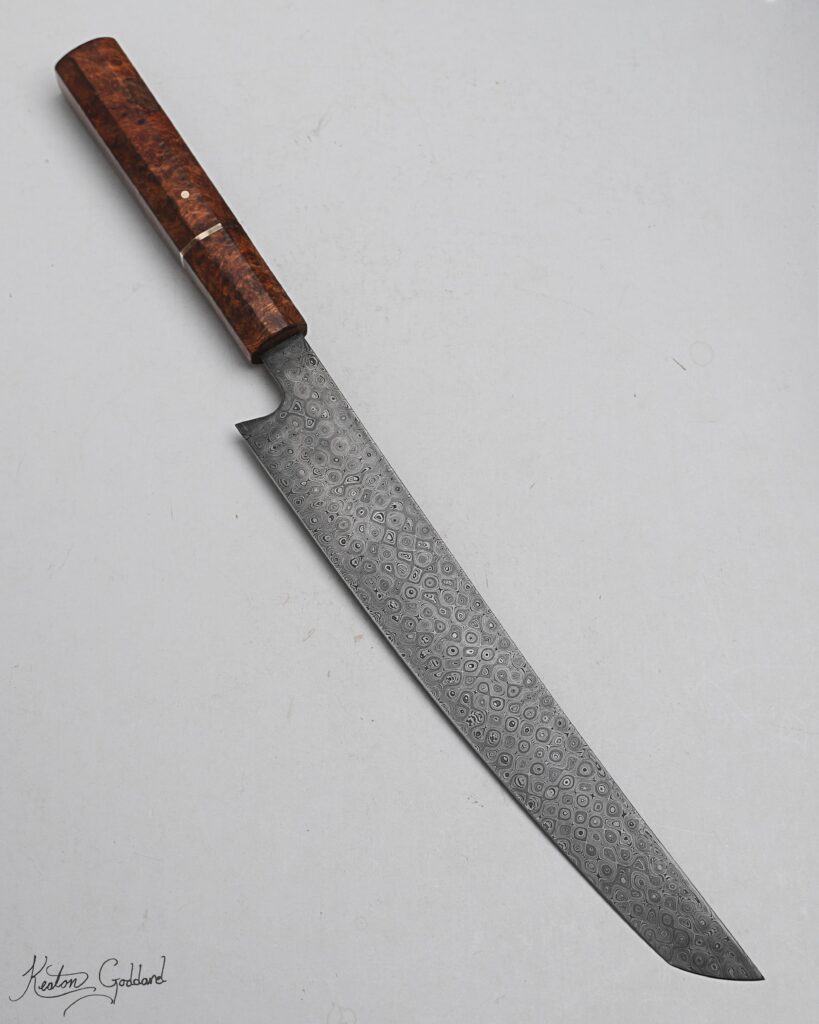
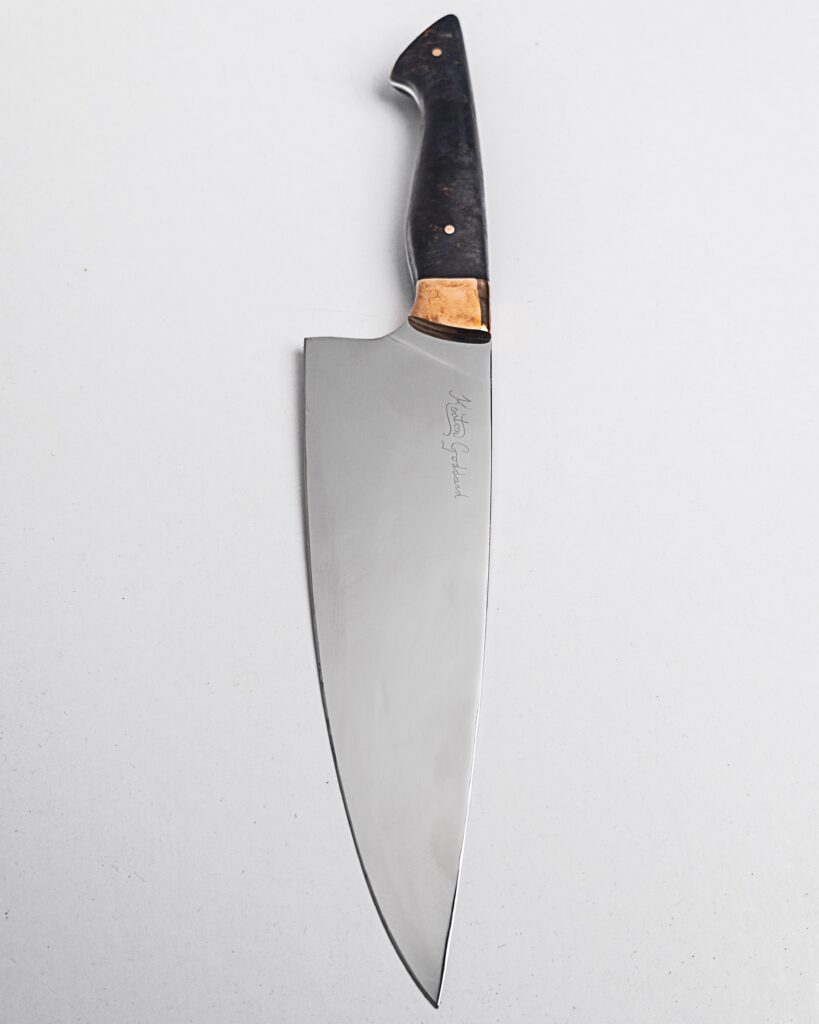
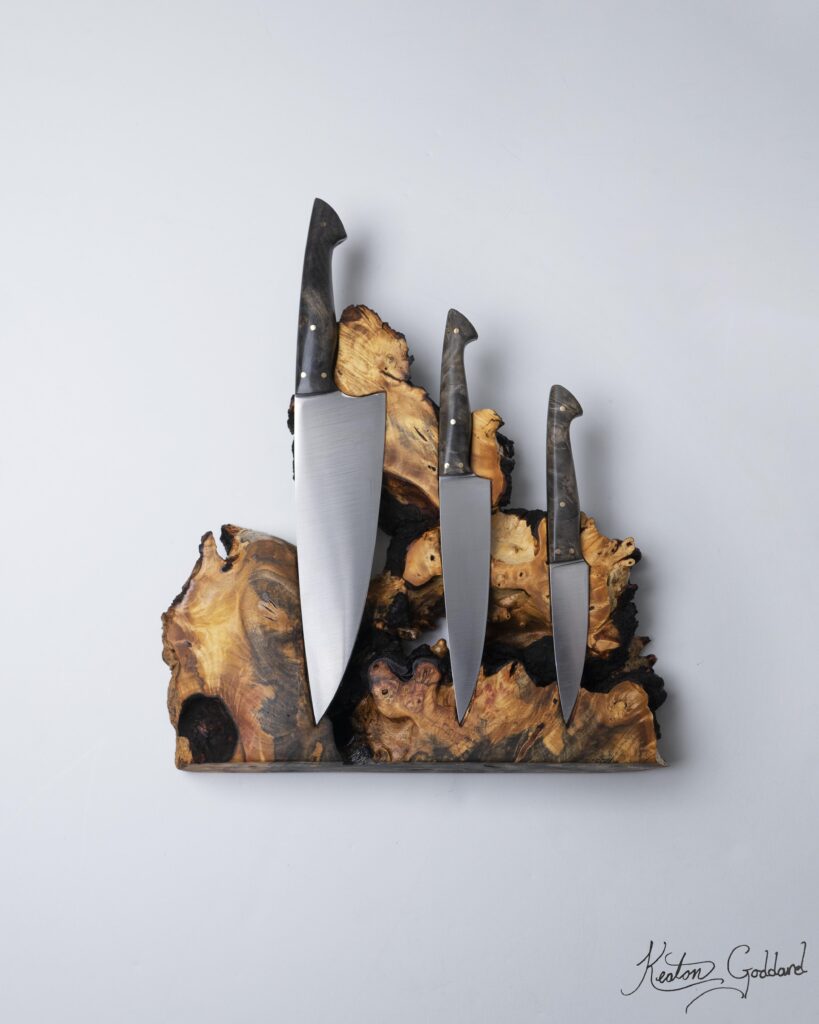
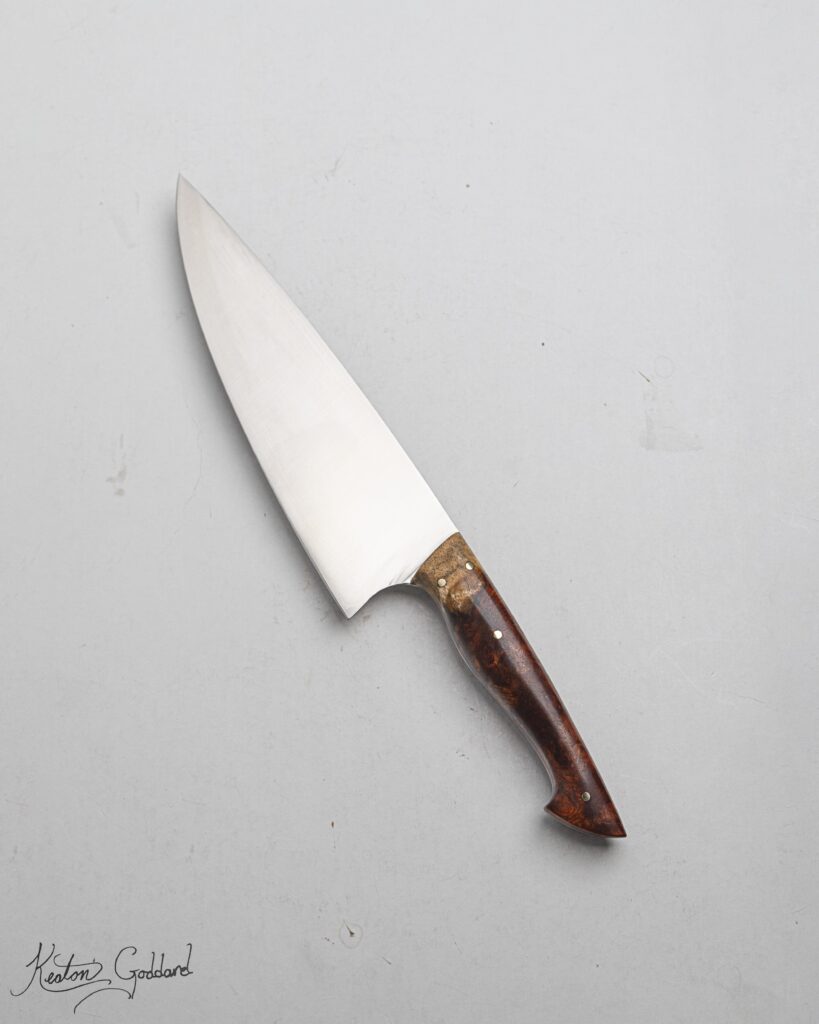
Industrialisation resulted in the dip and eventual turning point for blacksmithing as a craft. “While everything is industrialised now, it all came through blacksmithing,” the secretary adds. Building on the argument regarding modern blacksmithing, Legge says: “Its taken a while for it to become recognised as a creative craft. There are no barriers if you really want to go for it.”
Whilst blacksmithing is no longer a crucial role to sustain a society, the handcrafted creations which derive from this revitalised industry will always be valued and acknowledged. “Nobody really needs a sword”, Goddard reflects. “It’s an art now. We don’t need it as a society because we have modern technology but people still respect it as an art form.”
Leave a Reply