

By Ali Suker
Homelessness in London has reached a critical point, with increasing numbers of individuals and families finding themselves without a place to call home.
Despite the city’s wealth and global standing, the issue of homelessness continues to escalate, revealing deep-rooted social and economic challenges.
It is not unusual to see people sleeping rough on Holloway Road, or asking for money to buy alcohol, cigarettes or food. “I always see the same homeless people asking for change around the area, I don’t think it’s a choice for them, I think the government doesn’t do anything right,” said Cameron Ward, a 26-year-old Amazon driver from Holloway.
“Rishi Sunak should be creating more initiatives for not just the homeless but anyone in need instead of wasting the people’s money.”
The Scope of the Problem
Recent data from the Combined Homelessness and Information Network (CHAIN) indicates that over 11,000 people were recorded as sleeping rough in London over the past year. This marks a significant increase from previous years and highlights the severity of the crisis.
According to the charity Trust for London, the number of rough sleepers in London has more than tripled since 2008, from 3,472 to 11,018. These statistics alone show the crisis London is facing, which requires vital action to be taken to slow down the rate of homelessness.
Factors contributing to this rise include a lack of affordable housing, changes to welfare benefits, and economic instability, including the persistent cost of living crisis, catalysed by the COVID-19 pandemic.

Contributing factors
There are several main reasons why homelessness is on the increase in the UK:
- Housing Affordability: One of the primary drivers of homelessness in London is the high cost of housing. The average house price in the capital has soared to over £500,000, according to the Office for National Statistics, far out of reach for many. Rent prices have similarly skyrocketed, with average monthly rents now exceeding £2,100. This leaves low-income individuals and families particularly vulnerable to losing their homes.
- Economic Factors: The economic fallout from the COVID-19 pandemic has hit the most vulnerable hardest. Many people have lost their jobs or faced reduced income, making it even more difficult to keep up with rent or mortgage payments. Unemployment rates are slowly rising again after a decade low in the last quarter of 2023, according to Statista.
- Mental Health and Addiction: Mental health issues and addiction are both causes and consequences of homelessness. Approximately 45% of rough sleepers have mental health issues, and a significant number struggle with substance abuse, according to Crisis, the homeless charity. The lack of support services for these individuals fuels their situation, making it difficult for them to escape the cycle of homelessness.
Government and community efforts
Efforts to address homelessness in London have been varied, involving government initiatives, charity work, and community action.
The UK government has implemented several measures aimed at reducing homelessness. The “Everyone In” campaign, launched in response to the pandemic, provided emergency accommodation for rough sleepers. However, critics argue that these measures are temporary solutions and do not address the underlying issues.
Charities are also playing a crucial role in supporting homeless individuals. Organisations such as Shelter, Crisis, and St. Mungo’s provide vital services, including emergency accommodation, food, and support for mental health and addiction issues. These charities also advocate for policy changes to tackle the root causes of homelessness.
Local communities have also stepped up to support their homeless neighbours. Initiatives such as food banks, community kitchens, and volunteer outreach programmes provide essential support.
The importance of long-term solutions
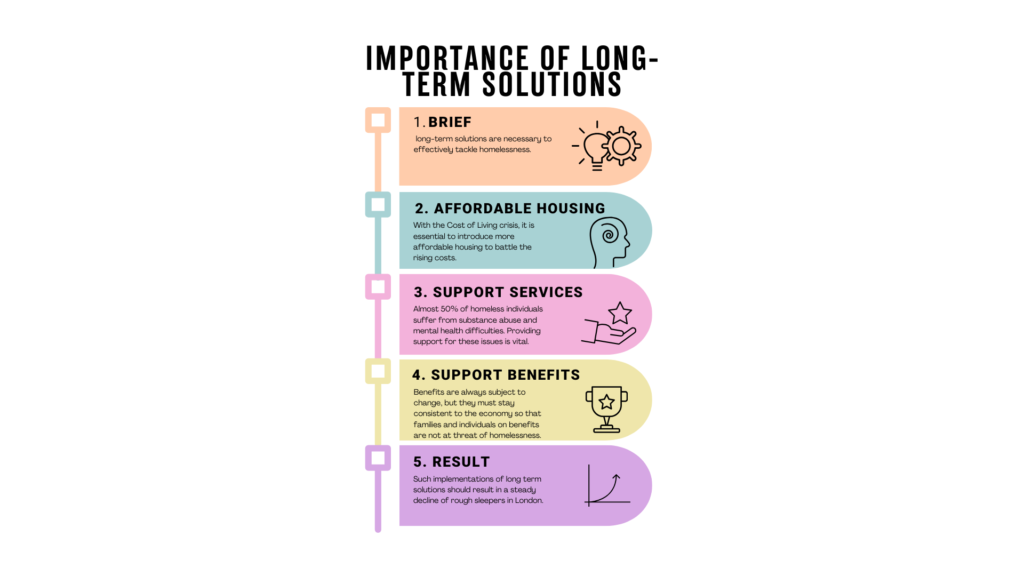
While immediate interventions are crucial, long-term solutions are necessary to effectively tackle homelessness.
Affordable housing is a key area of focus. Increasing the supply of affordable housing is essential. This could involve building new social housing, implementing rent controls, and providing financial support for low-income renters.
Enhancing support services for mental health and addiction can help address some of the underlying causes of homelessness. This includes increasing funding for mental health care, expanding addiction treatment programmes, and providing integrated support services.
Comprehensive policy reform is needed to address the structural issues contributing to homelessness. This includes revising welfare policies to ensure they provide adequate support and addressing economic inequalities that leave many vulnerable to homelessness. As well as making sure that welfare benefits stay beneficial by being consistent with the change in costs of bills and prices of food.
Scoping into Islington

While homelessness is a pervasive issue across London, the Islington borough also faces this issue. It has also seen a noticeable increase in the number of individuals and families facing homelessness, correlating with the broader citywide trends.
Islington Council implemented a rough sleeping strategy between 2018 and 2023 as the government issued £30 million to tackle rough sleeping. Islington received £265,987. Their strategy focused maximising housing opportunities and prevention due to the low amount of funds.
“I believe a lot of homeless don’t actually seek help but rather choose to stay on the street because of their addictions. They would much rather focus on their next hit, as narrow minded as I sound,” said Angel local Anita Diab, a 21-year-old barista.
Addressing the rising number of rough sleepers in London demands both immediate and long-term strategies. Government initiatives, charity efforts, and community actions provide essential short-term relief, but sustainable solutions are crucial.
Increasing the supply of affordable housing and enhancing mental health and addiction support services are necessary steps. Ultimately, the issue of homelessness requires the input of not solely one organisational body but also the community, charities, and the council/government.
If you are or know anyone struggling with homelessness, visit Crisis.
Leave a Reply