

By Sara Scheeres
Three years ago, the infamous coronavirus spread around the world, becoming the first pandemic in one hundred years. The whole world was affected, with cities coming to a harrowing standstill, hospitals overrun with seriously ill patients, countries’ economies tanking as each one managed the spread of infection in her own way.
I remember the first few months of COVID 2020, as every American would, too, checking the New York Times covid-19 monitor graph, watching the alarming rise in cases and deaths, then a steady fall, only to see them rise again. From our homes and bedrooms, if we were lucky to have such a secure roof over our heads, the whole of humanity shared a halting experience, wading into the unknown, waiting for answers, solutions.
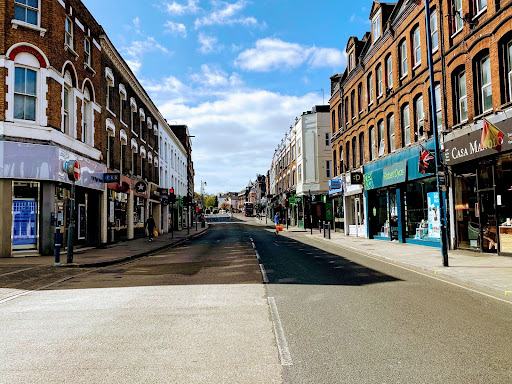
London’s initial lockdown began on March 20th, 2020. Arda Halls was living alone in west London, advised by the government and confirmed by her daughter in law, a nurse, to stay at home, because of her age at seventy. For three months she stayed holed up at home alone, her daughter in law passing every couple of weeks to leave groceries on the counter, and quickly back out again, without seeing Halls. “I really thought it was the end of the world,” says Halls, thinking back. “I remember the black ambulances, with tinted windows, collecting the bodies on Ladbroke Grove.”
On a clap-for-the-NHS Thursday morning at 8am, Arda went out onto her balcony, banging pots and pans. She heard cheering from the window next door, and called out, hello? Is anyone there? The neighbour called back, and they began to chat, the neighbour asking how she was getting on with shopping – she was doing alright, she said, she didn’t have fruit but her daughter in law would be coming in a few days. An hour later, the neighbour had attached a bag to the end of a mop and carefully syphoned it from window to balcony. Arda went to open the bag and found bananas.
Allison Jenkins, of the same age group as and a friend of Halls, said of her experience, “We went to the park every day and either me or Tina brought a thermos of coffee, the milk, and mugs.” She shared stories of friends who had it harder than her, who contracted the coronavirus and nearly died. In particular, a Brazilian friend in South London, “got it so bad she couldn’t get up the stairs.”

Back to the present, in a lively small coffee shop in West London, Halls touched Jenkins’ hand, admiring her nail colour.
When I asked them how present covid is in their minds these days, Jenkins replied urgently, “I never think about it anymore, even though I just had it in December. Who cares, you know. It’s over. It’s over for me.” She walked out of the coffee shop, moving on.
Halls presented me with a stretchy nylon lulu lemon mask that she keeps in her bag with her, still prepared to take precaution. “If I feel nervous, I put it on,” she said. “I don’t think it’s over. Sometimes I leave a place if someone’s coughing profusely.”
Halls went on,“Really it was a scary time, and you really did think, maybe this is how it ends. Really slims down the world, and I didn’t want to be a statistic.” After a while longer sharing stories, I saluted Halls as we went on with our days, and when a hug might have been afforded after our connection, we smiled goodbye with a remembered distance between us.
Leave a Reply