

By Shaelyn Stout
Public or personal, we all have our problems—perhaps the way we deal with these problems is what sets us apart. While coronavirus lockdowns are in effect across the world, the question of how to cope is more relevant than ever.
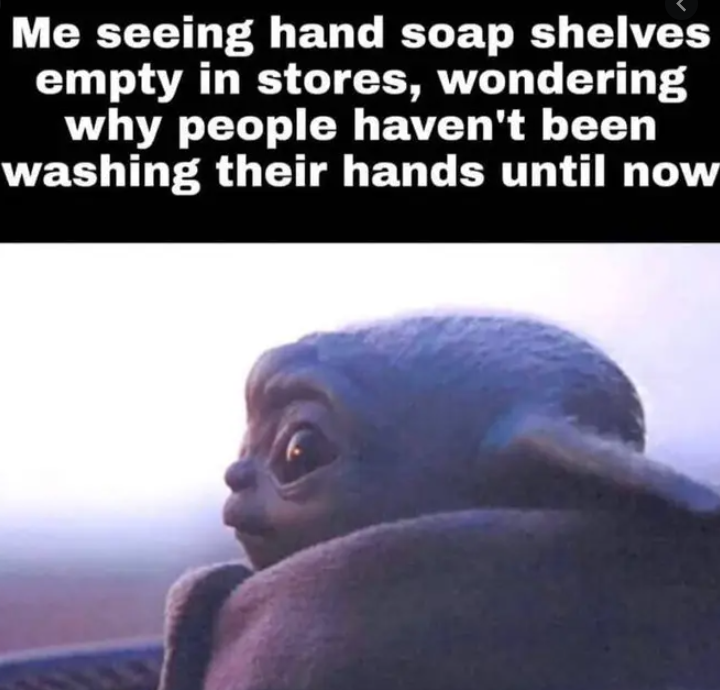
Your nan might bake banana bread and your dad might panic-buy toilet roll, but what are younger demographics doing to deal with this pandemic? Hop on social media and you’ll see a lot of people are turning to memes—one of the world’s most questionable coping mechanisms.
In attempts to remain relatable, memes often make light of global issues or controversies. They have become a laissez-faire coping mechanism for everyday people to deal with stressful or scary changes in the world.
Take coronavirus, a global pandemic that has killed hundreds of thousands of people worldwide. It’s a serious issue that has put the real world on hold, yet taken the meme world by storm. With so many people stuck in their homes or under strict regulations, there has been a surge of relatable content to work with (i.e. overeating, virtual meetings).

If you don’t know what a meme is, chances are you’ve still seen one. According to the Oxford Dictionary, a meme is “an image, video, piece of text, etc., typically humorous in nature, that is copied and spread rapidly by Internet users, often with slight variations”.
Though meme use spans age groups (see GrandadJoe on TikTok), many statistics show that a majority of Gen Z and Millennials are especially interested in them. A research group called YPulse—whose reports focus on Gen Z and Millennial behaviour—recently found that 55% of 13-35-year-olds send memes every week.
Since their humble beginnings, memes have exploded in popularity and reach. Apps like Facebook, TikTok, Instagram, Reddit and Twitter have all become platforms for meme-ers (and their fans) to create and enjoy new content.
London-based comedian Nico Yearwood shares his appreciation for this side of social media. He says, “now anyone who has an idea can execute and put it into the world and if it’s well done and funny it will be shared”.
Memes cover relatable content, allowing anyone to participate in the making, sharing or ‘liking’ of them, as Nico mentioned. If you know anything about World War II, for example, you’ll likely understand this:

The point is that when we’re all facing similar stressors, why not laugh about them online with millions of strangers? New York-based podcast “Daily Charge” discusses using memes to cope with coronavirus. (Below)
From an academic perspective, coping with and bonding through this kind of public issue makes a lot of sense. Austin Stout, 24, a master’s student with a BA in Integrated Communications, gives insight on the popularity of coronavirus memes as it relates to human interaction and the ways we communicate. (Below)
Another public issue turned meme phenomenon was the near conflict between the U.S. and Iran earlier this year. On the brink of World War III, meme-ers did what they do best. Suddenly, the issue didn’t feel so threatening.

Though tensions were rising between the U.S. and Iran, this creator made light of a potential army draft sending him and his friends to Iran for summer 2020.
While it seems odd to put such serious issues into comedic contexts, there is some science behind using comedy to cope.
According to Dr. Paul Hutchison, Principal Lecturer in Psychology at London Metropolitan University, coping mechanisms are “strategies that people use when faced with stressful situations or when experiencing painful or difficult emotions.
“We know from years of research that making light of a traumatic or stressful situation can help us to maintain perspective and prevent the situation from becoming overwhelming.
“Memes about topical issues have the potential to help people cope with stressful situations”.
Nathalie Perl, 24, a summer school assistant at Imperial College London, said memes “offer a great glimpse into what someone else is going through and help connect people”. She adds, “[memes] might actually make people more engaged in social or political issues like COVID-19”.
So, while the world is seemingly unraveling around us, maybe you should scroll a meme page like Daquan or fuckjerry.
Though comedy is a well-researched coping mechanism, it still begs the question: why make fun of such serious issues?
Over 70 years ago, sociology professor Anontin J. Obrdlik coined the term “Gallows Humor” to describe “the type of humor that arises in a type of precarious or dangerous situation”. Looking to examples like coronavirus or tensions between the U.S. and Iran, this is exactly what meme-ers have been doing.
When asked why people might turn to memes in times like these, Comedian Nico Yearwood explains, “comedy turns the darkness into light, or at least makes it a bit more bearable”.
And it’s not just public issues that take the meme limelight, there are perhaps just as many people that use memes to cope with personal problems like mental health or understanding their sexuality.

Many people take medication or use cognitive therapy to cope with mental illness or other personal issues, but how do memes come into play?
Dr. Chris Chandler, Head of Psychology at London Metropolitan University, is an expert in addiction and the biological end of psychology. When asked about the use of memes as a coping mechanism, he said “coping therapies all have an effect on your brain, they might just do it a bit slower than taking a drug”.
Will Web, 21, a biochem student and amateur comedian from London, said “I cope with so much via comedy: my sexuality, mental illness.
“Comedy is either escapism or therapy, for the comedian and audience. You either escape from your worries or you dress them up so they’re no longer scary”.
In a survey of 30+ students, graduates, professors and parents, over 75% said they have used memes to cope with a personal issue. See below:

There is still controversy over whether or not memes should reference such serious matters, personal or public.
Dr. Hutchison explains, “while memes alone are unlikely to provide all of the solutions to the trauma or stress [people] might be facing, they can help people cope by providing perspective, [giving them] an opportunity to open up and discuss difficult and sensitive topics”.
You may not be a meme-er yourself, but there is no doubt they are helping people across the world cope with public and personal problems alike.
Check out these links for more:
Leave a Reply