

By Oliver Morgan
The urgent quest to clean London’s air has generated multiple different solutions that seek to solve the capital’s pollution crisis and help build a cleaner city. From restricting private vehicles, pedestrianising popular roads, improving cycle infrastructure and investing in public transport, there hasn’t been a lack of ideas and action from people and organisations looking to fight the climate crisis and make London safer for its residents.
In a YouGov poll conducted prior to the 2021 Mayoral election, the environment was listed as the most urgent issue for 24% of Londoners. In 2019 over 4,000 people died due to high levels of toxic air in London, according to a study by Imperial College London.
Nearly half of all air pollution comes from cars in London and it’s having drastic effects on peoples’ health. But what can be done to curb the reliance and usage of private vehicles in the capital?
Ultra Low Emission Zones
The Ultra Low Emission Zone (ULEZ) is an area in central London where drivers of petrol or diesel vehicles must pay £12.50 every time they venture into the zone. Introduced by London mayor Sadiq Khan when he took office, ULEZ has had a drastic impact on the reduction of pollution in the city.
Initially covering the same area as the pre-existing congestion charge, the Ultra Low Emission Zone expanded to operate within the North and South circular roads in October 2021. Plans currently proposed by City Hall would see ULEZ further expanded to the entirety of Greater London, with Sadiq Khan hoping the change will be in place by the end of 2023.
Whilst inevitably controversial, the introduction of ULEZ has undoubtedly proven to improve air quality and aid in reducing major health risks associated with emissions.
Data published by City Hall in August 2020 suggests that the reduction in emissions of nitrogen dioxide in central London is five times greater than the national reduction average since the zone was introduced.
Since ULEZ was implemented there has been a 94% reduction in people living in areas with illegal levels of nitrogen dioxide, according to a London Assembly report on air pollution from 2016-2020. This report also suggests that carbon dioxide emissions have reduced by 12,300 tonnes since 2016.
Is the ULEZ fair?
But is an expansion to charging zones for private vehicles during a cost of living crisis really fair on residents of London suburbs?
Harrow Conservative councillor, Zak Wagman, believes the expansion of the Ultra Low Emission Zone will be devastating for businesses in outer London. “A lot of businesses in the area I represent rely on people who drive from outside of London into Harrow,” he says. “If these people have to pay to drive in London they’ll stop using our local business and take their custom to areas outside Harrow where they don’t pay.”
“Air quality is better here than in Central London, it’s a leafy, suburban area,” Wagman says, adding that the proposals aren’t fair on residents of outer London. “These policies are made for places such as Shepherd’s Bush and Oxford Street where the air quality is worse.”
Wagman believes there are better solutions to curb toxic air and reduce London’s pollution. “Investing in better public transport should remain the priority.”
Nathalie Sylvia Bienfait, a Green Party councillor in Tower Hamlets, welcomes the expansion but believes the system needs reform. “It is important to implement policies that encourage behaviour change in private car drivers to incentivise using other modes of transport,” she says. Bienfait believes the ULEZ charge is a “blunt instrument” as it charges everyone the same amount of money which has a disproportionate impact on lower-income drivers.
“The Green Party GLA members have been pushing for some years to implement a privacy-friendly road charging system that would charge drivers based on the amount of pollution they emit in a given area.” According to Bienfait this would be calculated based on the age and size of a driver’s engine together with the length of time they spend in the area in question.
She says that ULEZ expansions and any other traffic management policies shouldn’t be implemented in a vacuum and should be supplemented with further measures to minimise car usage. “It’s really important that any policy is co-designed with the community which will experience these impacts and not imposed top-down,” she says. “It is vital that corresponding positive policies are implemented at the same time which seek to make it easier and cheaper to walk, cycle or get public transport for those who can.”
Public Transport
It’s often touted that the key to reducing peoples’ reliance on cars is to invest in public transport and to improve and expand existing networks. Pre-pandemic, there were over 1.3 billion journeys made on the London Underground annually; an increase of around 415 million over an 18 year period.
Number of passenger journeys on the London Underground
[visualizer id=”25286″ lazy=”no” class=””]
Statistics from the Department of Transport
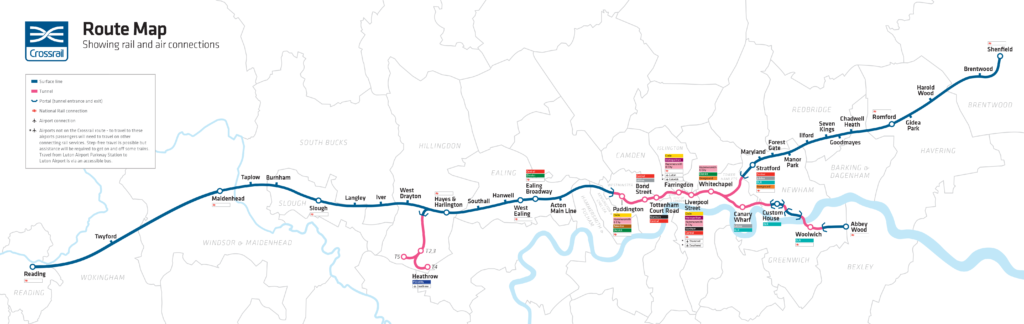
To cope with increasing ridership of rail in the capital, more money is being invested into new and existing public transport projects to keep people moving. The recently opened Crossrail network is projected to improve transport links, reduce journey times and ease the demand on existing tube lines.
The network, known as the ‘Elizabeth Line’, will connect Central London with Reading and Heathrow to the west and Shenfield and Abbey Wood to the east, whilst being integrated with existing TfL rail and tube services.
Following the opening of the initial stage of Crossrail, Prime Minister Boris Johnson declared his support for a long-proposed second section of the new network, linking Surrey and Croydon with Central and North London. “All the problems of commuters coming into Waterloo getting up to north London, you can fix that with another Crossrail,” he said following the unveiling of the Paddington Elizabeth Line station.
Another vital aspect in strengthening public transport is better bus networks and cleaner buses. Transport for London has increased the number of all-electric buses on London streets and have even invested in hydrogen fuel cell technology with twenty hydrogen buses currently in operation around the city.
In late 2020, City Hall announced that 95 per cent of London buses met the ultra-clean Euro VI standard and committed to the further electrification of the current fleet with 650 zero-emission buses currently operating in the capital.
Cycling and pedestrianisation
If there was ever a subject that highlighted the political divide in London, it would be cycling. Kensington and Chelsea council, run by the Conservatives, have often blocked proposals for so-called ‘cycle superhighways’ to run through their borough. In Labour run boroughs you’ll often see low traffic neighbourhoods (LTNs) which are residential areas with significant traffic calming methods to restrict private vehicle usage. These areas prioritise pedestrians and cyclists and aim to promote safer, cleaner streets.
Nevertheless, the introduction of LTNs are often blamed for worsening traffic conditions whilst impairing emergency service vehicles and unfairly targeting working class people.
Simon Munk is the campaigns manager for London Cycling Campaign, an organisation that campaigns for better cycling infrastructure in London and advocates for the reduction of road space for traffic. He believes opposition to traffic-reduction policies are clouded with myths and misinformation. “We’re ignoring ongoing impacts of unnecessary car use,” he says. “Road danger, pollution, the climate. These have impacted us for decades but people don’t want action because it impacts a poorer driver?”
In the recent local elections in London, the Conservatives suffered losses all over with Labour gaining control of Westminster, Wandsworth and Barnet councils in shock blows to Tory candidates. Labour gaining control of Westminster council could be significant for the Mayor and his proposal to pedestrianise Oxford Street.
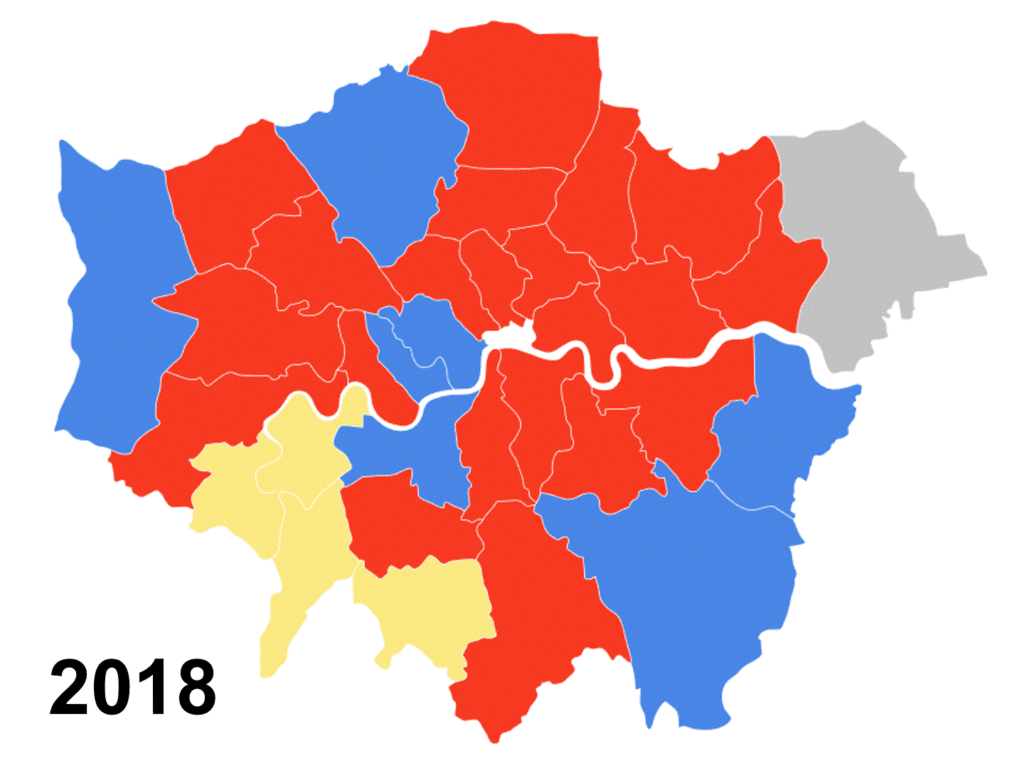
Sadiq Khan initially proposed the introduction of two pedestrian plazas on Oxford Street in early 2018 but saw his plans vetoed by the then Tory-run Westminster Council due to concerns it would be unpopular with local residents. During the pandemic the council revisited the plans but with a Labour-run administration overseeing any future changes, it is more likely that traffic could be a thing of the past on Britain’s busiest shopping street.
London isn’t short of concepts and proposals to reduce traffic and build a greener city; progress made over the past couple decades have made a substantial impact in easing congestion and cleaning the metropolis’ toxic air. Despite great progress, levels of nitrogen oxides and other harmful toxins are still at dangerous levels and still pose serious health risks to residents.
The goal of a clean, green city is still yet to be fully achieved but with further measures being taken to tackle pollution, there’s a lot that can be heralded as good progress in our fight against climate change.
Leave a Reply