
By India Gustin
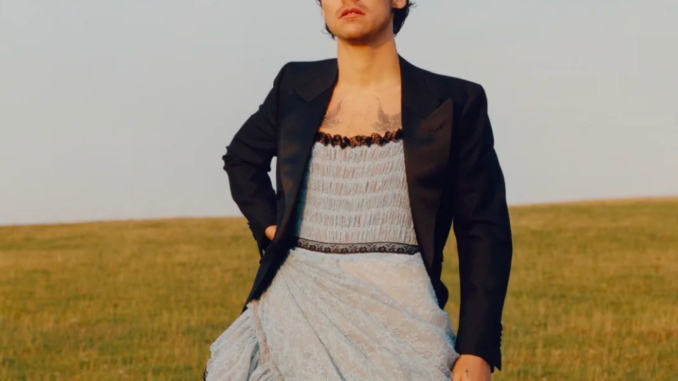
Harry Styles was recently featured on the December issue of US Vogue donning a Gucci gown. Many people appreciated his androgynous dress sense, which also included him wearing a kilt and a crinoline, or stiff petticoat.
In his Vogue interview, Styles opened up about his beliefs on the matter: “I’ll go in shops sometimes and I just find myself looking at the women’s clothes thinking they’re amazing. It’s like anything – any time you’re putting barriers up in your own life, you’re just limiting yourself. There’s so much joy to be had in playing with clothes.”
Not everyone has embraced his fashion choices. Candace Owens, American conservative commentator and political activist, took to Twitter stating: “The steady feminization of our men at the same time that Marxism is being taught to our children is not a coincidence. It is an outright attack. Bring back many men.”
Owens’ statement created a social media frenzy in support of Styles. One fan commented: “You’re just jealous because he looks better in a dress that you do.”
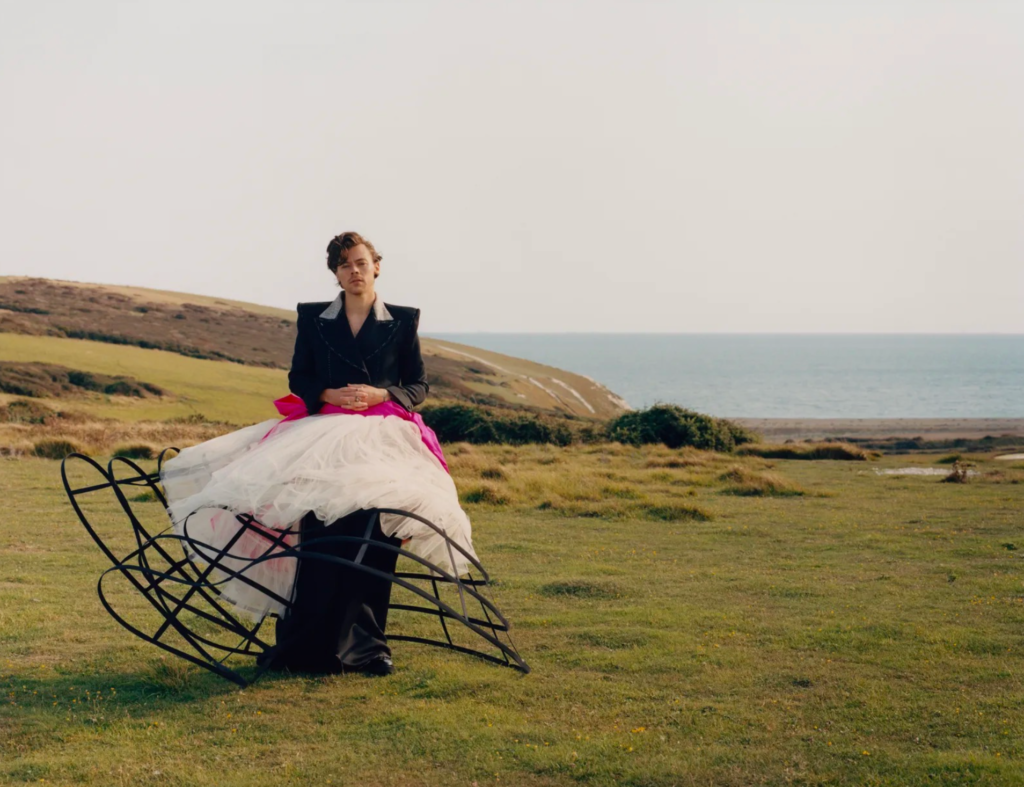
Fashion has always had its issues with gender fluidity and with that society deems ‘acceptable’.
Styles’ eccentric photoshoot has shown us that although the fashion world is progressing, there are still those who remain uncomfortable with letting go of gender conformity.
Limitations in dress
Actor and comedian Brett Sinclair said: “I’m someone who’s always been interested in expressing myself through style and fashion. Unfortunately, being a male, that means there are so many limitations in what I can wear and still be deemed as socially acceptable.
“We are assigned a gender at birth based on what genitals we are born with. We are then expected to have a personality and a sense of identity which revolves around that entire option we were given and that’s ridiculous.”
Some believe that it is all depends on how some people are brought up and their particular lifestyle.
A student who goes by the name of Katie Sutt, said: “I think that typically the people who disagree can all be categorized into the same few boxes: traditional, old, conservative, republican. I think age is a huge factor in the fluidity of fashion – you could say it’s the way they’ve been brought up and the ideals that they were forced to accept growing up.”
An evolving industry
The fashion and beauty industries have slowly been evolving, with more and more brands embracing genderless fashion.
“Fashion itself has done a lot. There are really famous artists that involve transgender people in their shows and in their production for music or use male models as female models,” said business student, Robin Triet.
“I think they would do it more if society accepted it because we all saw the reaction the world had to Harry Styles wearing a dress on Vogue…I mean why were people upset with him looking his absolute best in really nice fabric? Why do associate that with not being manly?”
Although the road to wearing whatever make you feel comfortable has had positive results, there continues to be some bumps along the way. “People have started to realise that the system is broken,” said Sutt.
“People are realising that fashion isn’t men and women, it’s a lot more than that. Just like how makeup has evolved rapidly in the past few years to be inclusive of all genders and people, I think the fashion industry is on that same trajectory and it’s about to implode!”
Leave a Reply